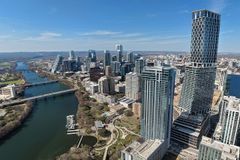
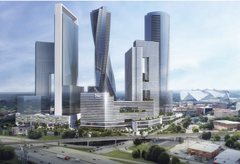
Austin’s proposed land use code entirely eliminates parking requirements for Downtown and steeply decreases parking spaces for retail and residential uses across the city.
Planning Commission members took almost two hours Tuesday night to wrap their heads around the new CodeNEXT requirements for parking, with members split almost evenly between development advocates who favored fewer spaces and more cautious neighborhood representatives who focused on residential uses, such as the parking requirements for granny flats behind existing single-family homes.
Some members of the Planning Commission wondered aloud whether Austin was tripping over itself to get to the car-less future. Nuria Zaragoza, a longtime neighborhood advocate and opponent of stealth dorms, pointed out new standards cut the Mueller parking requirements in half, with reductions on top of that. This, despite the fact only 6% of city residents were car-less and 14% had three cars or more in their driveway.
“Then there’s San Francisco, where there are 30% zero-car households,” Zaragoza said. “I can understand it, for something like that.”
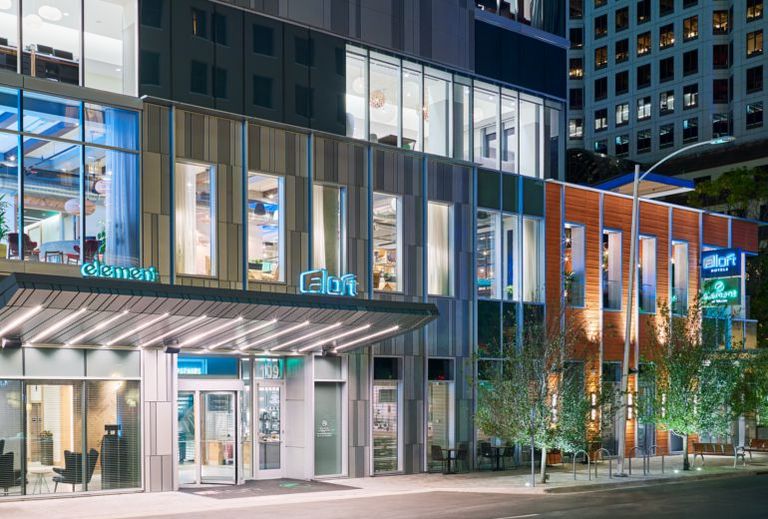
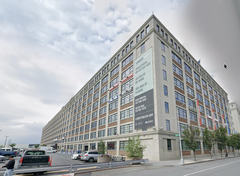
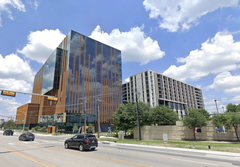
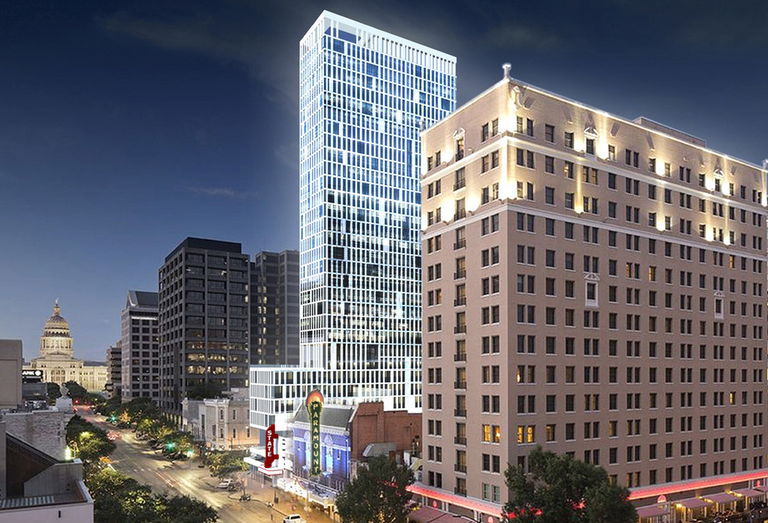
Downtown is one space where Austin has dipped a toe into a car-less reality, mostly on narrow lots. The Avenue, advertised as Austin’s “first true urban apartments,” touts its mixed-use car-less qualities as encouraging walking, biking and ride-sharing. And the Element/Aloft hotel property, a block away, has no parking garage and valet parking in adjoining buildings.
Parking requirements have followed a basic cycle since Austin's first land use code in 1954. Base requirements were set in 1954, then expanded in the 1980s and 1990s and now would go back to closer to the original land use code.
Planning and Development Review Director Greg Guernsey said cities such as Dallas, Rowlett and San Marcos have moved toward removing or decreasing parking requirements. In the case of Dallas, over-parking was considered costly to developers and increased impervious cover.
Asked what Austin would get out of reduced parking requirements, Guernsey pointed to Barton Creek Square. For all but a few weeks around Christmas, the parking lots and outer islands around the shopping are empty of cars. That space could be grass, trees or an expansion of business.
“It’s trying to find a parking requirement that’s right for each business,” Guernsey said, adding that the parking requirements were a floor and not a ceiling when it came to new development.
"Generally, in CodeNEXT, we provide capacity that would allow various forms of transit, in addition to driving," Guernsey said. "It's not to preclude parking. It's a recognition that people are more inclined than in the past to try these other modes of transportation."
Some commissioners would have preferred Guernsey push even further. Commissioner James Schissler, an engineer, said Austin has eight parking spaces for each car, which was way too much parking. He supported a number of parking recommendations, including fewer spaces for affordable housing.
Commissioner Greg Anderson pushed for parking requirements to be dropped for the University Neighborhood Overlay, in West Campus, as well as areas of transit-oriented development.
"We need to recalibrate our density program," Anderson said. "We have a hotel on East Sixth Street and if it's on one side of the highway it requires zero spaces and if it's on the other side, it requires so many underground spaces it kills the deal. I still don't know why we aren't doing more."