Pickleball’s post-pandemic popularity prompted retail purveyors across the country to create concepts in malls and former big-box stores to attract players, but some of their real estate deals have turned sour as markets have become saturated with court options.
After years as the fastest-growing sport in the U.S., pickleball court construction has slowed despite participation figures rising nearly 23% last year. Facility franchisor The Picklr’s Oct. 9 bankruptcy filing underscores the risks of aggressive expansion in the increasingly competitive market.
“As people were catching the pickleball bug, they were a little bit pie-in-the-sky about how their business models could look, and they accepted real estate deals that they probably shouldn't have because they were overly bullish,” said Ross Chaifetz, managing director at private investment firm Chaifetz Group.
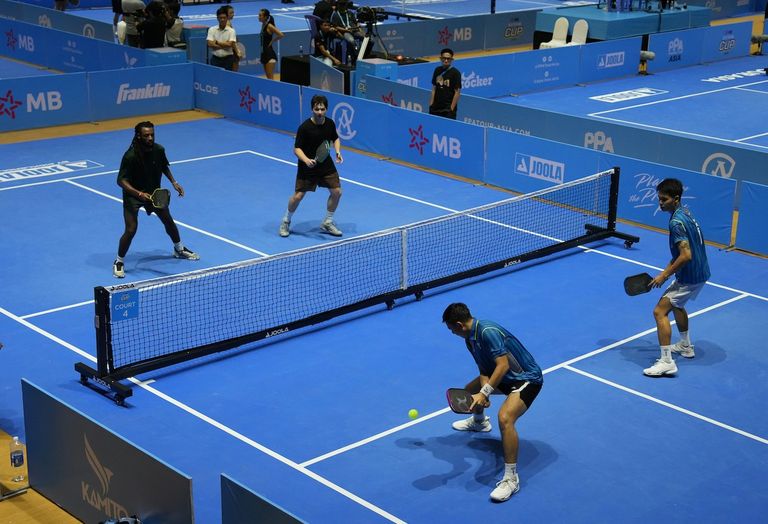
The expansion of public pickleball courts across the 100 biggest U.S. cities has slowed significantly, dropping from 14% growth in 2024 to just 4% in 2026, Axios reported. Indoor expansions have similarly cooled off as retailers become more selective with their growth plans, according to pickleball media site The Dink.
However, the Sports & Fitness Industry Association's 2026 Single Sport Report showed that pickleball participation rose from nearly 20 million players in 2024 to more than 24 million last year. Chaifetz believes that presents a best-case scenario for the remaining pickleball businesses to prosper.
"You have an increasing amount of demand and an increasing player pool that will now be redirected to a smaller supply count of facilities and places to play," Chaifetz said.
The pickleball boom prompted mall operators to lean into the trend as a demand driver throughout 2023 to help fill vacant store space. But the wave of attention for the sport had crested by late 2024, according to FanEquity, a platform that tracks cultural relevance and fan behavior similarly to how financial market analysts watch stocks.
Still, The Picklr and five other prominent pickleball brands continued expanding through the first nine months of 2026, opening more than 50 new clubs during that time, according to The Dink.
Now, the fast build-out in major markets across the country has caught up with the industry.
In Northern California, new pickleball leasing activity has slowed due to oversupply in the market, JLL Sacramento Senior Vice President John Brecher said.
“The market is in a let-the-dust-settle phase,” Brecher told Bisnow. “Operators, landlords and investors want to see how membership ramps up, where the customer demand actually is and which trade areas are already saturated before they commit to the next round of deals.”
The Picklr is the poster child for why operators and landlords alike are hesitant to rush into leases.
Founded in 2021, The Picklr began franchising in 2023 and reached a $59M valuation the following year. The company sold over 300 franchises by mid-2024 and had plans for clubs in more than 32 states by early 2025.
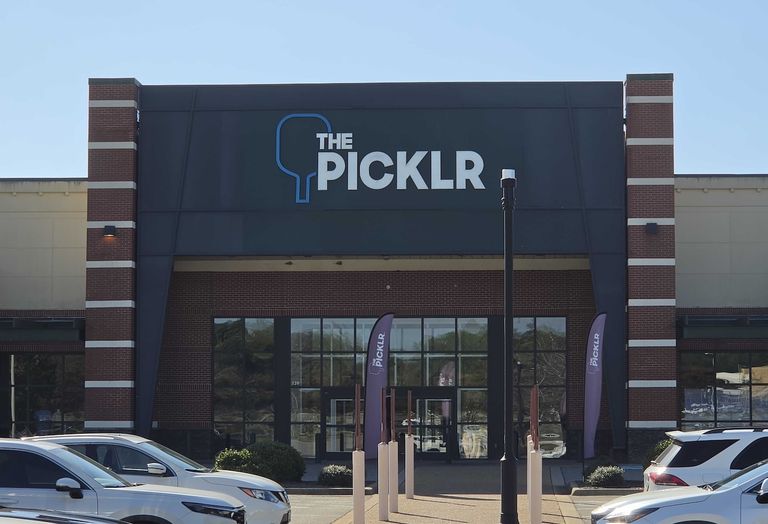
However, its operating footprint grew more gradually than those early projections, as the company had just 76 franchise locations before filing for bankruptcy.
“In a lot of ways, it's somewhat predictable if you look at any high-growth trend or fad … there's always an overshoot,” Chaifetz said.
The Picklr did not respond to Bisnow’s requests for an interview.
CEO Jorge Barragan told the Sports Business Journal that the bankruptcy stemmed from The Picklr’s lease guarantees for around 40 early franchisees that became too costly for the company. The Picklr generated $10.3M in revenue last year but still recorded a $4.4M loss, with total liabilities reaching around $19M by the end of the first quarter of this year.
The company isn't the only chain that has faced financial difficulties in recent years, as PickleRage and Pickleball Kingdom have also shuttered franchise locations.
The economics of small pickleball clubs can prove challenging, as most 10-court facilities have rents of about $30K to $50K per month for spaces of 20K SF to 40K SF, Heleus Holdings CEO West Shaw wrote for The Dink.
Clubs with 10 or fewer courts typically pull in around $8K per court every month, according to industry performance data from Johns Design & Consulting. But a $50K rent plus expenses such as payroll, utilities, upkeep, marketing and inventory can total more than $85K per month, meaning clubs need to make more than $1M per year to break even, according to Shaw.
Private equity and venture capital flooded the pickleball space before the market understood how to properly monetize demand for the sport, according to Painted Hospitality CEO Justin Amick, whose company operates entertainment-driven concepts with bars and restaurants.
While exact figures of pickleball’s U.S. footprint aren’t available, there is likely more than 14.7M SF devoted to the sport at indoor venues, as data analytics company FRANdata reported brands typically need 20K SF to 40K SF and The Club Scout lists 735 indoor clubs.
The retail sector is well positioned to absorb pickleball club closures, as the sector’s third-quarter national vacancy rate was 4.3%, which Colliers noted was near historic lows. While Northern California hasn’t seen any pickleball closures as of late, Brecher said junior anchor space in well-located trade areas remains in demand with a variety of tenants.
Cities like Austin, Seattle and New York have become major pickleball hubs as the sport has grown. But The Picklr's bankruptcy will make investors nationwide think twice before signing on to future pickleball-related projects, Custom Capital CEO Jason Milton said.
“Some of these indoor pickleball court clubs charge $40-$50 a month,” Milton told Bisnow. “If you're in a sunny area and you can play outside, that's free.”
Many pickleball operators are still thriving.
Painted Hospitality opened its pickleball concept, the 33K SF Painted Pickle, in Atlanta in April 2024 with eight indoor courts modeled after London's All England Club. The Painted Pickle also offers a full restaurant and bar as well as miniature golf, a putting green, darts and a stage for live music.
It caters to pickleball players as well as people who just want to socialize, which is why the establishment does a lot of private and corporate events.
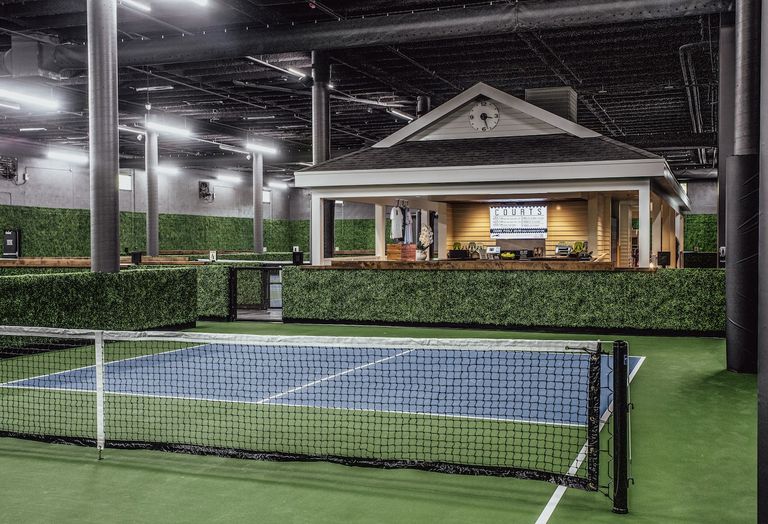
Amick said he believes Painted Pickle is better positioned to withstand an industry shakeout because of its diverse offerings and its decision not to operate as a membership club. He sees membership-based pickleball facilities as vulnerable when consumers cut discretionary spending due to the inflationary economy.
"People are more focused on being able to fill up their gas tanks and feed their families … as opposed to some of the disposable income expenses like memberships,” Amick said.
In New York, club chain CityPickle followed a similar path to Painted Pickle, with its first-class food and beverage offerings helping drive its success, according to Patrick Steffens, Avison Young senior director of leasing and advisory services.
CityPickle has two existing NYC-area locations of 10K SF and 37K SF, as well as a 60K SF location coming to Brooklyn and a 100K SF location to open in Boca Raton, Florida.
Chaifetz said he believes the pickleball businesses best positioned to survive are those that have a diversity of offerings.
“If you're just offering traditional pickleball programming, that's not going to cut it,” Chaifetz said.
While the market is becoming more selective with its pickleball placement, Realtor Melanie Zimmerman, who owns MVP Chicago Real Estate, said landlords are still interested in the sport.
“A pickleball facility can bring additional foot traffic to an area,” Zimmerman said. “Foot traffic can benefit surrounding businesses, though the amount of benefit depends on where and how the facility operates.”
The Picklr’s bankruptcy will influence underwriting for future locations, according to Brecher. Experienced operators with proven clubs will have an edge, and newer operators should expect more scrutiny.
“Landlords will look harder at the strength of the operator actually signing the lease: the franchisee’s own financials, operating experience and local track record,” Brecher told Bisnow. “They’ll rely less on the brand name or a corporate guarantee.”