Barely half of commercial real estate professionals now rate their own business conditions as “good to excellent.”
Two years ago, 65% did.
The industry has never been more ready to make a deal, though. The investment barometer in ULI and PwC’s Emerging Trends in Real Estate 2027, released Tuesday, hit the highest reading in the survey’s history. But the report suggests some of that appetite reflects fund deadlines pushing money out the door — not just conviction.

Futures traders overwhelmingly expect the Fed to hold rates Wednesday, after September’s quarter-point hike, its first since 2023. The 10-year Treasury yield hit 5.3% at the end of September, capping its biggest quarterly jump since 1994.
“Why real estate when I can get 5 percent risk-free?” the president of one development firm told the report’s researchers, who surveyed and interviewed nearly 1,500 industry professionals across the U.S. and Canada.
The report finds that the industry has largely stopped waiting for relief. Returns now have to come from growing income and running buildings better, not from falling cap rates and cheap debt. And limited partners increasingly judge managers on cash actually returned rather than projected internal rates of return.
However, owners do have one tailwind — U.S. construction starts for most property types have fallen to or below the level needed to replace aging stock, a gap the report says favors existing buildings.
Here are nine takeaways from the 162-page report.
1. AI Is Redrawing The Office Map
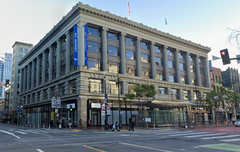
San Francisco jumped from 45th to fifth in the rankings of top markets for investment and development prospects, a rise surpassed only by Knoxville, Tennessee's, and the rebound is accelerating. Leasing through the third quarter reached 12.1M SF, up 49% from a year earlier, Bisnow reported. Office vacancy fell 6.6 percentage points to 27.7%, and CBRE says the city is on pace for record net absorption.
Nationally, office investment prospects improved for a fourth straight year, and downtown office posted the survey’s biggest gain of any subsector.
The report casts Seattle as a possible sequel. The market fell from 22nd to 38th yet logged its best new office leasing through September since 2019, with artificial intelligence-related demand up ninefold, a trajectory that echoes San Francisco’s.
2. Data Centers Lose The Top Spot
After three straight years at No. 1, data centers posted the survey’s steepest single-year fall among asset classes, a slide the report pins on execution.
Demand remains intact. Vacancy is below 2%, and North American leasing in the first half of 2026 topped all of 2025 by nearly 40%, according to Datacenter Hawk research cited in the report.
Getting projects approved is another matter. Local opposition blocked or delayed nearly $68B of projects in the second quarter, according to Data Center Watch. New York Gov. Kathy Hochul in July ordered a one-year moratorium on large data centers, halting about $10B of development.
Power prices are feeding the backlash. Prices on PJM, the largest U.S. grid, are set to rise more than 60%, an increase its market monitor attributes to data centers, and 45.3% of ULI and PwC’s survey respondents named power and grid constraints a top disruptor.
3. Manhattan Pulls Away
Manhattan rose from ninth to seventh in markets to watch, extending a climb from 42nd in 2022. The borough is on pace for its busiest leasing year since 2000, and Class-A asking rents hit a record $85.45 per SF, Colliers data shows. In September, hedge fund Castle Hook Partners set a city record, agreeing to pay $375 per SF for a two-story penthouse atop Related’s planned 625 Madison Ave.
The rest of the region is another story. Brooklyn fell from fourth to 28th, Jersey City from second to eighth and the survey’s “NYC Other” category from 17th to 33rd.
The report doesn’t explain Brooklyn’s slide, but its apartment market is in flux. Multifamily deal count there rose 12.7% in the third quarter, while dollar volume fell 12.8%, according to Ariel Property Advisors. The Rent Guidelines Board’s June vote to freeze rents on about 1 million stabilized apartments took effect Oct. 1, and landlords have sued to block it.
4. Chips And Defense Are Minting New Winners
Dallas-Fort Worth ranked first for the third straight year, followed by Nashville, Miami, Raleigh-Durham and San Francisco. Southern and Southeastern markets claimed six of the top 10 spots, though the authors say the story there is shifting from migration to diversification.
The biggest climbers had a specific industrial engine. Knoxville rose 46 spots to 20th on defense technology and affordability. Columbus jumped from 38th to 19th, anchored by a roughly $28B semiconductor campus, and now ranks third nationally as a data center market, the report notes.
Cincinnati gained 27 places and Boise 25, and Raleigh-Durham, up seven spots, is adding a manufacturing base to its life sciences identity.
5. Las Vegas Falls 50 Places
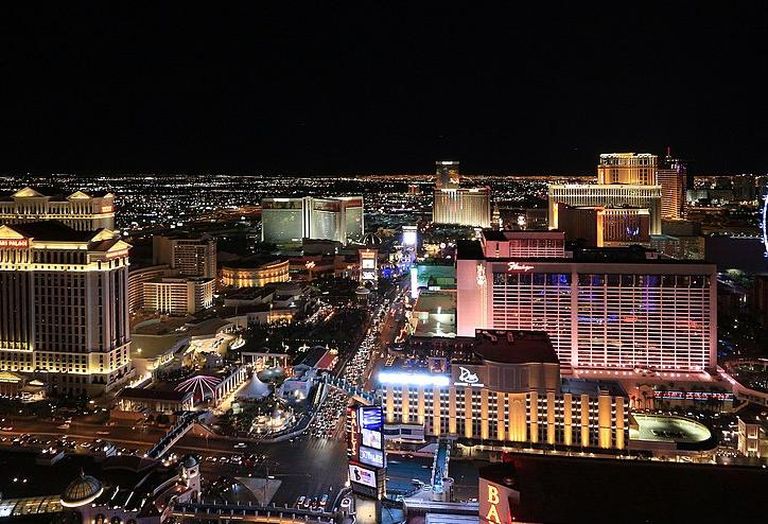
No market fell further than Las Vegas, which dropped from 28th to 78th.
The slide marks the city’s worst tourism year since record-keeping began in 1970, outside the pandemic. Visitation fell 7.5% in 2025, about 3.1 million fewer visitors, according to Las Vegas Convention and Visitors Authority data. Skift tied the drop to fewer Canadian visitors and reduced airline capacity, and the report shows net domestic migration to the metro has cooled sharply.
Boston slid from 15th to 27th after development approvals fell by about half in 2025, which the report attributes to shifting regulations and elevated construction costs. Austin, which plunged to 30th last year, recovered only to 21st as it works through elevated supply.
6. The Distress Is In The Capital Stack
Distress in this cycle is situational rather than systemic, the report finds. Leased, rent-paying buildings are being undone by leverage that no longer works at current rates and by 2017-2020 vintage funds that have run out of time.
Apartments are taking the brunt. Those bought at sub-4% cap rates with floating-rate debt have repriced 300 to 400 basis points. Apartment prices fell nearly 5% in the year through August, while overall prices were flat, and about 8% of multifamily CMBS loans were delinquent in August, Bisnow reported, citing MSCI and Trepp. Northwind Group founder Ran Eliasaf said at a Bisnow finance event to expect more syndicator defaults after the September hike.
Lenders say their patience is running out, and some warn of a day of reckoning if rates keep climbing. With $875B in commercial mortgages maturing this year, ULI’s report says silent foreclosures and negotiated recapitalizations are already outpacing what deal data captures.
7. Everyone Is Using AI, But Few Can Prove It Pays
Respondents ranked artificial intelligence the most disruptive force facing the industry through 2029, ahead of construction costs and power constraints. Almost two-thirds say they are actively using it, and most of those report productivity gains.
The payoff is uneven. One economy extended-stay hotel operator told researchers a staffer with no coding background built roughly 80% of a custom operations tool that an outside vendor had quoted at $400K, for a fraction of that price.
But a survey by software firm Dealpath of 103 institutional real estate professionals, published as a spotlight in the report, found that 97% have built AI into their investment process, while just 19% say it has made their decisions more precise, and 94% check its work most or all of the time.
8. Senior Housing And Medical Office Take The Lead
Strong fundamentals buoyed senior housing and medical office to share the top investment ranking among established subsectors.
Healthcare REIT Welltower said Monday that same-store NOI in its senior housing operating portfolio jumped 21% in the third quarter on 320 basis points of occupancy growth. The company has closed or agreed to $21B of investments this year.
New supply is scarce. Senior housing units under construction fell in the first quarter to a level last seen in 2012, according to NIC MAP.
Medical office occupancy is above 92%, and transaction volume nearly doubled year-over-year, according to the report.
9. Infrastructure Outscores Every Property Type
For the first time, the survey rated four infrastructure categories: energy and renewables, transportation, digital infrastructure beyond data centers, and water and utility systems. All four scored higher for investment prospects than every established property type.
Nearly a quarter of real estate investors surveyed by Knight Frank have or expect to have infrastructure exposure by year-end.
Interviewees caution that these assets demand operating expertise that most real estate firms lack. For managers with that depth, the report says, the opportunity set heading into 2027 is the widest in years.