Pennsylvania officials have released tentative information about a slate of communities where real estate investors will be eligible for federal tax breaks starting next year.
The state has until Oct. 28 to submit its nominations for the second iteration of the federal opportunity zone program, and while it hasn't officially made those nominations yet, the Pennsylvania Department of Community and Economic Development posted a draft map this month showing which census tracts it is considering.

The map shows a pared-back footprint in Philadelphia compared to the first iteration of the program after federal officials sought to steer investment toward rural areas. But it still includes some parts of the city, plus urban areas in the collar counties and other parts of the state like Reading.
"You want to be able to score some wins. You don’t just want to be aspirational,” FisherBroyles partner Brad Molotsky — a Philadelphia-based real estate attorney who specializes in opportunity zones — said about why urban areas still made the cut.
“We gave this benefit to this area, and it was used appropriately,” he said of the state government’s thought process. “You want to create that as a legacy.”
Opportunity Zones 2.0, passed into law with the One Big Beautiful Bill Act last year, is set to go into effect at the start of January. OZ 1.0 was passed in late 2017 as a time-limited program, whereas the new version was written as a permanent fixture in the tax code. The program allows investors to minimize their capital gains tax exposure if the proceeds from a sale are reinvested into a qualified fund that invests in a business or real estate project in one of the OZ census tracts.
The second iteration narrowed the eligibility criteria for which areas can qualify as opportunity zones, and states are now submitting new OZ maps to the U.S. Department of the Treasury for review.
Pennsylvania's draft map includes a disclaimer that it isn't finalized, and it says it has left 10 OZ slots available to consider adding more tracts before next week's deadline.
While most sections of Philadelphia have fewer tracts included in the draft map of OZ 2.0 than in the first iteration, Southwest Philly was the exception.
The area gained four new contiguous tracts, primarily along Woodland Avenue between 46th and 65th streets. The section around Bartram Park included in OZ 1.0 isn't set to be nominated again.
In North Philadelphia, the proposed map includes a more compact collection of tracts, primarily along Broad Street near the neighborhood’s Amtrak station and Temple University.
The school has an ambitious 10-year plan, including an expansion of its on-campus housing portfolio. Molotsky said Temple and colleges around the state could use the OZ designation to expand their footprints via third-party developers.
“Universities aren’t typically in the business of building buildings,” he said. “This is an ability to have someone else build off-balance-sheet buildings for them.”
Sections of Fishtown, Kensington and Brewerytown included in OZ 1.0 didn't make the cut in DCED’s draft map.
Neither did several previously included tracts in Northwest Philly and far North Philadelphia. There is just one nomination in Northeast Philly, down from the roughly half a dozen included in OZ 1.0.
The neighborhood's lone tract slated to roll over includes part of the Tacony waterfront, where One River Development plans to build an $80M marina.
Molotsky said One River co-founder Dana Russikoff, a client of his, was in close contact with a variety of local officials in an effort to ensure the site was included again.
There are just two South Philly tracts set to be nominated, in Gray’s Ferry and Point Breeze, down from four in OZ 1.0.
West Philly’s sprawling OZ 1.0 footprint has also been downsized significantly to an area entirely north of Market Street and west of 36th Street.
But directly across the city line, two sections of Upper Darby and the entirety of Millbourne were included in DCED’s tentative map in a part of Delaware County that was completely excluded from OZ 1.0.
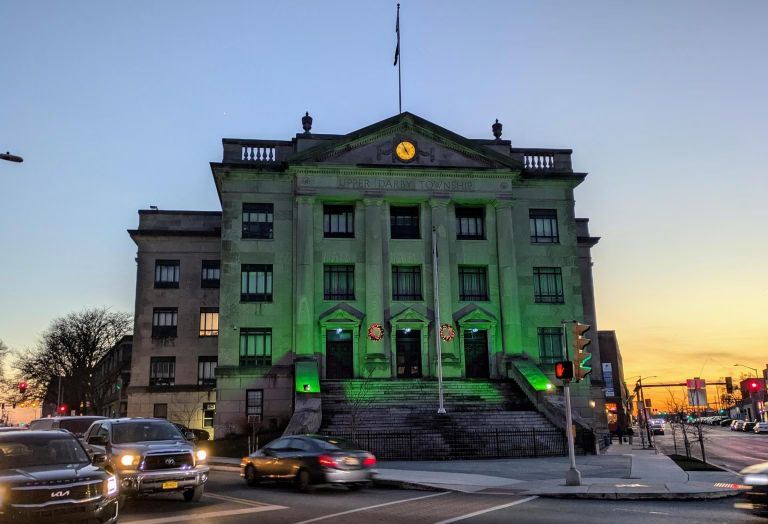
The two tracts butt up against the 69th Street Transportation Center, where a series of trolleys converge with the Market-Frankford Line. One of them also includes a bustling retail cluster centered on the H-Mart grocery store directly across from the station.
Upper Darby Planning Commissioner Robert Ford hopes the potential designations spur more residential construction in those neighborhoods.
“We’re busting at the seams in terms of housing,” he said.
While the residential tracts in that area still have their low-density suburban zoning, Ford said the opportunity for new funding and development could spur change on that front.
“I do know, talking to colleagues across Upper Darby, finding ways to make zoning not be a hindrance is high up on the list,” he said.
Some other urban sections of Philadelphia’s collar counties got an OZ boost in the tentative map.
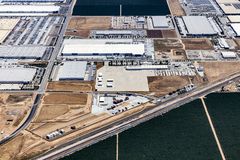
Chester’s waterfront, which has seen some logistics-centric industrial construction in recent years, was rolled over into the tentative map.
State officials plan to include two additional tracts into the city near the Chester Transit Center, where Mayor Stefan Roots and the Chester Economic Development Authority are compiling land with aspirations for a transit-oriented mixed-use project.
Part of Norristown’s Schuylkill River waterfront was included in OZ 1.0, but this time around, DCED plans to nominate the core of the city’s downtown, which includes the seat of Montgomery County’s government and a site where MM Partners plans to build a 116-unit multifamily building.
None of Coatesville made it into OZ 1.0, but more than half of the small industrial city in the heart of Chester County is set to be included in 2.0.
It has an Amtrak station, which Ford said could be a hub for new projects in the city and would allow developers to potentially take advantage of Department of Transportation funds available for transit-oriented development.
Beyond the Philly suburbs, other small urban areas are included in the draft OZ 2.0 map.
State officials picked six districts in Reading, up from the four included in OZ 1.0. Molotsky attributed this to a coordinated local lobbying push and an effort to compile parcels to support larger projects.
“Reading is very focused on putting the right pieces in place,” he said.
“That to me is smarter than hoping something happens,” the attorney added.
Shuman Development Group President Alan Shuman, one of the biggest real estate players in Reading, is considering using OZ 2.0 funding for a new shopping center he is building at the former Glidden Paint Factory.
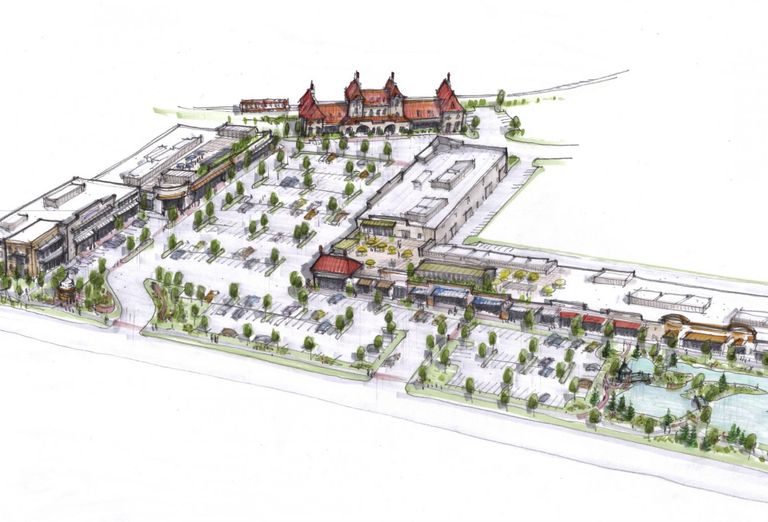
He said the program can make a big difference in major cities where projects regularly top the $30M threshold the program sees as the floor for OZ, but Shuman was skeptical that Reading could field a large number of projects that big.
“Most of the big opportunity zone funds prefer $100M,” Shuman said.
“The typical project in Reading is $2M or $3M,” he added.
One of the main ways OZ 2.0 differs from 1.0 is the additional benefits it presents to tracts categorized as “rural,” which is defined as any municipality outside a contiguous urban area with 50,000 people or fewer.
Developers in those areas could get a 30% basis step-up as opposed to OZ’s standard 10% and would only need to make a 50% substantial improvement instead of 100% to qualify.
“That’s kind of magic,” Molotsky said.
Some dense tracts that technically fit the rural designation are set to be nominated, including swaths of York, downtown Hazelton and a section of State College adjacent to Penn State’s main campus.