The use of artificial intelligence is driving the world's largest companies to reassess their workforce — and workspace — in the pursuit of efficiency.
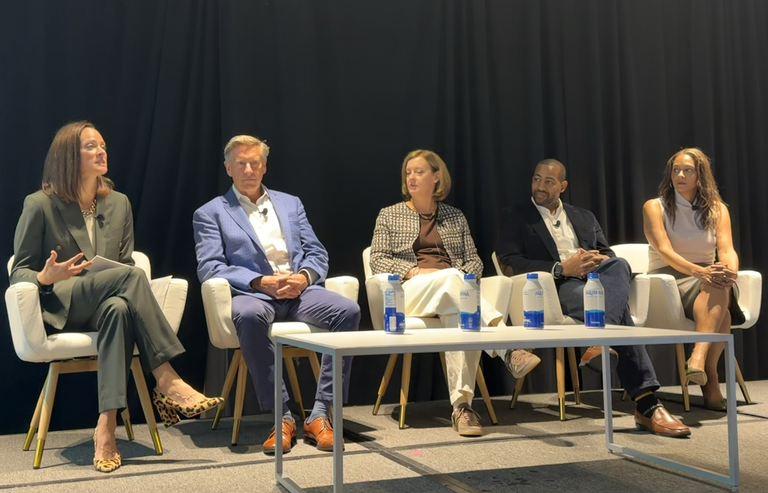
The technology is reshaping how employees work and collaborate, prompting employers to reevaluate their office layouts to promote more integrated workspaces, workplace and real estate executives for Microsoft, Citadel, Amazon and Coca-Cola Co. said during a panel at the Urban Land Institute's fall meeting Tuesday in Miami Beach.
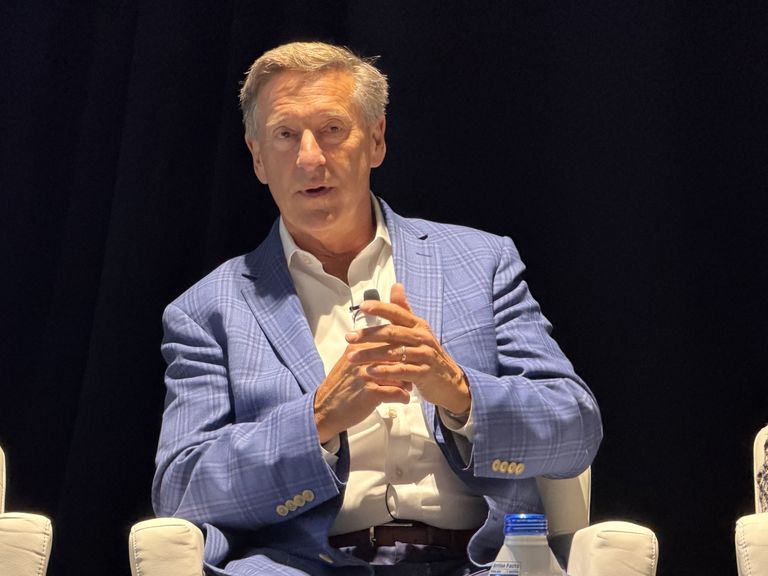
Not only are companies starting to use AI to design their spaces, but they are also reconfiguring their spaces away from isolated workstations and toward a more open and collaborative environment, the executives said.
"I think AI is going to have a big impact on corporate, like our spaces that we use," said Terri Lasoff, senior director of global real estate portfolio for Coca-Cola, which is using AI for internal data, generating ads and throughout the creative process.
"When we think about our spaces at work — and I know we've moved there with hybrid work where you have less 'me spaces,' more 'we spaces' — but does AI continue to drive that where the reason you're coming into the office isn't to do the heads-down, build the deck, do the report?" she added.
AI has already created a fundamental difference in the office market, as companies focused on the technology are leasing office space at rapid rates, making them among the most active sectors in the market.
But the technology's growing adoption is also expected to keep office-using job growth flat and has led to mass cuts to company headcounts, fueling growing concerns that automation is taking over the workforce.
In a global survey of more than 6,000 employees and business leaders, 40% said they expect AI to help employees be more productive, while 28% expect it to reduce headcount, according to an October Workday report.
Microsoft announced earlier this week that it was offering voluntary buyouts to about 60,000 employees, more than a quarter of its global workforce, in addition to the 4,800 employees the company announced it would lay off in July, Reuters reported.
When the news broke Monday, Microsoft's head of global workplace services, Elizabeth Schryer, was on a plane to Miami for the conference. She said onstage it made her think about what it meant for the workspace.
"I would really say that it points to the biggest thing, which is workforce shifts not just in size but also in location and the move to bring people together in the office experience and collaboration," Schryer said.
"AI in general is huge for everybody," she added. "It's huge for all of us ... including companies who are deep in the middle of it [and] are trying to figure out what it means to us and our teams and our businesses, the domain in which we work, and how to use it."
Microsoft, which expects to spend roughly $175B on AI infrastructure in 2026, is developing new AI models and using it internally in many ways. The workplace strategy team is starting to use AI to design and create renderings of proposed workspaces like offices, campuses and event areas, reducing time and cost, Schryer said.
Amazon, among the most aggressive companies in its push to use AI to reduce its payroll, announced last year that it would cut 14,000 corporate positions and plans to cut as many as 30,000 more as AI pushes quicker innovation.
Sean Lee, the company's global real estate and facilities leader, said his team's AI usage jumped from roughly 7% in January to more than 90% this month, allowing team members to spend more face time with clients rather than at their desks.
"We're extremely lean as a team, so bandwidth is constrained," Lee said. "What we found is AI, as a supplement to work, is creating bandwidth so that people are doing higher-level thinking at this point.
"They can knock out papers faster, they can put presentations together, they can do all of that stuff really easily, which is then giving them the time to take a step back and look at what's going on with my customer."
Citadel hasn't made any moves to cut jobs because of AI. On the contrary, it is building its own headquarters tower in Miami and another in New York, two of the biggest office projects in the country. The hedge fund's billionaire founder and CEO, Ken Griffin, owns the combined 3.5M SF office towers underway, but he has shared concerns over the danger AI poses to white-collar jobs.
Still, the firm is leveraging AI internally to "further accelerate their research process," Griffin said at a New York conference last December, Business Insider reported.
Citadel is focused on employee synergy, Chief Workplace Officer Paul Darrah said, and is often reconfiguring spaces to improve upon it, especially as internal teams realign and move around.
That includes taking the reins on moving a landlord's staircases or taking over the fire exits when they lease space in an office building to boost efficiency and interconnectivity, he said.
"I'm going to say our competitive advantage is our in-office culture," Darrah said. "We bring employees together to collaborate. We build community, and so for us, being in the office is paramount.
"How we think about delivering our workplace, to ensure high performance of our teams but also elevate the experience of the employee — both of those things are really important."