Manchester's office developers get it. Manchester's office landlords largely get it. But do tenants realise they have to pull their weight to achieve Manchester's sustainable building targets?
According to one consultancy, fresh from completing a rare BREEAM-rated fit-out on an older Manchester office block, not nearly enough tenants are prepared to do their bit.
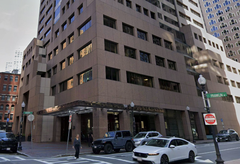
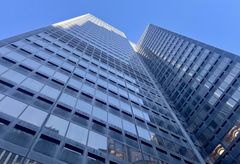
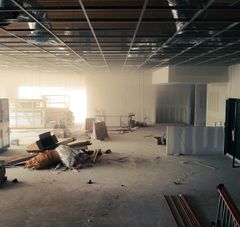
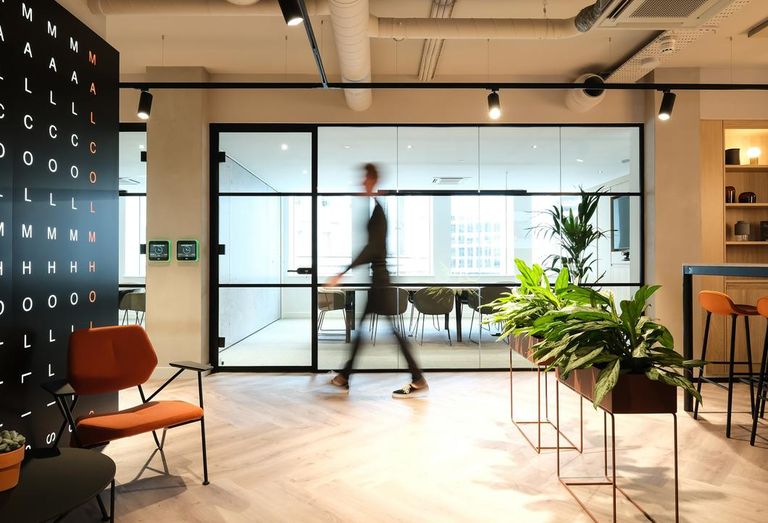
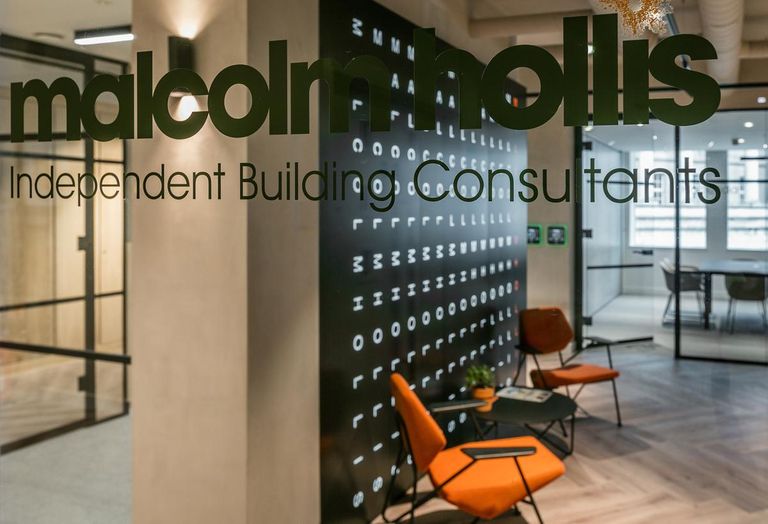
Building consultancy Malcolm Hollis has achieved an “excellent” BREEAM sustainability rating for its newly refurbished 3,600 SF suite at the 1960s office block, Lexicon House, near St Peter's Square.
The firm says retrofitting older buildings through sustainable fit-outs is essential if Manchester is to reach its ambitious carbon targets — the stated goal is to become a zero carbon city by 2038. The city council’s action plan, which it started enacting in March, relies on real estate to play a mighty part in a short, sharp reduction in carbon outputs.
BREEAM data for office reburbishments shows just 384 refurbishment projects have been assessed, only six of which are in Manchester. Twelve are in Birmingham.
“I think it’s a case of a lot of occupiers paying lip service to sustainable building issues without doing much about it, and the burden has fallen on developers and landlords who have had to take the initiative and make the strides,” Malcolm Hollis in-house BREEAM assessor Stephen Bickell said.
“Everyone in property has a responsibility to deliver sustainability in the most efficient way possible if Manchester is to meet its target of carbon neutrality by 2038. That is a tough target, and much of the carbon output is associated with property which includes both landlords and tenants because everybody needs to do their bit.”
Bickell also called on landlords to offer more sustainable fit-outs as standard.
“It is a sad indictment on building professionals that it is not offered as standard, but to be fair the market is waking up to the specifications required, but hasn’t adopted them on much of a scale yet.”
Cost does not need to be an issue: The standard assumption that fit-out could add up to 5% to construction costs seriously overstates the potential of sustainable fit-outs, he said.
“There would not necessarily be any significant cost, it could in fact be cost-neutral or save the tenant money. I hope BREEAM fit-out standards will show how sustainable specifications can in fact add value to a traditional building when completing retrofitting,” he said. “The issue is to look about maximising value over the life of the fit-out, not just looking at short-term costs or value engineering.”
Malcolm Hollis’ specialist in-house team project managed the fit-out. The firm also provided in-house mechanical and electrical consultancy and CDM principal designer services. Local firm Kin were appointed as interior designers and TMT Group delivered the build on-site.
To gauge the success of the project, an internal staff workplace survey was conducted before and after the office move. The results revealed a 58% increase in general workplace satisfaction and a 10% improvement in staff mental and physical wellbeing following the move.
“The fact that the office is set within a building constructed in the 1960s has also shown the market that sustainable workplace practice can be realistically achieved within older properties, and not just new builds," Head of Energy and Sustainability Anne Johnstone said.
The Manchester Climate Change Board has developed a draft zero carbon framework for 2020-2038 and started work to produce a draft action plan for 2020-25.
A front-loaded carbon budget means that overall emissions must fall sharply in the next few years. Of the 15 million tonnes of carbon dioxide the council hopes to eliminate, not less than 6.9 million tonnes will need to go between 2018 and 2023. A further 3.6 million will be eliminated from 2023-27.
More than 50% of the total reductions required will be short term. The council's aim is to ensure that all new buildings are carbon-neutral by 2028.