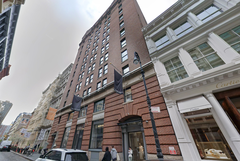
Houston office investors should plan to spend double a building’s purchase price.
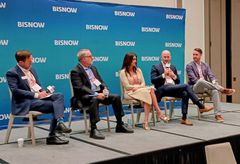
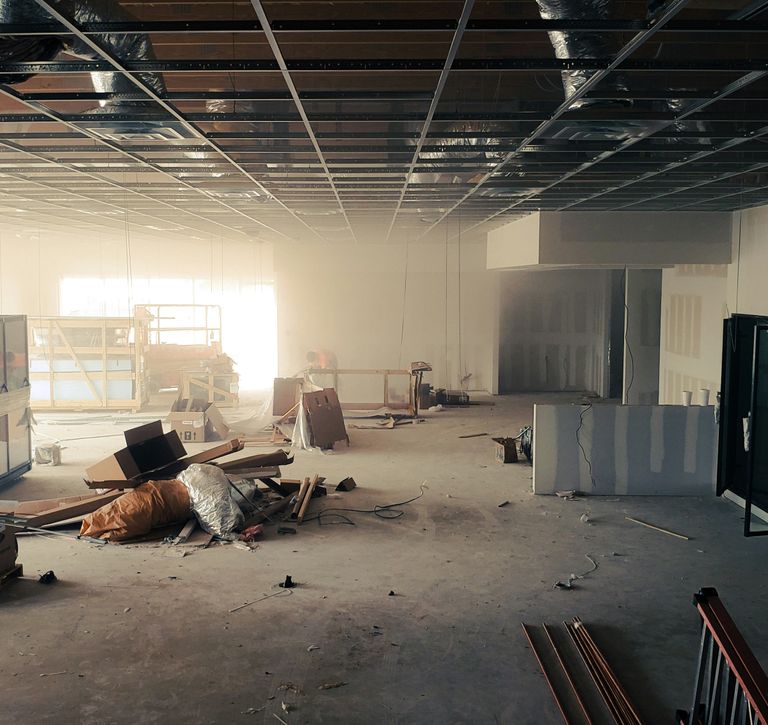
Older office buildings need upgrades and renovations that will cost just as much as the building itself to compete for tenants, brokers said at Lee & Associates Houston's third-quarter market briefing on Tuesday. And increasingly, they said, landlords getting work done are not able to pay for it.
Brokers check for a mechanic's lien, a legal document filed by contractors who haven’t been paid for their work, as a standard practice before bringing tenants to tour an office building, Lee & Associates co-Managing Principal Chris Lewis said. With loans coming due and financial distress spreading throughout Houston’s office market, the presence of liens is “quite prevalent” lately, he said.
“That's probably not a good sign that they're going to be maintaining the building well,” Lewis said.
Identifying these issues early can prevent trouble later, as tenants have high standards in Houston’s split office market, where rents are rising due to demand for top-tier space. The metro has a direct vacancy rate of about 23% — well above the national vacancy rate of about 18% — with much of that concentrated in old, poorly located and obsolete buildings.
Tenants may think they’re getting a good deal on an acceptable building recently acquired by a newer investor. But if that investor can’t afford to maintain the building’s mechanical, electrical and other systems, the tenant will be itching to leave long before their lease expires, Lewis said.
“For the owners that aren't putting money into the assets, they're going to move,” he said. “They're going to have air conditioning problems. The elevator doesn't work. Things like that. You only put up with that for so long.”
There’s been a shift from institutional to local office investors in Houston. Some of them may not realize that their $10M building also needs $10M of work, Lewis said. A lack of capital to invest in maintenance and upgrades will send tenants scattering, unless the building trades to an institutional investor.
“We are seeing a little bit more institutional capital interest in Houston on the office side than we have seen, but it's still not on the radar of the big institutions yet,” he said.
If these buildings are not sufficiently upgraded and maintained or traded, there is a significant chance that they will empty and fall into the obsolete category, for which options are extremely limited.
“Most of these office buildings need to be torn down,” said Jason Dannatt, who specializes in commercial resource capital for Lee & Associates. That includes some midblock office buildings that never should have been built and some 1970s vintage product, he said.
“There are millions of square feet of office buildings that need to be taken off the sheet because no one will ever occupy them ever again, because they don't make sense,” Dannatt said.
In some cases, even demolition is not financially feasible. Asbestos can add tens of millions of dollars to the upgrade or demolition costs, Dannatt said.
But despite the challenges, the continued flight-to-quality trend is pushing market rents to all-time highs. The weighted average asking gross rent rose to about $31.50 per SF in the third quarter, 4% above the 2025 average of $30.26 per SF, according to Lee & Associates data.
“The good stuff is good, and the bad stuff is bad, and there's not much in the middle,” Dannatt said.