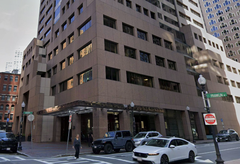
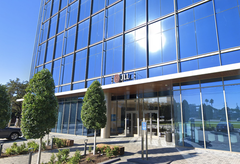
When Weil, Gotshal & Manges announced Wednesday afternoon that it would be shutting down, it wasn’t just the attorneys wondering what would happen to their desks.
Law firms have been one of the most active tenant groups this year, signing 12.2M SF of leases during the first half of 2026. But the wind-down of Weil Gotshal — which leases more than 830K SF of office space around the country, according to a Bisnow analysis of CompStak data and public records — could present a challenge for trophy towers relying on lucrative law firm leases to support their rent rolls.
“We really have never seen it before,” said Brandon Charnas, co-founder of New York-based brokerage Current Real Estate Advisors. “This reprices law firms as tenants citywide.”

The closest precedent is Dewey & LeBoeuf, which filed for bankruptcy in 2012 under a heavy debt load. Weil, by contrast, was considered one of the safest tenants in office until this month.
Weil Gotshal is one of the country’s most prominent law firms, with about 1,200 lawyers worldwide. It had entered merger talks earlier this month with fellow white-shoe firm Willkie Farr & Gallagher as it tried to play catch-up after losing one of its top attorneys in the ongoing war for legal talent.
After those talks fell apart last week, Weil brought in Davis Polk to advise on a potential restructuring. On Wednesday, the firm’s leaders announced it would wind down, a stunning reversal for a firm that was negotiating a merger just weeks ago. Weil didn’t respond to a request for comment.
The news caught at least one owner off guard, a landlord who leases to the law firm told Bisnow on the condition of anonymity Wednesday afternoon when restructuring rumors were still swirling. The landlord hadn’t heard from Weil Gotshal, they said, and didn’t know what the firm’s plans were for its space in that office building.
The law firm is light on debt but heavy on its lease obligations, according to The Promote. Bisnow’s analysis of CompStak data and public records found Weil holds 12 leases across 10 U.S. markets. Most are larger than 35K SF, and most were signed or expanded since the start of 2025.
The firm leases:
37K SF at 1001 Boylston St., Boston
69K SF at The Crescent, 100-300 Crescent Court, Dallas
3,710 SF at 600 Congress Ave., Austin
390K SF at 767 Fifth Ave., New York City
45,280 SF at 600 Madison Ave., New York City
28K SF at 700 Louisiana St., Houston
100,950 SF at 2001 M St. NW, Washington, D.C.
18,580 SF at 1395 Brickell Ave., Miami
7,950 SF at 600 Montgomery St., San Francisco
59K SF at Shore Center in Redwood Shores, Silicon Valley
26,970 SF at BXP’s 4 Embarcadero Center, San Francisco
47,300 SF at 1950 Avenue of the Stars, Los Angeles
BXP President Douglas Linde suggested during BXP’s Wednesday morning earnings call, when it was still unclear whether Weil would restructure or fold, that the General Motors Building space could be re-leased at much higher rents.
“There is a vast gap between where the in-place rent is at the General Motors Building and where we believe or perceive the market is,” he said.
But Weil Gotshal is BXP’s ninth-largest tenant, according to the landlord’s most recent quarterly filing. Even for a landlord of BXP’s size, a departure like Weil Gotshal’s could cause problems when the skyscraper’s $2.3B mortgage comes due in June, Crain’s New York Business reported.
“Any disruption to the building’s net operating income could impact the refinancing,” Piper Sandler Managing Director Alexander Goldfarb told Crain’s. “If something unforeseen happened, they would have to market the space, find a tenant, and build it out.”
Other owners could face similar difficulties. Weil Gotshal is also Hudson Pacific Properties’ ninth-largest tenant, according to a Q1 2026 filing with the Securities and Exchange Commission.
Its other large leases include 69K SF at Crescent Real Estate’s The Crescent in Dallas and 101K SF at Stream Realty’s 2001 M St. NW in Washington, D.C.
BXP didn’t respond to a request for comment, and a spokesperson for Crescent Real Estate declined to comment. It isn’t yet clear how Weil will handle its lease obligations as it winds down or how much its landlords will ultimately recover.
Outside of trophy towers, some landlords may struggle to backfill the space after Weil departs, brokers told Bisnow.
“You get back a 30-year-old space that needs to be demolished, and you have minimal security deposit from what appeared to be a great tenant — you're in a pickle,” said Darell Handler, president of boutique office brokerage Handler Real Estate Organization.
Finding a new tenant for the space might prove tricky unless landlords can lease to another law firm, brokers said. Tech firms, another group of tenants with a voracious appetite for space, are less likely to take former law firm space because they generally want open floor plans rather than rows of private offices, Charnas said.
The firm’s closure could also have wider implications for how the office sector views a previously reliable tenant type. Big law firms have long been considered Grade A credit tenants, but Weil Gotshal’s wind-down may change how law firms are viewed by office landlords and how they structure leases, Charnas said.
“That is going to be very interesting to see, how this affects security deposits and other means of protection that landlords are going to have to implement going forward, knowing that they can no longer rely on a corporate guarantee of a law firm,” he said.
The landlord who spoke to Bisnow on the condition of anonymity echoed Charnas.
“It could change landlords’ expectations or strategies around how they securitize those leases in ways that they haven’t in the past,” the landlord said.
“I think that it’s going to have a psychological effect on the market going forward,” Charnas said.