Even as its leasing success continues and many of its malls remain profitable, PREIT is running out of time to get out from under its massive debt.
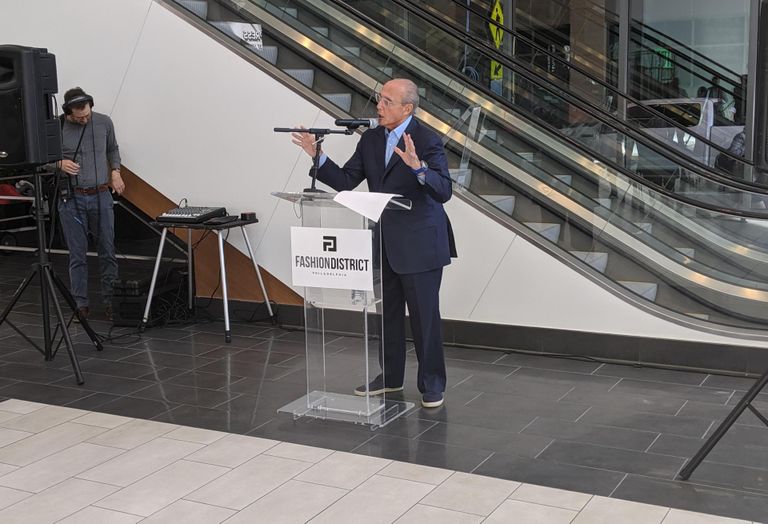
The Philadelphia-based mall REIT is exploring options to address its debt situation, including selling some of its best malls or the company itself, CEO Joe Coradino said on the company's Q3 earnings call Tuesday.
PREIT reported a net loss of more than $71M for the quarter, an 87% increase from Q3 2021, despite a slight gain in revenue over the same interval.
At issue is the company's $2B-plus debt load, which has a weighted time to maturity of 1.1 years, with only a few months' leeway in the form of extension options.
PREIT exercised one such option in October when it extended the maturity of its $246.5M mortgage on Cherry Hill Mall in South Jersey, the best-performing mall in its portfolio. That move bought the company six months, but a further $150M of debt is set to mature by the end of this year, according to the quarterly report.
PREIT had $36.4M of interest expenses and over $28M worth of depreciation and amortization costs at its malls in the third quarter, compared to $32.4M of interest and over $29M worth of depreciation and amortization in Q3 2021.
Almost 42% of its total debt is floating-rate, including over two-thirds of the $973M it owes across two term loans, neither of which can be extended past the end of next year. Debt service payments for the term loans approach $100M per year, according to PREIT's report.
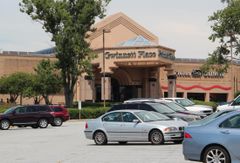
To date, PREIT has focused on raising capital by selling its worst-performing malls, as well as outparcels and land for development at malls it intends to hold. At Moorestown Mall, which has continually struggled in the shadow of Cherry Hill Mall, construction began in Q3 on a Cooper University Healthcare facility and a 375-unit apartment building on parcels that had been a vacated Sears anchor and unused land, Coradino said on the earnings call.
In the spring and summer, PREIT was already struggling to find ways to address its debt directly. As the Federal Reserve's continued aggression toward interest rates has made new debt more expensive, PREIT's situation has grown direr.
"We think the financing challenges that all real estate owners are experiencing is related to more than just interest rates," Coradino said in response to a submitted question. "We see tighter underwriting standards, valuation uncertainty and negative undertones regarding certain sectors have led to virtually frozen credit markets."