The planned redevelopment of a defunct Gwinnett County mall could soon be eligible for federal tax breaks after Georgia submitted nominations for a program designed to spur investment in distressed communities.
Georgia Gov. Brian Kemp nominated 235 census tracts across the state for the opportunity zone 2.0 program, which offers tax breaks to developers to steer investment toward lower-income areas. If the zones are certified, a spate of prominent redevelopment projects in those areas could get financial incentives, potentially speeding up their timelines.
The proposed map includes 115 tracts in rural areas of the state, out of a pool of nearly 950 tracts that were considered, according to data compiled by Opportunity Zone Invest.
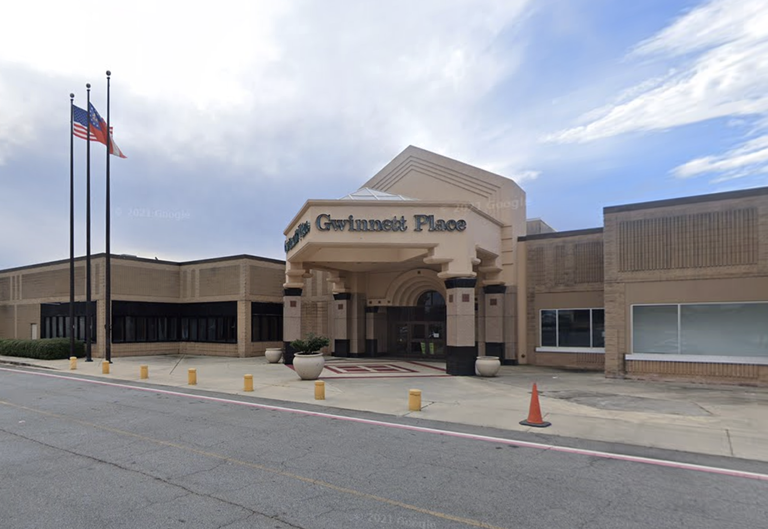
Nominated tracts in Metro Atlanta include 31 in Fulton County, a dozen in DeKalb County and seven in Cobb County, according to the list. Georgia also nominated 13 census tracts in Gwinnett County, including land that houses Gwinnett Place Mall, which the county has targeted for a major mixed-use redevelopment.
“These designations represent a tremendous opportunity to attract new private investment which will foster economic development and expand opportunities for revitalization,” Gwinnett Economic Development Division Director Alena Green said in an email to Bisnow.
“This program is a unique opportunity to introduce a new funding mechanism into our toolkit,” Green said. “Increasing project financing and construction costs can limit development opportunities, so we view the ability to add funding diversification as a vital step forward to bringing new investment into Gwinnett.”
Last year, the county’s redevelopment arm tapped CBRE to begin plans to bring in a master developer that would transform the now-closed indoor Gwinnett mall into up to 3,800 new housing units, 55K SF of retail, a nearly 5-acre park, office space and an international community cultural center.
CBRE issued a request for proposals last year, a submission process that was slated to close last December.
Created under the Tax Cuts and Jobs Act of 2017, the first iteration of the opportunity zone program was designed to spur private investment in economically challenged and low-income communities across the U.S. It allows investors to redeploy capital gains to projects and businesses in OZs to defer taxes.
The 2.0 program, enacted under President Donald Trump’s One Big Beautiful Bill Act, makes the program permanent, with new designations made every decade starting on Jan. 1, 2027.
To date, the Department of the Treasury has designated more than 8,700 census tracts in the U.S. for the program, including 260 tracts in Georgia. Georgia submitted its nominated opportunity zone 2.0 census tracts in September. Certified zones would take effect in January.
Another major redevelopment effort in Gwinnett County, a planned mixed-use hub on the site of a former fiber-optics plant, also falls under one of the nominated tracts, according to a Bisnow analysis of the state’s interactive OZ map.
In March, the Urban Redevelopment Agency of Gwinnett County tapped CBRE to seek developers to transform 106 acres on the site of the former OFS campus, now dubbed Gateway Gwinnett, into a mix of apartments, office, retail and industrial.
Other projects situated in the proposed 2.0 zones include RBH Group’s Atlanta Teacher’s Village redevelopment, which is slated to create 430 income-restricted apartments in a 33-story tower in Downtown, and the Mall West End redevelopment, which is slated to transform an ailing mall into roughly 1,000 residential units, a hotel and retail.
Georgia-Pacific’s headquarters in Downtown Atlanta also falls in a nominated tract, but the paper giant scrapped plans to redevelop part of its 51-story skyscraper into mixed-use due to project costs.
Sherman Standberry, an Atlanta-based certified public accountant who advises clients on the tax benefits of opportunity zones, told Bisnow in an email that he is “personally happy about the census tracts connected to Fulton County as there is already strong potential for residential and commercial redevelopment.”
“Many of my clients are interested in areas close to the Atlanta metropolitan area,” said Standberry, who is CEO of the firm My CPA Coach. “Tracts in Savannah may also present a strong investment opportunity.”