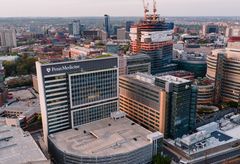
When students returned to the University of Pennsylvania and Drexel University for the fall semester, a massive new building was waiting for them: a 34-story student housing tower called The Mark with 909 beds and high-end amenities like a pool, gym and outdoor grilling area.
The developer, Landmark Properties, told Bisnow it brought the building to about 80% occupancy ahead of its debut semester. It is pacing higher for next year, with 50% already full just two weeks after launching preleasing, putting it in the top tier of the student housing firm’s portfolio.
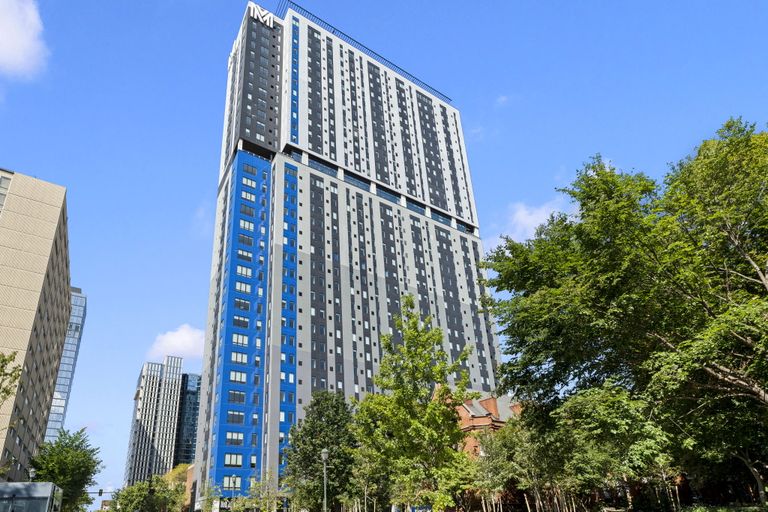
The firm completed another 715-bed project in 2023 that reached nearly 100% occupancy within two years, and that project came one year after a separate developer delivered a 1,187-bed building nearby.
This supply surge has made West Philadelphia’s University City neighborhood an even more institutional student housing market, and it has brought hundreds of student renters out of traditional market-rate apartments. This is putting pressure on some landlords of older apartments in the neighborhood while also bringing down rents and freeing up units so more people can afford to live there.
“These student housing projects, if they're located really thoughtfully, can reduce some of the competition for traditional rental housing,” University City District CEO Sarah Steltz said.
“It's our hope that they could help make the neighborhoods more affordable for nonstudent residents,” she added.
However, the student housing development pipeline in the neighborhood has now hit zero, and that isn’t expected to change anytime soon.
While Landmark remains bullish on prospects for developing in the submarket, a restrictive affordability overlay for new multifamily construction in much of West Philadelphia has kept the firm from committing to any new builds.
“The challenge right now is whether new development is viable with the overlay,” Landmark Senior Director Aaron Stange told Bisnow.
Steltz said projects like The Mark have a positive impact on the immediate neighborhood, including boosting demand for ground-level retail.
“The density of development like the Mark, they can improve the foot traffic and make a meaningful difference for neighborhood businesses,” she said.
The project primarily targets undergraduate students at Penn, where freshman enrollment has grown steadily over the past decade, according to Yardi. Stange expects that institution to grow in the coming years.
Drexel is experiencing some financial issues that have had an impact on enrollment. It added just 1,918 freshmen last year, down from 3,353 in 2018, according to Yardi.
The situation doesn’t appear to have had an impact on Landmark’s previous building, the Standard at 119 S. 31st St., which was completed in 2023 to serve Drexel. It was fully stabilized and at nearly 100% occupancy within two years, Stange said.
That project came one year after CSC Coliving and Alterra Property Group delivered the 409-unit, 1,187-bed Mason on Chestnut in April 2022, according to Yardi.
Amid the wave of new supply, Yardi predicts that student housing rents will grow 1.4% and 1.8% per bedroom for buildings serving Penn and Drexel, respectively, between 2017 and 2029. That is lower than the 3.3% rent growth the analytics firm expects in the top 200 student housing markets.
The broader West Philadelphia multifamily market, which also serves students to some degree, has seen muted year-over-year rent growth as well.
The metric remained negative or flat through all of 2025 and reentered positive territory for the first time at the start of 2026, according to Yardi. Rent growth reached 1.6% in Q3, which was the neighborhood’s first quarter above 1% since Q4 2024.
As Yardi tracked a 44% surge in Drexel’s freshman enrollment numbers between 2016 and 2018 and Penn consistently placed in the top 10 of U.S. News & World Report’s university rankings, investors had a lot of optimism about owning housing close to University City a few years ago.
That hasn’t panned out in some cases, according to Trophy Commercial Real Estate Managing Partner Craig Thom, a broker who has sold properties in the neighborhood.
Multifamily properties tend to go for about $170K per unit in West Philly overall, but between $250K and $300K in core University City proper due to the $100 to $200 monthly rent premium owners can charge in comparison to the broader neighborhood, he said.
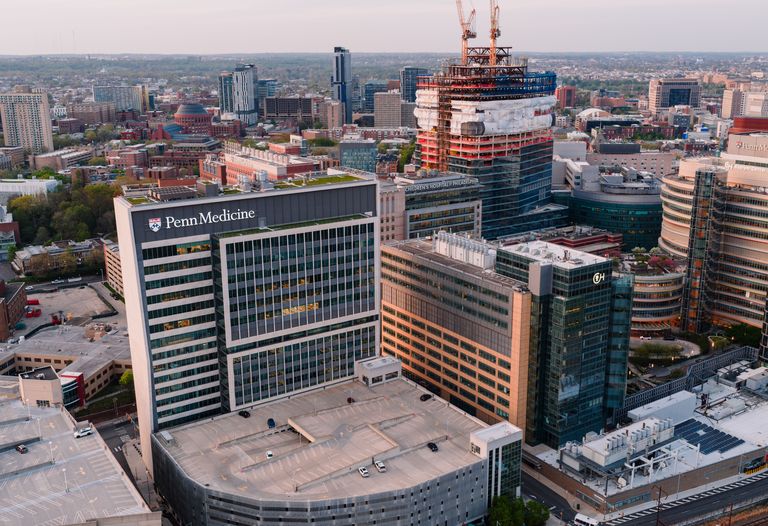
Thom found that many investors overestimated how far into West Philly that rent premium would extend and are now courting young professionals and families that can’t or won’t shell out as much.
“A lot of these people that bought properties that they thought were close enough to universities to get student housing, they are now realizing that they're not getting the students that they wanted, so they have to reposition,” he said.
Overall multifamily occupancy in West Philly was at 93.4% in September, which was lower than the roughly 95% seen citywide.
Thom expects that vacancy in the neighborhood will decrease in the coming months as the city continues to work through the supply glut of projects that got underway in time to qualify for a development tax abatement that expired in 2022.
Now, University City is expected to field little to no new purpose-built student housing in the coming years.
High interest rates are hampering new construction nationwide, and Stange said University City student housing isn’t an exception. But much of West Philly is facing another barrier: the Mixed Income Neighborhoods Overlay.
The legislation, passed in 2022, requires 20% of any new apartment building with 10 units or more to be affordable for families making 40% or less of the area median income.
The Mark was entitled before the implementation of the overlay, which has drawn sharp critiques from the neighborhood’s multifamily players as a major impediment to new supply.
While Steltz said there is a carve-out for universities to construct new dormitories, purpose-built student housing projects like Landmark’s new buildings are lumped in with the rest of the multifamily sector.
“The issue in Philadelphia is that the MIN overlay cannot be financially absorbed while meeting return expectations within the market,” Stange said.
“There are projects that have been entitled,” he added. “They’re just not getting built.”
The developer said the 800 to 900 students living in The Mark are removing demand from the rest of the multifamily market, which could help keep rents in the broader neighborhood affordable.
Without new student housing in the pipeline, Stange predicted that rents will rise. At some point, he said they will get high enough that new student housing construction will pencil despite the MIN.
“If you don't have purpose-built student housing, then those kids are still living somewhere,” Stange said.
Steltz’s team at UCD and Yardi have both hypothesized new student housing could foster greater affordability in the rest of the neighborhood, but they haven’t seen the data bear that out yet.
From UCD’s point of view, the verdict is still out on the MIN and its impact on the multifamily sector. There won’t be enough data to make an accurate judgement for about another year and a half.
“We're concerned about the pipeline,” she said of the student housing sector. “Given all of the other factors, we can't attribute the forthcoming purpose-built student housing pipeline — or lack thereof — to the MIN overlay.”