Officials at the Federal Reserve voted to hold the central bank’s benchmark interest flat Wednesday, capping a volatile month after the central bank's meeting in September, when it raised rates for the first time since 2023.
The decision to hold rates was widely expected, but it comes against a backdrop of elevated inflation that remains stubbornly above target and rising U.S. Treasury bond yields that are putting pressure on borrowers and debt markets, stifling transaction activity.
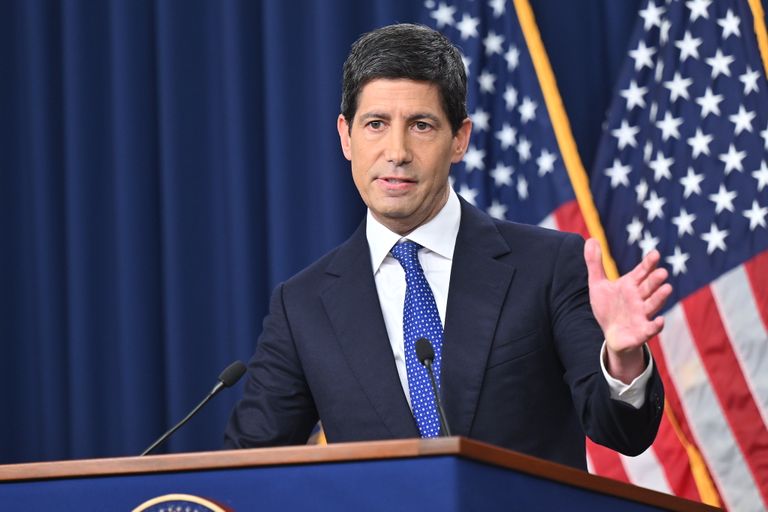
Fed Chairman Kevin Warsh opened the customary post-decision press conference with an uncharacteristic look behind the central bankers’ thinking, explaining the decision to sit tight.
“At each policy meeting, my colleagues and I assess the economy by looking out the window — it's what we call interrogating reality to gauge what's really going onhe said. “It is not a task that has grown easier.”
The vote included two dissents, with Lisa Cook, a Biden appointee, and Beth Hammack, a rotating member of the voting committee from Cleveland Fed, voting in favor of a 25-basis-point hike.
In its post-decision commentary, the central bank said economic activity was expanding at a strong pace, as opposed to the solid pace it cited after the September meeting.
Yields on 10-year U.S. Treasury bonds surpassed 5.3% on Oct. 5, the highest level since 2002. They were still above the 5% rate Wednesday morning, a threshold that market watchers have long warned threatens to slow economic growth. They moved modestly upward on the Fed's decision.
“Holding rates today doesn’t undo what the last two months have done to commercial real estate deals,” Mitch Ginsberg, founder of mortgage broker CommLoan, said in an email. “We’ve seen lenders come back at final loan approval with a higher rate than the one borrowers planned around. With the midterms next week and a December hike largely priced in, that uncertainty isn’t going away.”
The rising cost of debt is leading to more distressed trades, deals being repriced or pulled and heightening refinancing risk of existing commercial mortgages. Roughly 78% of fixed-rate securitized commercial real estate debt maturing through 2028 carries an interest rate below the current 10-year Treasury yield, Newmark estimates.
Inflation has for years run ahead of the Fed’s stated 2% target, with President Donald Trump’s trade war and tariffs first driving up prices before the U.S. began a war with Iran that spiked energy prices and rippled across the broader economy.
Inflation nudged slightly higher to 3.7% in the September Consumer Price Index report. Core inflation, which strips out food and energy costs, was up a more modest 2.6%. Traders briefly shifted bets toward a rate hike earlier this month after the CPI report but shifted back toward no rate change after a weak jobs report came later in the month.
Nonfarm payrolls were up just 29,000 roles in September, less than half the 84,000 forecast. August and September data was also revised down from what had been strong results, with 60,000 fewer jobs than previously reported.
The rate decision comes six days before the midterm elections, which are expected to be heavily influenced by voter dissatisfaction with the economy, particularly rising prices. Democrats are projected to win back the House of Representatives, and the race for the Senate is a toss-up, according to Cook Political Report.
“The midterm elections add another layer of uncertainty, and until the political picture clears, expect to see many buyers and sellers choosing to sit on the sidelines,” Louis Puopolo, head of the New York City Commercial Division at Douglas Elliman, said in an email.
This is a developing story.