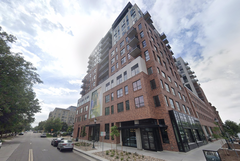
In an environment of elevated construction costs and risk-averse capital markets, multifamily developers in Virginia’s Rosslyn-Ballston corridor are increasingly headed toward the area’s outer edges to build low-density, suburban-style construction.
The cost of structural materials needed for high-rise development — iron and steel — is outpacing that for low-rise: wood. Meanwhile, equity investors in the area are requiring higher returns in exchange for pouring money into an asset class that experienced a post-pandemic supply surge and today maintains a full pipeline.
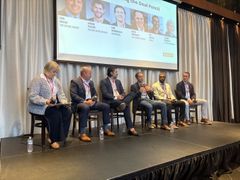
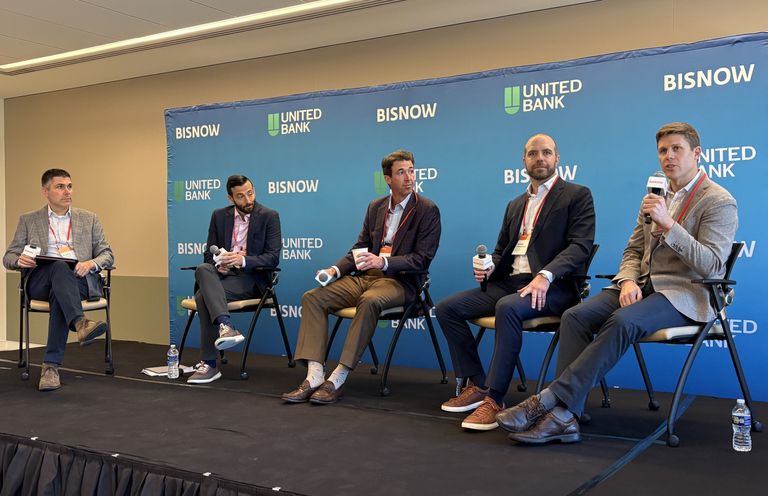
Due to those factors, developers are leaning toward suburban edges, where land values are more apt for lower-density, wood-frame construction, and in turn, where their capital partners can be more secure about their return potential, panelists said at Bisnow’s Rosslyn-Ballston Corridor State of the Market event last week.
“Capital and developers deciding not to maximize density and build wood-frame product is a testament to where we are economically,” Mill Creek Residential Managing Director of Development Peter Braunohler said onstage at Three Ballston Plaza.
Nationwide, construction material costs in October were 11.5% more than the same time last year, and 59% above 2020, according to an industry group analysis of Bureau of Labor Statistics data.
But there are significant differences in the rate of change for the types of materials.
According to the analysis, the cost of concrete products rose by 4.1% between September and October and is now 48.5% higher than it was in 2020. And the cost of iron and steel products rose by 25% during the month and is 87.7% higher than that of the early pandemic period.
The cost of lumber and wood products rose by 5.8% during the month but sits at just 32.3% higher than what it was in 2020.
“Generally speaking, the RB corridor is the top submarket in the DMV, and that's where capital wants to be right now,” Braunohler said. “That being said, I think it is very telling that three, four of the ongoing projects right now on the multifamily side are wood-framed product.”
Penzance is undertaking one such project with an office redevelopment at 4601 Fairfax Drive.
There, a locally based developer is demolishing a 12-story office building and building a 328-unit apartment building in its place. Five of the seven stories are set to be wood-frame.
The calculus to do this type of development ultimately comes down to the returns that equity partners — real estate’s white whale of the moment — are looking for.
“The availability of debt is not the issue,” Monday Properties Senior Vice President of Development Frank Craighill said. “It’s the equity and return thresholds required for equity.”
“And so that is where really getting into controlling your budget, your land values, there's only so many levers you can pull, and why you're also seeing, because of the lower construction cost of wood-frame, most of the deals that are being capitalized right now are wood-frame,” he added.
Because wood-frame means fewer units and less rental income, developers for that product require cheaper pieces of land, often not transit-oriented and often not in the center of urban hubs. And that’s exactly where the development is taking place in the Rosslyn-Ballston corridor, panelists said.
“The densification is happening on the edges of the corridor,” Penzance Senior Vice President of Investments Jacob Rosenberg said.