Brookfield quietly closed on the acquisition of the largest privately held manufactured housing portfolio in the United States this year, prompting some members of Congress to inquire about the investment giant’s plans for the properties it now owns.
Brookfield purchased Yes Communities from GIC, Singapore’s sovereign wealth fund, in the second quarter, public filings and statements from Brookfield management indicate. Brookfield hasn’t publicized its acquisition of the Denver-based operator of nearly 300 manufactured home developments, but three Democrats from the House of Representatives nonetheless sent a letter to the firm last month voicing concern about the purchase and seeking pledges for tenant protections.
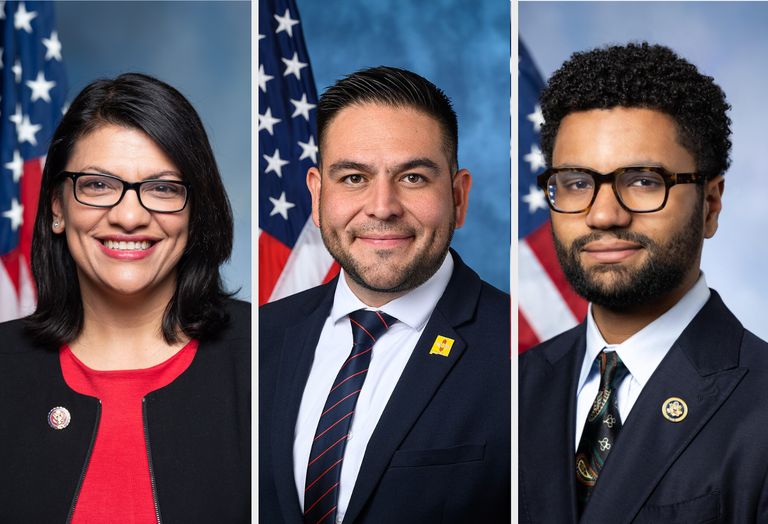
Reps. Maxwell Alejandro Frost, Gabe Vasquez and Rashida Tlaib asked management at New York-based Brookfield Asset Management, the publicly traded arm of Toronto-based Brookfield, and Brookfield Real Estate Group to provide assurances that residents’ quality of life wouldn’t be impacted by the deal.
The representatives gave BAM until Nov. 20 to respond. The asset management giant hadn’t yet replied as of mid-November, Frost’s office confirmed to Bisnow on Nov. 9.
Brookfield didn’t respond to multiple requests for comment. It hasn’t formally announced the acquisition, which was first rumored to be in the works in September 2025, but BAM said in second-quarter filings with the Securities and Exchange Commission that it acquired “the largest privately held U.S. manufactured home portfolio.”
Yes Communities operates more than 55,000 housing sites across the U.S., with a focus on the Southwest, Midwest and Southeast.
A purchase price for the portfolio is unknown, but BAM said it spent $5.2B in the second quarter on its real estate business, including the manufactured home portfolio and the take-private of an industrial outdoor storage portfolio. Brookfield announced a $1.2B all-cash deal in February to buy Peakstone Realty Trust, a REIT with 60 IOS properties and 16 traditional industrial assets.
In its second-quarter filings, Brookfield Real Estate Income Trust disclosed a new investment in a 2% ownership interest in 294 manufactured housing properties at a book value of $86.6M, which aligns with the number of properties under the Yes Communities banner.
BAM Chief Financial Officer Hadley Peer Marshall also disclosed on the second-quarter earnings call that a Brookfield fund had made its first investment by deploying capital to Yes Communities. Other affiliates of Brookfield may have also contributed capital for the Yes Communities acquisition.
Brookfield REIT said in an investor presentation on its website that as of Sept. 30, it owned a 294-community manufactured housing portfolio across 23 states, the same number of states Yes Communities is active in.
Executives from Brookfield held one virtual meeting with residents and their advocates following the acquisition that was facilitated by the Private Equity Stakeholder Project and MHAction, two nonprofit advocacy groups, PESP confirmed to Bisnow.
GIC and another unnamed institutional investor acquired a 71% equity interest in Yes Communities in 2016, with Stockbridge Capital Group holding on to the remaining stake. Brookfield was reportedly in talks with GIC about acquiring its stake for more than $10B, and it is unclear exactly the size of Brookfield's interest in Yes Communities or how much it paid.
In their letter from Oct. 13, the three members of Congress sought details about the acquisition.
The letter outlines previous tenants' complaints with Yes Communities for high rent increases, excessive fees and neglect of routine maintenance and says that Brookfield “has the opportunity to change this scenario” and “support meaningful protections for its residents.”
“Given the challenges our constituents have experienced at Yes! properties, as well as broader concerns about the private equity business model, we seek assurances that Brookfield will prioritize improving residents’ quality of life and protecting their economic and housing stability, rather than exacerbating the economic challenges they already face,” the representatives wrote.
The letter specifically asks Brookfield to disclose whether it plans to increase rents by more than 3% annually, to outline its policy regarding new and existing fees, and to confirm whether it will refrain from serial eviction filings for routine rent collection. The letter asks BAM to commit to meet regularly with tenants and to cooperate with tenant groups that are seeking to collectively purchase their communities.
Corporate ownership of single-family properties has for a decade been an issue in some political corners, but it spilled into the mainstream in recent years, including with the debate around the 21st Century Road to Housing Act and the focus on affordability from candidates in midterm races across the country.
The housing legislation that made it to the president’s desk includes new restrictions on existing home purchases from institutional investors but carves out broad exemptions for new development of single-family communities built as rentals.
The Government Accountability Office examined investor ownership of single-family homes in Cincinnati, Dallas, Nashville, Phoenix, Seattle and Jacksonville, Florida, and found that institutional owners held 1% to 3% of all single-family homes in the area.
But the March analysis found wide differences across the six cities examined, and corporate landlords own more than 10% of the single-family housing stock that is available for rent in half the cities surveyed.
Institutional landlords owned 22% of the single-family rental stock in Jacksonville in 2024, the most recent year data was available, and 13% each in Nashville and Phoenix. In Dallas, 9% of single-family homes for rent are investor-owned, compared to 8% in Cincinnati and 4% in Seattle.