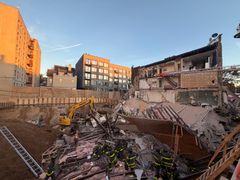
The pace of price hikes for construction inputs has moderated, but the cost to build remains elevated.
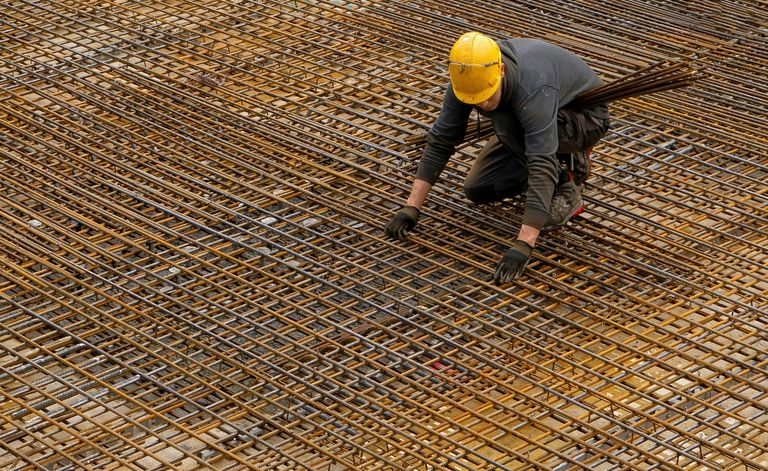
Construction input prices were flat in October, but inflation, tariffs and other cost pressures have still driven prices up 11.5% compared to last year, according to an Associated Builders and Contractors analysis of U.S. Bureau of Labor Statistics’ Producer Price Index data released Friday.
The flat monthly price movement was due to falling oil and lumber prices, ABC Chief Economist Anirban Basu said in a statement. Materials impacted by President Donald Trump’s tariff regime, including iron, steel and copper, are still seeing rapid price hikes, Basu said.
Multifamily and industrial construction inputs were flat month-over-month, but nonresidential construction inputs rose 0.2% over the same period, and prices for commercial construction rose 0.3%. Input costs for maintenance and repairs were down 0.2%, the only industry segment to see a price reduction.
The largest monthly swings came from a 10.3% dip in the price of crude petroleum and a 7.7% dip in the cost of unprocessed energy materials. Natural gas prices rose 3.7% across October, the most of any commodity, while steel mill products got 2.7% more expensive, along with fabricated structural metal products and hot-rolled steel bars, plates and structural shapes.
Builders remain optimistic about their profit margins despite the stubbornly high prices, ABC’s October member survey results show, with 35.9% of respondents saying they expected their profit margins to increase, up 170 basis points from the prior month. Another 40.5% of contractors expect their profit margins to remain flat, while 23.6% are expecting some decrease.
ABC’s Construction Backlog Indicator also fell to 8.1 months in October, down 0.6 months from the prior month and 0.3 months from a year earlier. The shrinking backlog is impacting nearly every sector, with the exception of data centers.
Contractors with data center work saw their backlog grow from 11.3 months to 11.5 months from September to October, but the rest of the industry saw their backlog fall from 8.3 months to 7.6 months, Basu said.
Construction starts have been hampered not only by rising material prices but also by the rising cost of capital. Developers around the country have been scrapping commercial projects in the face of higher costs driven by tariffs, energy prices and interest rates, Bisnow reported in September.
Total construction starts declined 1.5% year-over-year in September to an annual rate of $1.33T, according to Dodge Construction Network. Nonresidential building starts slipped by a steeper 6.3% in September, and commercial starts were down 18.4%.