Sometimes the Sunshine State's pro-business laws don't go far enough to hedge against economic volatility.
Florida lawmakers have increasingly removed red tape for developers looking to maximize their projects under the Live Local Act. But as elevated borrowing and construction costs squeeze project viability, municipalities, which can still attach conditions to approvals, are gaining back their leverage.
Amid market volatility and a sluggish multifamily market, developers are learning to operate under shifting circumstances.
“If you go in and you just try to shove it down their throats and say, ‘This is what I'm building, and you can take it, or I can sue you,’ I think the reaction is going to be a far cry from if you go in from Day 1 and say, ‘Look, this is what I'm trying to do. I've really taken into consideration where I'm building and the surrounding neighbors,'" said Jennifer Sanz, co-founder and CEO of workforce housing developer Next Development Group.
“Then you have their buy-in from Day 1, and they become your partner in the project, as opposed to an opposing force," she added.
Lawmakers passed the Live Local Act in 2023 to entice developers to fill the growing hole of affordable and workforce housing units in Florida.
In Miami-Dade County alone, the need for units for households making up to 80% of the area median income grew from roughly 90,000 units in 2024 to 118,000 units this year, The Real Deal reported, citing a University of Florida Shimberg Center and Miami Homes For All report.
Under the law, developers could access significant tax abatements and density and height bonuses as long as they dedicate at least 40% of their project to units making up to 120% of the area median income.
But when proposals for projects that would tower over neighborhoods and bring thousands of units to areas not designed for that kind of density poured in, many municipalities sought to regain control by restricting proposals, enacting new fees or slow-walking the approval process to limit project scopes.
Over time, the legislature closed in on those loopholes, and last year, it effectively tied the hands of local governments by requiring them to issue administrative approvals within 90 days of an application, barring shrinking projects and mandating affordable and mixed-income housing approvals on commercial, industrial and religious land.
The amendment led to widespread concerns from officials and the residents they represent as developers embraced the “carte blanche,” as Fort Lauderdale Mayor Dean Trantalis put it in 2025.
“Some developers thought it was the wild card they needed to go into any community to build in a way that would avoid having to deal with local zoning and building code issues,” Trantalis said in an interview this month.
But the year that followed suffocated deal flow, especially in South Florida’s multifamily market, which is experiencing one of the most intense multifamily construction pipelines in the country, putting downward pressure on rents and value.
Fluctuating tariff policies on construction inputs, like cement, plywood, machinery and tools, and elevated fuel prices amid U.S. conflicts with Iran have pushed up already costly construction expenses.
Despite calls for lower rates, the Federal Reserve hiked rates in September for the first time since 2023 and held rates in October.

The dynamic has become evident even for one of the law’s most active proponents, Russell Galbut, who axed three out of the six planned Live Local Act projects in Miami Beach last month.
“What you need to do is you need to say, ‘Well, on this site, if I build this building, how do I build it? How and where is the income to build it and pay for it?’” Galbut said. “Because construction costs today are at an all-time high. Land costs today are an all-time high.”
The developer, who leads GFO Investments and Crescent Heights, made the decision after having conversations with Miami Beach Commissioner Alex Fernandez and Miami-Dade County Commissioner Vicki Lopez, who voiced concerns about the projects and their scale, and surveying whether the projects penciled.
Fernandez told Bisnow that conversations with Galbut, which took place over the summer, avoided administrative denials, appeals and potential litigation that would have swallowed time and resources for both parties.
“When you sit down and look at what was being proposed, it was very clear that there was not a path forward,” Fernandez said.
Among the projects was 1575 Alton Road, where Galbut’s Crescent Heights proposed a 43-story, 557-foot tower with more than 160 units, 62 of which would be dedicated to those making 120% of the AMI.
The project, which was too tall for the neighborhood, “deserved an apology from me, and I gave that apology,” Galbut said.
Galbut is now looking to sell the site, occupied by a former Firestone tire service building built in 1935. He expects it to take a loss but could come back with another proposal down the line, he said.
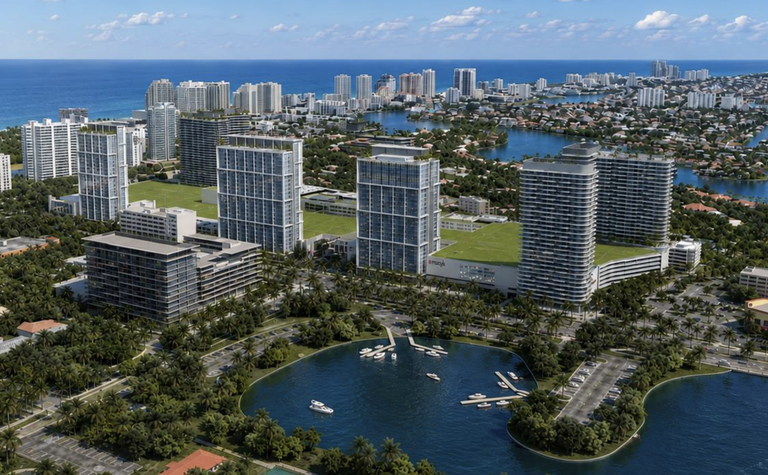
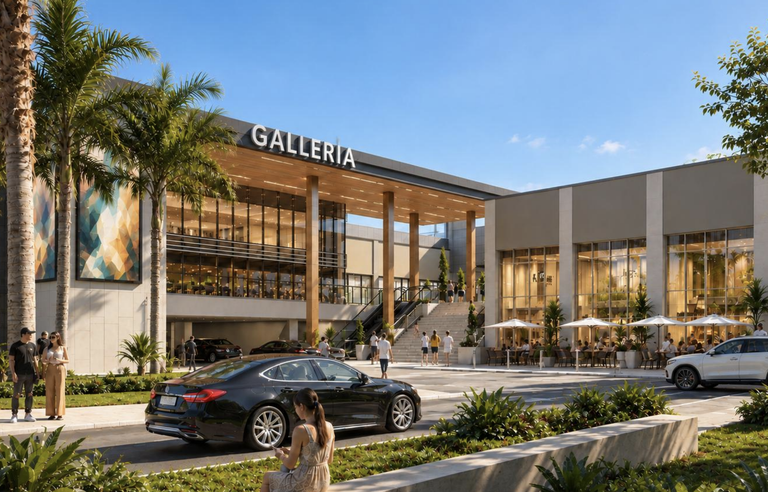
At the same time, Galbut has plenty of other projects underway in South Florida, including another Live Local Act project on the site of Fort Lauderdale’s largest shopping mall, the Galleria Mall at Fort Lauderdale, set to cost "billions," he said.
While the project was initially met with strong opposition from locals, they have since come around to the idea of uplifting the 46-year-old mall, which has struggled with occupancy since Covid, Galbut said.
"The intelligent people who live around there said, 'Hey, if we don't revitalize this mall, it'll be like that another 20 years,'" Galbut said.
The project received conditional approval in October, but the developer still needs to show that the city’s roads, water and sewer systems can handle the planned redevelopment, Trantalis said.
Despite plans for nine high-rise towers, more than 3,000 apartments, a 170-key hotel, 30 restaurants, office space and new parking, Trantalis said he was open to reducing the number of towers or spreading construction out over a long period.
“Now let's get down to some realistic expectations,” he said.
An environment of higher construction and borrowing costs has “100%” given municipalities some leverage back, Sanz said.
Sanz, who is working on a 142-unit Live Local Act project in Model City near Little Haiti called Principio, said maxing out on the Live Local Act without considering the neighborhood almost guarantees pushback.
But a balance of power is what is most important, and if you swing too far in the city’s direction, that’s how deals crumble.
“Suddenly, you turn a deal that would have worked into one that no longer is feasible,” Sanz said. “The locals have a bit more leverage right now, but they also, if they take it too far, they'll end up killing off everything.”
In some cases, the restrictiveness of the Live Local Act has made it easier to work with municipalities on projects because they offer more leeway to discourage using it to its fullest extent, White Oak Development Chief Investment Officer Tim Peterson said.
White Oak reached a development deal with the city of Davie, where it approved a density boost in exchange for workforce housing units without using the Live Local Act for the 286-unit Saddlebridge at Downtown Davie.
“If you work with us, we’ll be light touch and try and make this easy because we know if we make it difficult, you can take it through the Live Local entitlement, and then we have no say,” Peterson said.
“When you go to build a community, if you don't like your shell contractor, you can go to another shell contractor, another roofer, another plumber, but if you're going to build it on a location you've picked out, there's only one municipality to go to,” he added.
“You can't shop around. Historically, speaking as a developer, the leverage has been a little out of whack.”