The next chapter in global last-mile delivery is making warehouses “smart,” but intelligence doesn’t come cheap.
China is the largest e-commerce market in the world, and its online retailers are beginning to utilize smart technology to gain a competitive advantage.
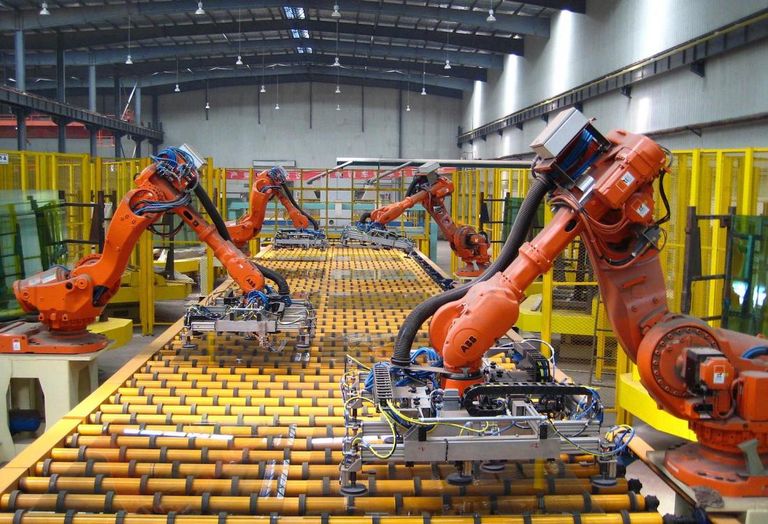
The country’s biggest e-commerce companies like Alibaba and JD.com are investing in warehouses that rely on tech improvements to speed up delivery times compared to rival firms, but the upgrades come with a hefty price tag, the Wall Street Journal reports.
Interior work at a traditional warehouse typically costs $10/SF, but smart warehouses can run between $150 and $200/SF, Green Street Advisors Senior Analyst Eric Frankel told the WSJ. The upgrades include robotic conveyor belt systems, air conditioning and high ceilings. These "smart warehouses" are being erected at a time when warehouse development is exploding in China. Industrial developers added 4.6M SF of warehouses across the country in 2017, a 52% increase from the prior year, according to CBRE.
Smart warehouses rely on automation and interconnected technology systems to boost productivity. Warehousing robots move products at a quicker pace around a facility than human employees, radio-frequency identification maintains inventory in lieu of bar-code scanning and artificial intelligence helps with everything from quickly picking the best-sized box to actually packaging the merchandise.
Record low vacancies in the country have made it a landlords’ market and mean the cost to upgrade often falls on tenants' shoulders. GLP, the largest warehouse owner in China, offers tenants financing options for smart upgrades. The company established a private equity fund in May to invest $1.5B in robotics and automation that could work in tandem with its real estate business.
U.S. and U.K. e-commerce retailers often share expenses with landlords on upgrades, with the tenant sometimes paying its share over the course of a lease via higher rent. Automation is increasingly viewed as a necessity in the U.S. to help bridge the labor gap at a time when industrial workers are hard to come by.
There is less pressure in China due to labor costs being much lower and reducing the benefit of automation, but considering the rapid growth of demand for distribution space across the country, some argue automation is simply a better use of e-commerce real estate in a country increasingly dependent on last-mile delivery.