Leisure parks could represent a major investment opportunity in 2027, according to one of the UK's top asset managers.
Weakening pricing on the back of a run of poor box office sales at cinema anchors could cause some investors to sell, according to Quadrant Real Estate Managing Partner John Maddison.
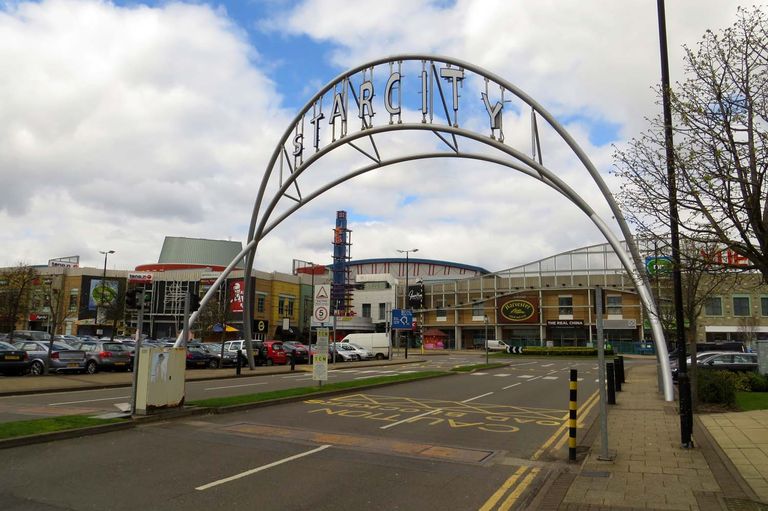
But with cinema takings on the up this year, and a fresh slate of potential hits in the offing for 2027, cinema-anchored leisure parks could offer a strong buying opportunity.
“A number of asset holders are likely to want to offload, and I think that with a stronger lineup of movies and with lots of new F&B operators from the U.S. and Asia looking to expand, there’s every opportunity to buy at competitive prices," Maddison said.
The company is seeing assets being offered at 10% yields, he said, which offers an attractive entry point, especially as the operationally intensive assets can then be managed to improve income.
Quadrant has built its business around buying, repositioning and selling retail parks and leisure destinations and last year sold AshbyCapital’s portfolio of three retail parks to U.S. investor Realty Income for more than £220M.
However, Maddison said the best value may come from leisure parks — schemes typically anchored by a cinema or major leisure facility and then supported by a range of food and beverage operators and other leisure — and that a stronger roster of upcoming movies could boost the sector again.
Indeed, the UK cinema market is heading into 2027 with a strong release slate, led by a succession of major franchise titles. Among the biggest releases are Spider-Man: Beyond The Spider-Verse, Shrek 5, A Minecraft Movie Squared, The Bluey Movie, Frozen 3, Avengers: Secret Wars and The Lord of the Rings: The Hunt for Gollum.
Star Wars: Starfighter, Godzilla x Kong: Supernova, The Legend of Zelda and A Quiet Place Part III should also be released next year.
There are already encouraging signs that UK audiences are returning, and British Film Institute figures show that UK cinema admissions reached 67 million in the first half of 2026, up 9% year-on-year, while box office revenue rose 11% to £552M.
“There’s strong investor bias towards the Southeast, but I feel that is a bit of a bubble, and there is better value further across the UK, but it’s about setting high standards from tenant mix to site cleanliness,” Maddison stressed.
Quadrant Real Estate owns Star City in Birmingham, a 400K SF retail and leisure destination acquired with CarVal Investors from Cerberus in December 2016. The repositioning strategy included restructuring leases with Vue and Tenpin, developing new entrance accommodation and improving the tenant mix.
After previously putting the scheme up for sale in 2023, Maddison said Quadrant is again looking to divest the project.
“Star City has been a great asset for us, but the time feels right to sell,” he added.

Maddison was in Cannes for MAPIC 2026, the annual European retail real estate event, where retail park investment was highlighted as a key asset opportunity.
“We still strongly believe in retail parks, which are at historical low vacancies and where the lack of new supply means there is very little chance of overcapacity," Maddison said.
"Although, more recently, we have primarily been sellers, we remain interested in core and core-plus schemes where you can still achieve yields in the 7% to 9% range,” he said.
CBRE Managing Director and Head of Europe Chris Gardener said investment recovery across retail property remained uneven.
“We saw an immediate recovery in the UK, a rebasing of rents, and a reengagement from a number of institutions," he said.
"It's still the largest transaction market within Europe, and it stands alone."
He added that CBRE saw activity in Iberia, and whenever Spain gets hot, the broker advises investors to move to Italy because it has many of the same characteristics but a difference in the entry yield.
"Where Spain might see itself at around 6%, we're looking at Italy in the 7%-pluses,” he said. “But there is some bad news in the middle: France and Germany, unfortunately, are trading well below where they have been before.”
However, Gardener did point to early signs of improving transactional volumes: “I think Germany has hit its bottom, and I very much see recovery. You can see already that Poland is starting to experience higher-than-average trading of retail real estate, and I expect Germany to follow."
The withdrawal of domestic capital and the departure of core and core-plus investors have put pressure on pricing, creating opportunities for buyers prepared to take a longer-term view, he added of the German market.
Conversely, tenant interest remains healthy across much of Europe. Cushman & Wakefield Head of EMEA Retail and Logistics Research Sally Bruer said, with no slowdown in appetite, particularly cross-border.
“Many of those brands are new entrants to Europe, particularly from APAC," she said.
"We've all seen the explosion of K-beauty. We're seeing more appetite coming from other parts of Asia as well, China, Japan, even Thailand. How that will manifest in Europe, we’ll see over the next 12 to 18 months."