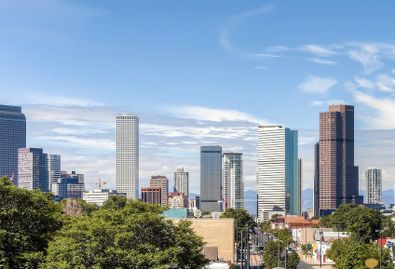
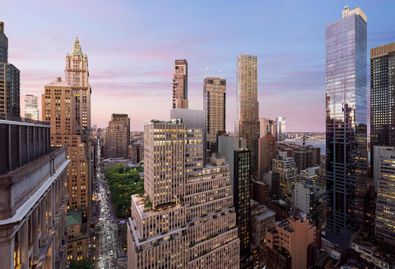
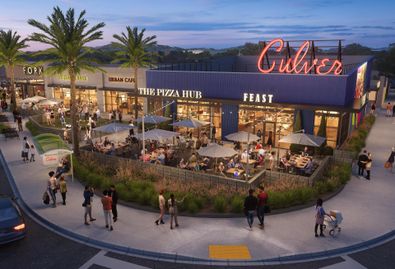
Denver’s retail market is experiencing a shift as more retailers and developers prioritize the suburbs over the urban core.
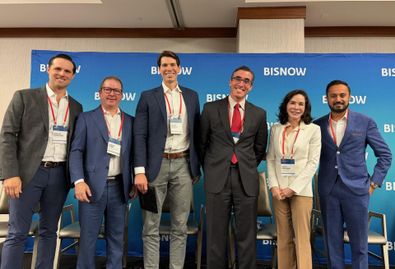
That was a key takeaway from Bisnow’s Denver Hospitality, Mixed-Use and Retail Summit on Tuesday at the Four Seasons Hotel Denver, where panelists discussed how rising costs, lengthy entitlement timelines and evolving consumer habits are reshaping retail development.
:no_upscale():quality(75))
Hybrid work models and shifting population patterns are driving demand, the panelists said.
“It seems like the suburbs are definitely experiencing more growth right now, with the hybrid work model and people working at home two or three days a week,” Zall Co. Senior Vice President Kyle Framson said.
Retailers are going where people live, he said, including fast-casual restaurant chains and health-focused companies.
Jon Hauser, managing partner at Drake Real Estate Services, said national retailers are doubling down on large-format locations outside the city center. This trend is evident in the grocery sector, with multiple chains expanding aggressively into suburban markets.
“The big-box-format retailers are really active,” Hauser said. “King Soopers is doing five or six stores. WinCo Foods is coming in with a dozen stores.”
He said Costco and Target are also making big moves in the suburbs.
:no_upscale():quality(75))
While suburban retail is thriving, the urban core faces mounting challenges, especially entitlement delays and increasing costs.
Chris Viscardi, a partner at Kentro Group, pointed to permitting bottlenecks as a major deterrent for urban retail development.
“Mixed-use is just challenging right now. Entitlement timelines in the urban core are really making things complicated — you’re talking 12 to 14 months,” he said. “We just got a King Soopers permitted, and it took us 24 months through Denver.”
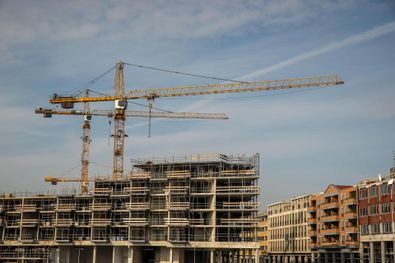
Long timelines contribute to higher costs and uncertainty, making it difficult to get new construction to pencil. And costs are at least part of what is driving retailers back to the suburbs, Viscardi said.
These fundamentals are also changing the face of demand.
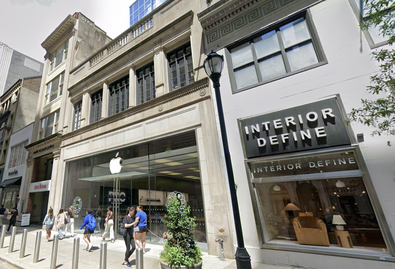
“Retail vacancies are at an all-time low, and retail rents are at an all-time high, just with lack of inventory,” Framson said.
:no_upscale():quality(75))
Jeff Durbon, president of construction firm Crosslands Cos., said the city is simply too expensive for many tenants to build new retail locations.
“We have got Denver city limits scratched off of our list because we can't afford to be there. Something’s got to change,” Durbon said.
Developing outside of Colorado is much easier, he said.
“They’re happy to see you come. They’re happy to schedule a pre-app meeting. Planners answer their phone calls,” Durbon said.
It’s an imbalance fueling fierce competition for second-generation spaces, which require less upfront investment and fewer entitlement hurdles.
Hauser pointed to the recent announcement that fast-food chain Del Taco was closing most of its Colorado locations. He said he has heard that there are already offers on all of the locations.
These second-generation locations are “just going to get sucked up, and so it's great if you can get it, but it's super competitive,” Hauser said.
Adaptive reuse is also gaining traction as an alternative strategy. Converting aging retail spaces, including vacant big-box stores and former malls, is increasingly seen as a viable way to meet demand.
“It’s still cheaper, faster and easier than ground-up new construction,” Hauser said.