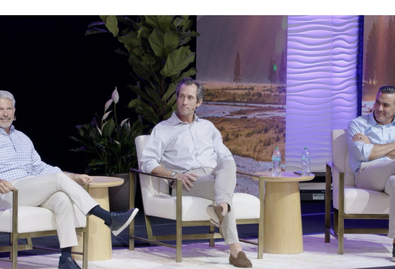
On a Wednesday night in January, on the first floor of a Manhattan office building, Knotel CEO Amol Sarva recounted to an audience of real estate power players what he heard, saw and felt in the Swiss town of Davos, where he spent a week among the attendees of the World Economic Forum.
:no_upscale():quality(75))
The annual gathering in Davos attracts political leaders, business executives, visionaries and celebrities from around the world, the vast majority of whom, Sarva included, aren’t actually affiliated with the forum itself. But the uninvited still happily engage with the event’s overarching theme, which changes every year.
The theme for 2020’s gathering was “stakeholder capitalism” — the proposal that corporations should not only create value for their shareholders, but also for their customers, employees, suppliers, governments and the environment.
Though stakeholder capitalism is an old idea, it has gained currency as companies and their employees reckon with their roles in combating or abetting income inequality and climate change. For commercial real estate, which controls so much of how people work and live — and which is one of the main contributors to greenhouse gas emissions — a move to stakeholder capitalism would be a revolution.
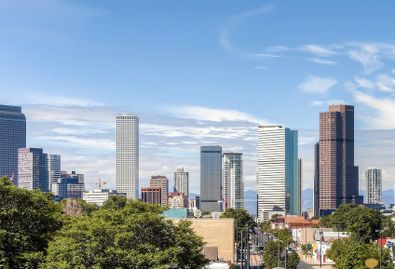
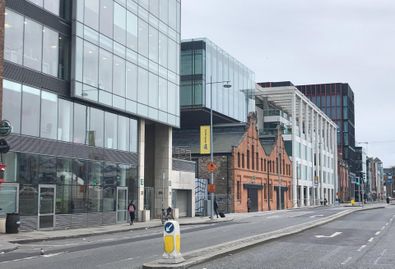
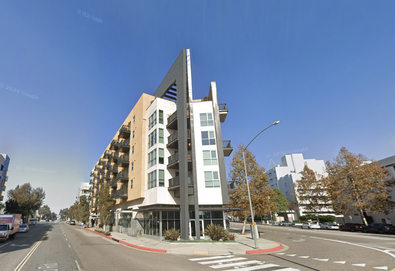
The location of Sarva’s talk was of special significance: 33 West 17th St. was where Knotel began operating in 2016. Just four years later, the company runs flexible offices at almost 300 properties in 17 global cities, from Los Angeles and Berlin to Delhi and Tokyo, and counts companies like Netflix, Monday.com, Brex and SeatGeek among its users.
Bisnow got the chance to interview Sarva one-on-one and get his take on what this year’s Davos gathering means for commercial real estate and for Knotel in particular.
Bisnow: What was your reaction to Davos?
Sarva: It seemed like everyone was there to declare that something was "over." The industrial age is over. Work is over. Fossil fuels are over. The Cold War is over. American power is over. There’s a sense that the paradigm has already shifted, or at least that the governing ideology of capitalism can’t go on in the same way it has.
Bisnow: How will "stakeholder capitalism" play out for real estate?
Sarva: Every business in the world calls their customers "customers," except for one. In real estate, customers are "tenants," and owners are "lords." It’s an outmoded, feudal way to run a business, and I think the future is more customer-focused.
In Knotel’s case, that change has happened in the last year. Our existing customers in New York are saying, "We’re hoping to start doing business in Frankfurt or Dublin or Atlanta," and they’ll ask us to follow them there. We have a responsibility to advance our customers’ missions.
Bisnow: Is this push for a new paradigm really believable coming from the mouths of Davos attendees, who have created so much wealth from the old status quo?
Sarva: It is kind of a paradox, and Davos felt like the anti-capitalist capitalist club. But the sort of remedies that were being proposed — universal basic income, retirement healthcare — those are fairly moderate changes. Even if the old paradigms do go away, they’re going to be in their death throes for a while.
All these changes are bound to be slower than predicted, with one exception: the transformation away from fossil fuels and the switch to sustainable business models.
:no_upscale():quality(75))
Bisnow: How do you think real estate can shift to more sustainable models?
Sarva: We really get something for free at Knotel, which is that when companies use flexible office space, they can lower their carbon footprint by 30%. Most companies that are planning on growing lease too much space. Rooms are getting heated and cooled, burning energy while they sit empty, waiting for the company to hire new employees. Companies that use Knotel only take up as much space as they need.
Then there’s the benefit of not moving, not buying and throwing away new furniture and tearing down and putting up offices. Around 30% to 40% of waste is construction waste. We didn’t start Knotel with the goal of overhauling the sustainability of this industry, but because we allow for so much less demolition and construction, we created a new benchmark without realizing it.
Bisnow: But isn’t Knotel just taking on the carbon costs that its customers would have taken on themselves?
Sarva: Because of the deal flow we are getting now, Knotel is not just sitting on empty offices. The best analogy for what our business does is a game of Tetris — we’re trying to make all the pieces fit together in our portfolio. And as we get more customers, the blocks are falling down faster and faster. But we’re up to about 5M SF of space now. As our portfolio grows, the Tetris board gets wider. It gets easier to make those pieces fit together without any wasted space.
Bisnow: What was the consensus about the health of the global economy?
Sarva: People weren’t popping champagne and saying, "This cycle will go on forever," but it also wasn’t a week of doom and gloom. It was filled with people who came determined to solve whatever challenges the next cycle threw at them.
Bisnow: Has Knotel made any preparations for the possibility of a downturn?
Sarva: We founded Knotel with the purpose of outlasting a downturn, to give companies a lighter-weight option than signing a long-term lease when a crash came, and to give them flexibility with their headcount.
You can look me up on Google Images and I’m wearing this embroidered sweatshirt I made myself that says "Grave Dancer" — we have been ready for the crash that everyone started predicting four years ago. But here we are and it still hasn’t happened.
Bisnow: As an increasingly global company, is Knotel threatened by the rise of nationalism, or by trade wars?
Sarva: We’re just not big enough yet to feel the effects. I do think it’s going to be an issue for commercial real estate in general. In New York, it might be foreign capital drying up as China becomes more insular. In London, it’s Brexit. In Germany, it’s what’s happening in Eastern Europe. It’s all these local changes that add up to a global trend.
Bisnow: What’s your take on Davos? Is it more than a place for leaders to grandstand about doing the right thing then go back to what they were doing before?
Sarva: Of course, if it’s just a lot of hot air, then what’s the point? But then you see an idea like the Trillion Trees initiative, which I think is the most influential program to come out of this year’s event. You have to think that if you bring together the world’s richest and most powerful people for a week under the banner of making the world a better place, some good has to come out of it.
This feature was produced in collaboration between the Bisnow Branded Content Studio and Knotel. Bisnow news staff was not involved in the production of this content.