Life sciences is struggling across the country, but some industry executives in Greater Philadelphia believe the region is well-positioned for when the headwinds relent — though it's not clear when that will happen.
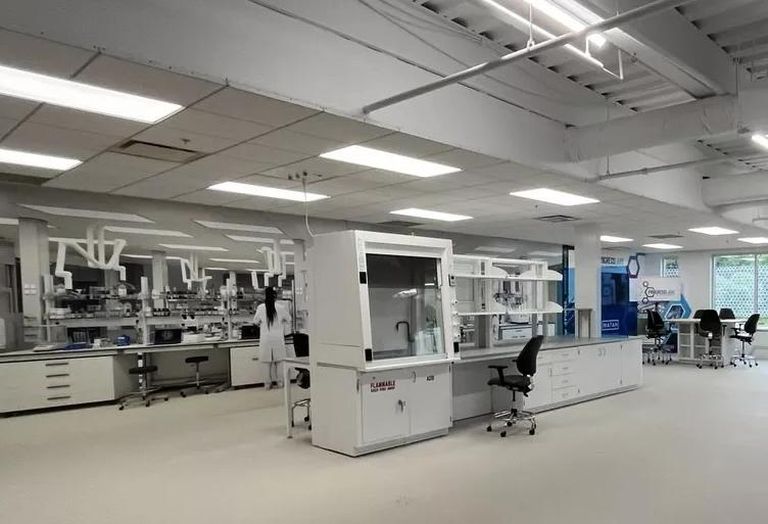
While federal funding cuts and a sluggish venture capital climate present major barriers, the high vacancy regionwide means there is space for companies to expand. CBRE calculated 18.4% vacancy across metro Philly and 37% in University City last quarter in its latest U.S. life sciences report.
“It could be better,” Wexford Science & Technology Vice President of Development Pete Cramer said of the market during Bisnow’s Tuesday Philadelphia Life Sciences Conference at Marriott Old City.
“We just need more leasing,” he added. “We’ve got a lot of spaces we need to fill.”
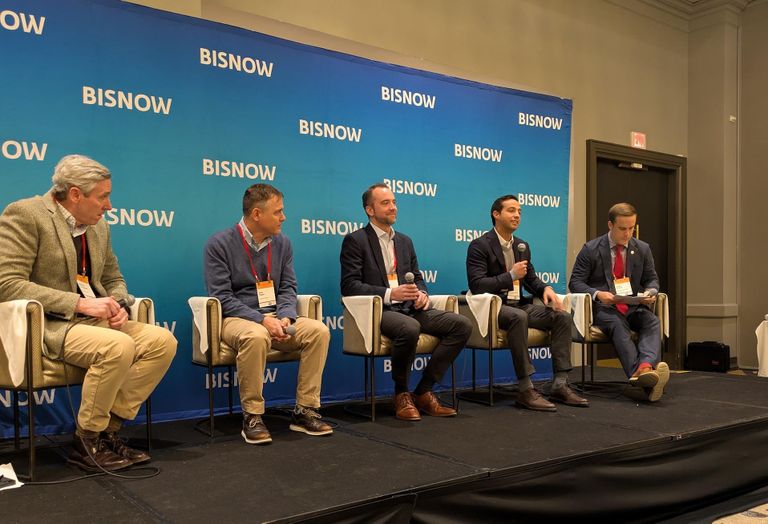
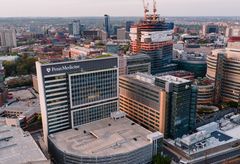
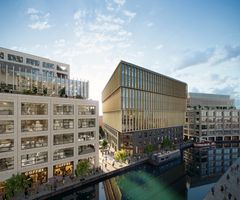
Cramer recalled just two major leases in Philadelphia over the past two years: Legend Biotech’s research and development facility at 2300 Market St. and Wistar Institute’s lab and office space at nearby uCity Square.
Prior to the pandemic-era life sciences construction boom, the city lacked the lab spaces needed to host new companies, said Ensemble Real Estate Investments Vice President of Leasing and Development Nelson Way.
“I’m going to spin this a little bit and look at the bright side,” he said. “We’re well-positioned to capture things as they come.”
“Long term, I think Philadelphia is probably in a stronger position than it was three or four years ago,” Way added.

Greater Philly is not generally seen as a top-tier U.S. life sciences market. Its 12.4M SF of inventory pales in comparison to the 56.2M SF in Greater Boston and 44.1M SF in the San Francisco Bay Area, according to CBRE.
But its regionwide vacancy is lower than the respective 27.7% and 32.8% in those markets, and the lack of life sciences saturation creates a more favorable environment in some regards.
“The big advantage Philadelphia has right now is timing ... other parts of the country have become saturated, while Philadelphia hasn't," HDR Senior Vice President Eric Jaffe said.
“We have the space becoming available. There's going to be demand for it."
Way said Philadelphia has other advantages, including lower costs, close proximity to airports and a talented workforce plus sites that can accommodate large users.
“Philadelphia is in an incredibly unique position to capture what I think will be a wave of activity over the next five years with these large-scale sites we have,” he said.
Cramer said he is “starting to see signs” of demand from larger corporations like Eli Lilly that are making big investments.
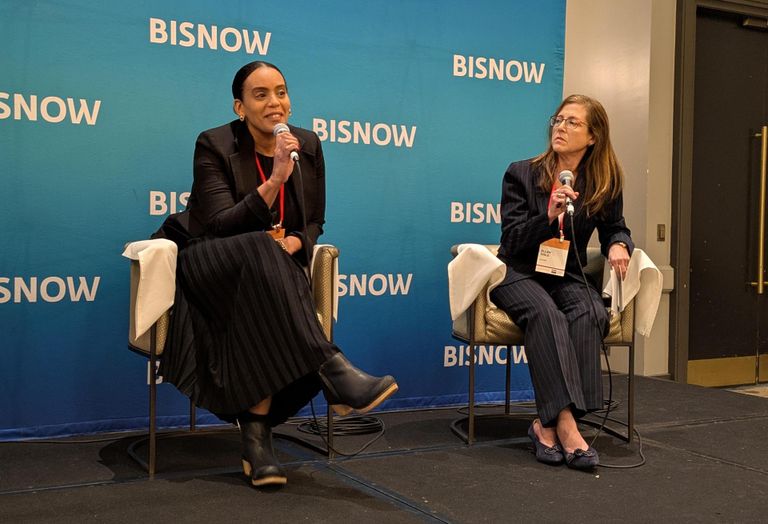
But AES Clean Technology Director of Business Acquisition Chad Smith said Philly is far behind when it comes to venture capital funding. The region fielded a little bit less than $600M from those investors last quarter, according to CBRE. That’s roughly one-tenth of what was seen in Greater Boston and the Bay Area.
The brokerage also found that Greater Philly received just $1.4B in funding from the National Institute of Health last quarter. That’s less than half of the $3.1B seen in Boston and only slightly above the $1.3B seen in North Carolina’s Research Triangle.
Cramer said proposed federal cuts to basic research are “concerning” given that it is a strength of the Philly region.
Smith warned that funding cuts at the U.S. Department of Health and Human Services will have a negative impact on the life sciences sector nationwide. He is seeing graduate students gravitate away from biomedical degrees as the grants underpinning their training dry up.
“That is a threat to us as a nation being able to generate and continue to be the frontier of medical discovery,” Smith said.