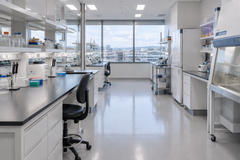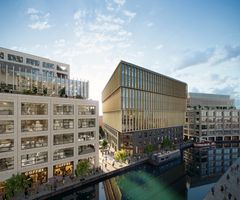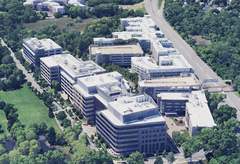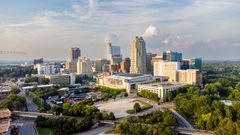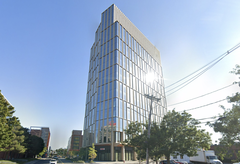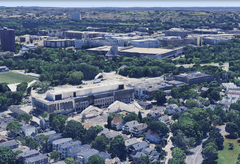

North Carolina’s Research Triangle Park is seeing demand for life sciences space, with available space at 3.3M SF in the second quarter of 2026, down from 4.6M SF this time last year. Vacancy dipped from 24.7% to 23.1% year-over-year.
Biotechnology manufacturing is on the rise in the region, backed by new capital investment in the billions. Last July, biotechnology company Biogen announced in a statement its plans to invest $2B in its current RTP manufacturing footprint.
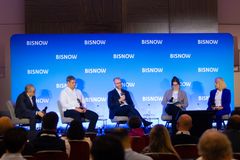
On Nov. 4, Bisnow is bringing together the market’s experts for its Research Triangle Life Sciences Summit to discuss how to build, design and finance the facilities on the cutting-edge of innovation.
Tyler Grimshaw, principal of architecture and engineering firm EwingCole, will share his insight into how the region is bringing forth and funding the next phase of mixed-use and biomanufacturing facilities on the panel Crafting the Next Wave: Innovation Districts and Biomanufacturing Campuses. Click here to register.
Grimshaw caught up with Bisnow in advance of the event to talk about the demand for manufacturing as well as flexible spaces, and how elements of architecture and sustainable design can be infused into manufacturing.
Bisnow: How does life sciences in RTP now compare to the early 2020s?
Grimshaw: In the early 2020s, the life sciences market was driven by abundant capital, aggressive hiring and rapid expansion. Interest rates at that time were favorable. Now, though, we're seeing a lot of people extending their cash runways, prioritizing their productivity and making investment decisions that are closely tied to commercialization milestones. The growth-at-all-costs model in the pandemic years has morphed into a capital efficiency approach.
Part of that is because manufacturing, as opposed to research and development, has become a national priority that has shifted the market focus. Companies increasingly want U.S.-based production and capacity with resilient supply chains. As a result, we’re seeing growing demand for facilities that can support process development, pilot production and commercial-scale manufacturing.
Bisnow: How do you help clients plan and design facilities with that flexibility in mind?
Grimshaw: Flexibility means something very different today than it did five years ago. Previously, flexibility often centered around workplace amenities, collaboration areas and creating attractive environments for recruiting talent. While those remain important factors, today’s clients are increasingly focused on operational flexibility.
As a principal architect specializing in life sciences, I work with a lot of our clients from Maryland down to North Carolina to evaluate how a facility can support multiple future scenarios. That may include discussions about phased expansion, increased utility capacity upgrades and opportunities for a wider range of potential tenants.
Early planning decisions have a significant impact on a building's long-term value. Ceiling heights, structural loading, utility distribution, power availability and expansion strategies all influence whether a facility can adapt to future market demands. Our role is to help clients make strategic investments today that preserve optionality and reduce future capital expenditures.
Bisnow: Can you explain more about EwingCole's work in the Research Triangle?
Grimshaw: Our work in the Research Triangle has given us a close view of where the science and technology sector is heading in RTP. Much of the work in this sector remains confidential, as clients are often protecting sensitive research, competitive advantages or strategic initiatives. As a result, we’re careful about what we share publicly, but two broader trends stand out.
The first is the flexibility that I previously mentioned. Developers are increasingly positioning facilities to serve a wider range of users and adapt to different operational workflows over time, rather than being built around a single tenant or a single process.
The second is the growing weight placed on employee experience and architectural quality. Even in highly technical environments, organizations recognize that thoughtfully designed workplaces help attract talent, support collaboration and create lasting value. These considerations remain drivers of long-term building value when applied thoughtfully and in coordination with operational flexibility. We continue to promote them as primary goals for new projects.
Bisnow: What do you think will be the hottest topics of conversation at this event?
Grimshaw: I expect much of the conversation will center on how the RTP market will evolve to continue to attract new businesses that look different from the pandemic years.
Looking across the board, both nationally and in RTP, we’re seeing lease availability in, like, 25% to 30% range. I’m interested in hearing on a granular level about how people are repositioning to meet the change. Ultimately, the industry is entering a new phase where success will depend less on the quantity of space delivered and more on the quality, adaptability and performance of that space over time.
Bisnow: What do you hope attendees take away from the event?
Grimshaw: I hope attendees leave with a clearer understanding that the next phase of life sciences growth is already underway. The future of the industry will be shaped by organizations that can successfully align scientific innovation, manufacturing strategy, workforce development and facility planning. Those factors are becoming increasingly interconnected.
RTP is uniquely positioned to lead that next phase of growth, and I believe this event will provide valuable insight into how industry leaders are preparing for that future.
This article was produced in collaboration between Studio B and EwingCole. Bisnow news staff was not involved in the production of this content.
Studio B is Bisnow’s in-house content and design studio. To learn more about how Studio B can help your team, reach out to studio@bisnow.com.