A proposed overhaul to Oakland's business tax structure is being watched closely by its office sector.

Earlier this month, the Oakland City Council approved a measure for the city's November 2022 ballot that would adopt a progressive business tax structure for businesses in the city. The measure would replace Oakland's flat business tax with one based on annual gross revenue, creating five brackets ranging from receipts of up to $1M to over $50M.
Council members Nikki Fortunato Bas, Sheng Thao and Dan Kalb originally introduced the measure for Oakland's 2020 ballot before Council member Loren Taylor and others supported an amendment deferring a citywide vote on the measure until 2022.
The measure attracted strong opposition from a coalition of business groups concerned over their lack of input in its drafting. Oakland Metropolitan Chamber of Commerce President and CEO Barbara Leslie, who penned an opinion article against the ordinance in the San Francisco Chronicle, said more info about the impacts of a progressive tax structure needs to be known than a 2020 vote would have allowed.
"One of the major issues the coalition had with the proposal for a 2020 measure was that there has been very little analysis done on its economic impacts, especially in light of the COVID-19 crisis," Leslie said.
To that end, a Taylor-authored amendment also calls for the creation of a blue-ribbon commission to be confirmed by the City Council that will recommend rates for the progressive tax structure.
Leslie and the Oakland Metropolitan Chamber of Commerce lead a group of business interests, including the Oakland African American Chamber of Commerce and the Oakland Business Improvement District, that have voiced concerns over the current.
Oakland's office owners say the tax would dampen the appetites of companies considering the city as a location. Transwestern Vice President Victor Valenzuela, an East Bay occupier solutions expert, said Oakland's flat business tax structure had become a significant selling point to companies deciding where to locate.
"We've spoken with other San Francisco-based companies about looking at Oakland for their office space because they would not have to worry about those taxes," Valenzuela said. "If companies are looking to move to Oakland from San Francisco for that reason, then you could argue that they would be looking to move from Oakland to another place in the Bay Area, or even out of the Bay Area, for that same reason, which is why it's a little concerning."
Valenzuela and Cresa Senior Vice President Dane Hooks both said big companies that would have looked to Oakland might now skip over it for submarkets farther into the East Bay, like Walnut Creek. Otherwise, go-to markets for some former Bay Area companies like Salt Lake City, Austin, Denver and Phoenix might also be beneficiaries, Valenzuela said.
"I think it's been pretty alarming to a lot of the real estate people amongst Oakland because I think that the biggest thing that it does, is it disincentivizes large tenants to come to Oakland," Hooks said.
The city has had a number of high-profile leases in recent years seen as wins by city officials and the office sector. In 2017, for instance, Blue Shield made waves by signing one of the city's largest-ever office leases in its move from S.F. to Oakland. Large occupiers like Square and, more recently, PG&E, followed suit.
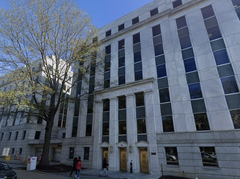
Now, the city's number of large office vacancies is becoming a concern when paired with the tax overhaul, according to Hooks, who cited 601 City Center, the city's first new Class-A high-rise in over a decade, as an example. Finished last year by developer Shorenstein and about halfway leased (mostly by the aforementioned Blue Shield in its relocation), according to the San Francisco Business Times, the 24-story property still has almost 300K SF available.
The Oakland area's office vacancy rate "increased appreciably in the second quarter of 2020," from 7.6% to 8.8%, Colliers International's latest report on the market shows.
Leslie and others say they are hopeful the additional time needed to decide on tax rates and a blue-ribbon commission will bear a business-friendly transition to a progressive business tax structure. Members of the commission will ultimately be appointed by the mayor and start meetings next year.
Contact Dean Boerner at dean.boerner@bisnow.com.