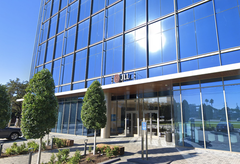
On the hunt for what's next in sustainability, our intrepid Chicago reporter asked the owner and developer of the Windy City's 272k SF LEED Platinum Green Exchange to be our spirit guide. (We're still undecided about our spirit animal, but we're thinking turtle.)
Baum Development principal David Baum (center) says the next big thing depends on what level you're playing at. While lighting retrofits and rebates are most common, "the next phase is how do we create a zero," he says, meaning no carbon footprint. (Just don't divide by it, or all your high school math teachers will haunt you this Halloween.) How it could work: adding a geothermal system to a building for heating and cooling, substantially reducing energy consumption; plus producing energy with some combination of wind and solar power. While a "zero" building may not make complete economic sense yet, green technology prices continue to go down as demand increases, boosting efficiency and the ability to create better building envelopes.
Another big trend: deconstruction. Reclaimed materials are all the rage these days, especially in retail. (We've been making necklaces out of recycled PVC pipes for years.) Instead of razing homes or commercial properties and dumping the waste in a landfill, designers are clamoring for materials like rough-cut lumber and old doors to repurpose in an artful and sustainable way, David says. The Green Exchange, located at 2545 W Diversey in Chicago's Logan Square, also includes an organic garden (above), chicken coop, and a 41,329-gallon rain cistern to capture water and reuse for irrigation. What's next on site: the opening of a sustainable brewery, Ale Syndicate, and a green restaurant is in the works.
We also asked our readers about what sustainable practices they'd like to see more of. The McShane Co's John Wilkins says a building's retention pond could be filled with gold if you consider urban fish farming. (You just wouldn't be able to bring your pet heron to work anymore.) "A feeder, some fish food, a little circulation, and bam, that eyesore becomes a cash cow... err, cash catfish." In Chicago, wholesale catfish prices are around $1.50/lb; 5,000 lbs of cats sold to local restaurants would make that puddle outside your property start paying off. Goby CEO Chris Happ foresees "data-driven sustainability—less about the plaque, more about the results." He's seeing property owners and managers tracking sustainability metrics throughout their portfolios with cloud-based software solutions. PositivEnergy Practice's Harish Chopra says the use of gas-powered microturbines to generate heating and cooling via absorption chillers and power can maximize efficiency and lower properties' energy bills.