Some opportunity zones will attract investor interest much more strongly than others because of the gentrification that is taking place within them, according to a new report by RCLCO. These gentrified zones tend to be in Rust Belt and Mid-Atlantic cities, as well as markets with strong tech industry concentrations.
While the vast majority of opportunity zones fall within economically challenged neighborhoods, there are gentrifying (and already gentrified) outliers. RCLCO found 70 qualified OZs in high-end neighborhoods.
RCLCO considered changes in real estate investment, household income levels and associated demographic characteristics to formulate the report's Gentrification Index. The index was then applied to every opportunity zone in the 25 largest metro areas.
The higher the index, the more likely it is to be a gentrifying area that investors will perceive as promising. Some quickly gentrifying OZs RCLCO studied will see tens of thousands of multifamily units delivered over the next several years.
Opportunity zones in the Mid-Atlantic are more gentrified than other regions, with an average Gentrification Index of 51.5, compared with 48.9 across all U.S. opportunity zones, the report said. Several of the country’s most affluent opportunity zones are in the Mid-Atlantic. Areas of Brooklyn Heights with median household incomes well over $100K/year are nevertheless opportunity zones, and Washington, D.C., has three OZs with median household incomes above $90K/year.
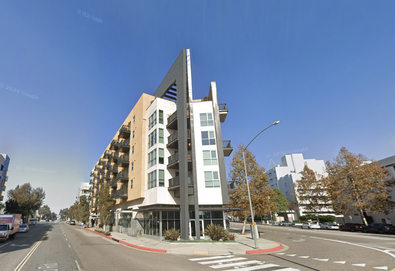
With an average Gentrification Index of 47.3, which is 3% lower than the average across all OZs, California’s opportunity zones are less gentrified on the whole than other parts of the country. Oakland has the most gentrified opportunity zones in California, while the Inland Empire has the least.
Sun Belt opportunity zones are generally less gentrified, comprising 55 of the 100 least gentrified zones, the report noted.
“Our index highlighted trends that we have seen anecdotally from research, strategy and institutional engagements,” RCLCO Vice President Eric Willett said.
"But we were especially surprised to see that certain highly gentrified opportunity zones had been selected, given the dialogue around opportunity zones as places to encourage long-term investments in underserved communities.”