Q4 has plenty in store: pumpkin spice lattes, Thanksgivukkah, and holiday parties. But what does this quarter mean for the hotel industry? We asked LW Hospitality Advisors prez and CEO Dan Lesser which four trends will define the 2013 market.
1) Growing Interest In Secondary & Tertiary Markets
While the traditional 24/7, coastal markets are still desirable, they're getting too competitive and expensive for many investors. (Plus getting sand in your socks is profoundly annoying.) Emerging energy markets—like Western Pennsylvania, Texas, and North Dakota—and university towns are gaining even more traction. Overall, hotel fundamentals will remain strong nationwide.
2) Governmental Impact
We're into the 10th day of the government shutdown, and hotels are feeling the pinch nationwide, with room rates and occupancy down. The government is not doing hotel business, and companies that do business with the government have cut back as well. Hotels around national parks are suffering, too. We still have "What ifs?" to contend with, particularly the looming debt crisis. "Despite this, we always seem to get through these issues," Dan says. "And we're still the greatest country in the world—overseas investors want to be here, own homes here, and visit. And it's the safest place to park your money." For risk-adjusted returns, hotels still garner tremendous interest.
3) Blackstone
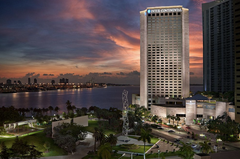
There's been a lot of IPO initiatives, most famously, Hilton. And Blackstone—the hotelier's parent company—is clearly the aggregator of hotel investors engineering proposed IPOs. The company "is nothing short of brilliant," Dan says, positioning assets for exit while still selectively choosing investments. One of its more recent deals was the $450M purchase of the Hyatt Regency Waikiki Beach Resort & Spa (pictured). "Blackstone is an expert owner," he adds.
4) The Affordable Care Act
Even though the Affordable Care Act opened for business Oct. 1, "everyone's still trying to get their arms around it, and there's still a ways to go until people understand what it's really about," Dan says. (In that way, the ACA is a lot like a TS Eliot poem.) The hotel industry doesn't know what its costs would be as a result of ACA, despite the fact that the act was supposed to be implemented by 2014. Hotel investment projections are being a bit stressed to reflect some time adjustment the law may require.