Data centers have become one of the nation’s defining political issues ahead of Tuesday’s midterm elections.
As tech giants invest hundreds of billions of dollars to build behemoth facilities and use vast amounts of power to support their artificial intelligence race, communities have pushed back. Candidates on the federal, state and local levels have responded to data center opposition by proposing stringent regulations on the industry — and by painting their opponents as data center supporters.
This contentious issue could influence the control of Congress and reshape statehouses across the country.

But for all the focus on data centers on the campaign trail, industry experts say the election’s actual impact on the development boom may be less widespread than the rhetoric would suggest. In Congress, even if a wave of anti-data center Democrats take control of both chambers, they would still struggle to pass significant legislation that could receive the signature of President Donald Trump, a vocal supporter of the industry.
In many states, candidates on both sides of the aisle are supporting stricter data center rules — meaning the industry is in for a tougher road no matter who wins. But there are state-level races in the key digital infrastructure markets of Texas, Pennsylvania and Georgia where candidates have staked out different positions, and the election could determine how much data center development will be allowed to move forward.
Just in those three states, Morgan Stanley estimates the planned development of 284 data centers totaling more than 33 gigawatts of capacity are at risk pending the results of these races.
“I don't think at the federal level the policy is going to shift much,” MOCA Economics Chief Economist Brandon Michalski told Bisnow. “If we go to the state level, that shifts dramatically and could change the trajectory significantly.”
The Battle For Capitol Hill
From Ohio and Michigan to Wisconsin, Texas and Maine, data centers have emerged as a major campaign issue in high-profile House and Senate races ahead of this week’s midterms. Data centers are deeply unpopular, and congressional candidates from both parties have made proposals to rein in development or limit its impacts a core element of their campaigns as voters voice growing concerns over electricity costs, environmental impacts and the broader consequences of the AI data center boom.
The trend is especially visible in political advertising. As of the beginning of October, House and Senate campaigns had spent more than $29M on ads mentioning data centers, almost always negatively, according to AdImpact data analyzed by Bisnow.
Although opposition to data centers cuts across party lines, Democrats have more aggressively nationalized the issue, contrasting calls for oversight of the sector with the Trump administration’s support for accelerating AI infrastructure development.
Prominent congressional Democrats have already proposed measures like a national data center moratorium and released an investigation arguing that hyperscalers aren’t paying their fair share of grid costs.
Now, party leaders are signaling their intent to make more aggressive oversight of the industry a prominent part of their policy agenda following the midterms, particularly if the party gains control of one or both houses of Congress. Last week, the Senate’s top Democratic tax writer announced plans to pursue an additional excise tax on data centers while eliminating the industry’s ability to tap a range of existing tax benefits tied to depreciation, research spending, opportunity zones and REIT structures.
Although Republicans have also pursued measures aimed at addressing voter concerns over data centers driving up electricity prices, GOP leaders have privately acknowledged that data centers have become a winning issue for Democrats.
The National Republican Senatorial Committee warned major technology and AI firms in August that Democrats were successfully making data centers the “centerpiece” of the Senate race in Ohio and that deteriorating public sentiment toward the industry was becoming a broader risk to Republican candidates specifically.
“This has become a sleeper issue for the entire election cycle,” the letter warned.
The data center industry has taken notice of this partisan dynamic.
AI infrastructure super PAC Leading the Future and connected groups have spent significantly more supporting Republicans than Democrats, according to Forbes, while hyperscalers and AI giants like OpenAI have reportedly ramped up lobbying in anticipation of more aggressive Democratic oversight of data center development and the AI trade.
Investors and analysts focused on the data center industry have similarly warned that the potential for Democratic victories in the House and Senate poses a threat to the industry’s growth and would bring greater regulatory and political risk.
“There will be congressional hearings. There will be investigations,” said Brian Gardner, chief Washington policy strategist at Stifel, according to Reuters. “You never know where that stuff leads, and there can be negative headlines.”
Yet despite the rhetoric and the flood of money pouring into congressional races, not everyone is convinced that even a Democratic sweep would materially change the federal regulatory environment for data centers.
A report published this week by MOCA Economics examining data center construction spending projected that Democratic control of at least one chamber would be a “nothingburger for policy.”
Michalski, who authored the report, said Democrats could introduce more restrictive bills, but Trump’s veto power would make measures such as a national moratorium, sweeping new grid cost requirements or additional tax burdens extremely difficult to enact. If control of Congress is divided, he expects deeper gridlock.
“I don't think you're going to get many Republicans to shift over to limiting growth in data centers and construction, and I don't think you're going to get many Democrats who are going to suddenly support data center development,” Michalski said. “From the outcome we foresee now in the House and Senate, I don't think that's going to translate into real material change.”
Others say the bipartisan dealmaking needed to advance restrictive data center bills, while unlikely, isn’t impossible.
Jacob Biderman, growth lead at data center permitting consultancy Spark AI, cited Trump’s Ratepayer Protection Pledge and Republican governors like Texas’ Greg Abbott, who have shifted toward tougher data center oversight amid voter concerns over their impact on electricity prices. If the midterm results are interpreted as a referendum on data centers, Biderman said, political pressure could push more Republican lawmakers — or the president himself — toward affordability measures they might otherwise reject.
“It's not unimaginable that a strong enough coalition might come together to convince him to be willing to sign some sort of regulation or at the least address the affordability issue, which is what we've seen most people concerned about,” Biderman said. “That seems like an argument that President Trump might be amenable to.”
Even without major legislation, Democratic control of one or both chambers could still lead to hearings, investigations, and additional scrutiny of AI and data center development, potentially creating market volatility and complicating federal permitting, Michalski said. A divided government also increases the risk of a government shutdown that would slow federal approvals.
Still, he said he doesn’t think any of these potential levers will meaningfully derail development for an industry that is already deploying the capital for its build-out over the next two years.
“A hearing or an investigation — if they brought in developers and the CEOs of companies like Meta and Google — they would shine the spotlight on the industry, but ultimately, that capital is already in the pipeline,” he said.
The Statehouse Races That Could Redraw The Data Center Map
Data centers are on the ballot in some of the industry’s most important markets. Data centers may be a major talking point in House and Senate races, but it is gubernatorial and other state-level contests that have the greatest potential to change the on-the-ground reality for developers.
The gubernatorial races underway in data center hotbeds across the U.S., in some respects, demonstrate the degree to which candidates view support for data center build-out as a liability, regardless of party or past support for the industry.
Few races present a choice between a candidate promoting data center growth and one opposing it. Instead, candidates in both parties are increasingly competing over how aggressively to rein in development, often seeking to portray their opponents as too closely aligned with developers.
In Michigan, Oregon, New Hampshire and Texas, both major party candidates support some form of data center moratorium.
But this doesn't mean the gubernatorial races won’t have massive implications for the development landscapes in key states. Candidates' proposals differ in both degree and approach, and there are states that could present very different landscapes for developers depending on who voters choose Tuesday.
Texas, Pennsylvania and Georgia stand out as the three states where the midterms could most directly reshape the trajectory of major data center markets.
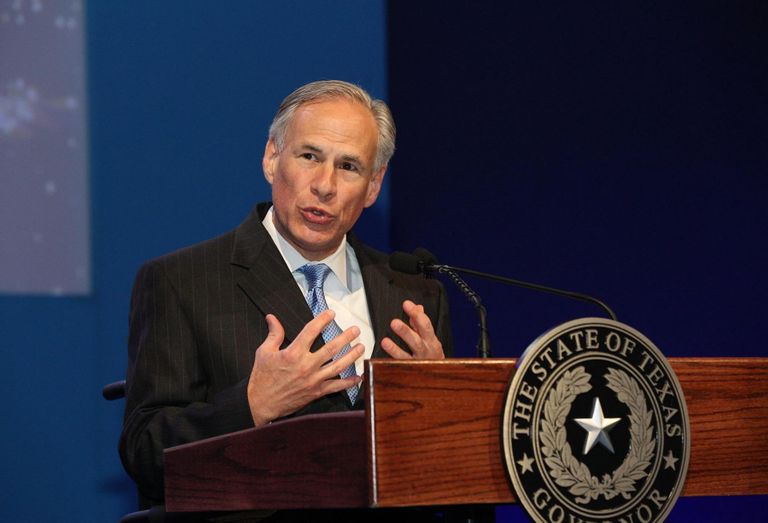
Few gubernatorial races carry greater stakes for the data center industry than in Texas, which has roughly 26 GW of capacity operating or under development and is on track to become the world’s largest data center market by 2030. The stakes have been heightened by an unexpectedly close contest between Republican Gov. Greg Abbott and Democratic challenger Gina Hinojosa, who trailed by just 3 points in recent polling.
Texas’ growth has been fueled by relatively easy access to power, limited local land use restriction throughout much of the state, and a business-friendly political environment that Abbott has long championed. But amid growing voter concern over data center electricity demand, the governor dramatically changed course this summer.
In August, Abbott ordered a halt to new data center grid connections while state agencies audited projects’ power and water needs, ownership and other details. He later directed the Texas Commission on Environmental Quality to pause data center permitting pending those reviews.
The orders have effectively functioned as a temporary moratorium, leaving developers uncertain when — or if — projects awaiting power will move forward. Spark AI data shows Texas project approvals fell 5% in the third quarter as the development bottleneck shifted toward the grid.
On the campaign trail, Abbott has also called for developers to bear more of the infrastructure costs associated with their projects and has suggested eliminating state tax incentives for the sector.
Hinojosa has made data centers an even more central campaign issue. She has pledged to impose an immediate moratorium until lawmakers enact stronger protections, including greater local control over approvals and safeguards preventing data center growth from raising utility bills. She has criticized Abbott's temporary measures as inadequate without permanent legislation.
Should Hinojosa pull off the upset, Spark AI’s Biderman said it would meaningfully change the trajectory of development in the state.
“Texas has been one of the more encouraging and welcoming states for data center development, so the outcome of this election could significantly change where developers feel comfortable — or able — to get facilities online,” Biderman said.
For others in the industry, the uncertainty extends beyond who wins.
If Abbott is reelected, some question whether his shift toward more stringent regulation will endure once the midterms are in his rearview mirror.
“How much of that is temporary for the elections or not, we don’t really know,” said Clifton Beech, a real estate attorney in Blank Rome’s data center practice, speaking at Bisnow’s DICE: Central event earlier this month.
In Pennsylvania, the stakes for data center development are in some ways the mirror image of Texas.
Democratic Gov. Josh Shapiro helped position the state as one of the industry’s most important emerging markets, but he has also moved to impose tighter rules as public concern over data center growth has intensified.
This summer, Shapiro unveiled a more restrictive framework governing data center development, adding new requirements around permitting, grid costs and community impacts.
His Republican challenger, Stacy Garrity, is calling for even tougher measures, including a temporary pause on new approvals to give municipalities time to update zoning rules, repeal of the state’s targeted data center tax exemption, and greater local control over project approvals.
Notably, Spark AI data shows project approvals in Pennsylvania increased significantly following Shapiro’s executive order imposing new permitting hurdles for developers.
Biderman said this illustrates a counterintuitive element to how developers view regulation. Shapiro’s order created additional hurdles and costs, but it also established clearer rules for what developers need to do to move a project forward. For many firms, predictability can be more valuable than a lightly regulated environment where requirements remain uncertain and can change after significant capital has already been committed.
He said it highlights the fact that developers aren’t necessarily hoping state-level elections result in the least amount of regulation and that more oversight doesn’t necessarily choke off new development.
“Some data center developers are actually very happy to see clearer regulations and restrictions, because if they enter a locality with no restrictions, they don't necessarily know what they're getting into, and that puts real money and real time at risk,” Biderman said. “Having that guidance, in some cases, encourages developers who feel like they can confidently put forward a project, understand what the entire timeline is going to be, and not be surprised by a new regulation or a new issue along the way.”
Georgia’s data center development landscape could look very different depending on the outcome of two statewide elections: the race for governor and the race for two seats on the Georgia Public Service Commission.
The state has emerged as a major industry hub, with more than 100 operational facilities and roughly another 100 projects in the pipeline. But the trajectory of that growth could differ based on the results of these elections.
In the gubernatorial race, Democrat Keisha Lance Bottoms and Republican Rick Jackson offer sharply diverging approaches to data centers. Bottoms supports a temporary statewide moratorium on new projects to develop a comprehensive strategy for managing data center growth. The measure would put new projects on hold. On the campaign trail, she has also proposed eliminating state tax incentives for data centers.
While Jackson has criticized some of the industry’s impacts and attacked Bottoms over her past support for a data center project, he has staked out a significantly more developer-friendly position. He opposes a moratorium and hasn’t called for eliminating incentives. Instead, he aims to address the concerns swirling around the industry by giving local governments greater authority over projects, mandating more extensive economic benefits and imposing more environmental requirements.
The midterms could also change how data centers pay for electricity in Georgia.
Two seats on the state’s five-person Public Service Commission are on the ballot, potentially altering the balance of power at an agency that regulates utility Georgia Power and approves major capital investments needed to serve data centers and other large loads.
Democratic candidates Peter Hubbard and Sheila Edwards have pledged to more aggressively scrutinize utility spending and prevent infrastructure costs for data centers from shifting to households and small businesses. Consumer advocates say that approach could better protect ratepayers, but some industry observers say stricter cost-allocation rules could raise the price of bringing new data centers online and deter data center development in the state.