The Interstate 35 corridor between Austin and San Antonio is one of the nation’s most active commercial real estate development areas.
But developers are increasingly facing delays.
Developers looking to build new projects along the highway are grappling with financing challenges, limited access to utilities and lengthy entitlement processes, real estate executives said at Bisnow’s Central Texas Mega-Metro Summit.
“It's very easy to make projects work on paper when you look at everything through rose-colored glasses and don't assess downside scenarios,” Stuart Hepler, director of credit investments at Palladius Capital Management, said at the Oct. 29 event, held at Plum Creek Shallow Bay in Kyle, Texas.
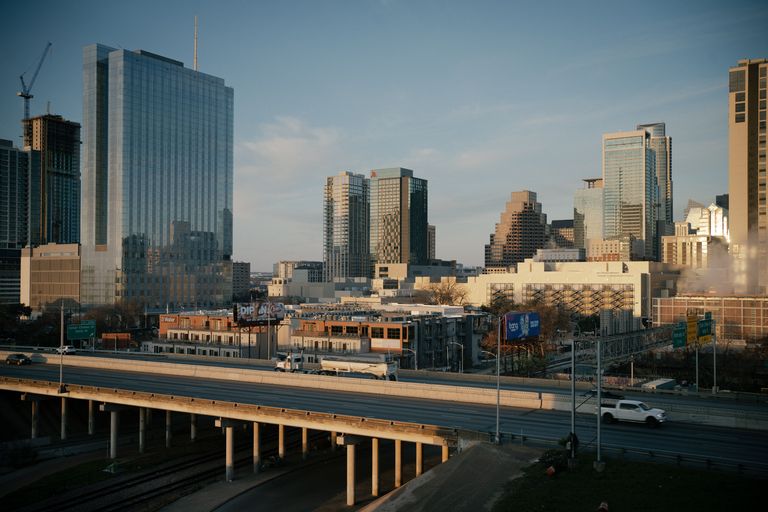
Retail centers, mixed-use destinations and infrastructure projects are reshaping the 80-mile stretch of I-35 in central Texas that serves as the main commuting route for many Austin and San Antonio residents.
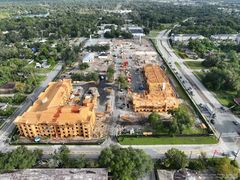
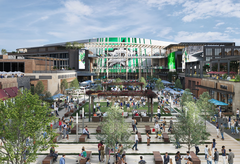
Construction is underway on a 100-acre mixed-use project called Kyle Park that will feature multifamily housing, restaurants and retail, with Dick's Sporting Goods and Barnes & Noble among its confirmed tenants. The first phase of a five-year development timeline is expected to be complete by late 2027, according to MySA. Another project, a $65M, 72-acre mixed-use development called Schertz Station, has been in the works for at least two years and will house a string of retailers including Home Depot and Cava.
Despite the progress, some developers say getting new projects off the ground is a challenge.
“There's so many hoops and hurdles that you have to go through,” Jeff Stringer, senior director of development at Quannah Partners, said at the event.
Securing utilities like power and water for construction is one such hurdle. Water supply pressures in the Austin region are driven by recurring drought conditions and rapid population growth. East of I-35, parts of Travis County could face an annual water shortage of about 5 billion gallons by 2080.
“Utility availability, especially water, is becoming harder to get,” said Michael Lee, vice president of development at Wilson Capital. “And it is much more expensive to reserve upfront.”
It would be difficult for developers to locate a site miles away from utilities because it would involve having to set up power and water on-site, which could set construction back one to two years, Stringer said.
The entitlement process can also get in the way of developers looking to situate projects along the interstate.
“I-35 is a very long corridor, so every jurisdiction is different,” Lee said.
The timelines vary, and it can take months or years longer than planned for a project to begin, he said.
“The project you imagine is not the one that's going to be delivered … and not on time,” Lee said. “Hopefully on budget, but definitely not on time.”
He added that the entitlement stage is where many I-35 projects start to lose momentum, especially for projects spanning multiple locales.
“We have five or six review jurisdictions that all have say over our project,” Lee said.
“Redesign loops, getting pricing back, getting comments back, changing your plans” are all components that can cause projects to take “a very, very, very long time,” he added.
Panelists also said it is a challenge to find financing for new projects along the corridor.
There is often “a disconnect between what borrowers or developers are looking for and what capital providers are willing to provide,” Hepler said.
In today’s market, it is “much more difficult to finance a project,” Lee said.
“Equity is more conservative, debt's more conservative.”