There is no ending in sight for the sharp rise in construction costs, and some sectors that have been relatively unaffected so far could soon be pulled into the chaos.
Construction costs will continue to rise at a faster-than-average rate for the next 12 months at least, JLL predicted in its second half construction outlook report. While single-family home and apartment prices have risen at similarly historic rates, contractors on nonresidential construction projects have yet to fully pass on the increased prices for materials and labor to developers, which seems bound to change.
In JLL's construction outlook report for the second half of last year, the commercial real estate services firm estimated that volatility in the global supply chain would ease somewhat, projecting materials price increases to sit in the 4% to 6% range for 2021. Instead, the volatility has either remained or deepened, leading materials prices to rise 17% in the year to date, JLL reports.
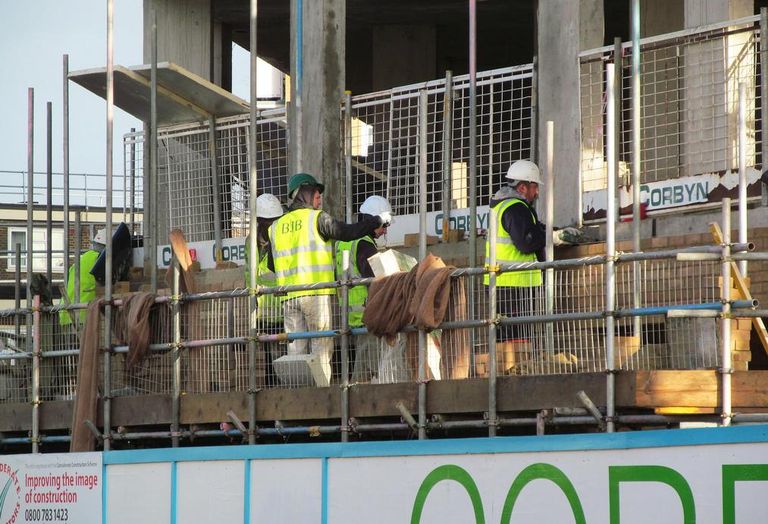
Construction wages also have no reason to stop increasing, as the industry has seen flat job growth or worse since May of this year, according to data from Carnegie Mellon University reported by JLL, while wage increases in construction have accelerated over the same time frame.
Though the price inflation in construction materials no longer seems to be rising at the eye-watering pace that lumber reached earlier this year, price increases have accelerated in more diverse types of materials in the past few months.
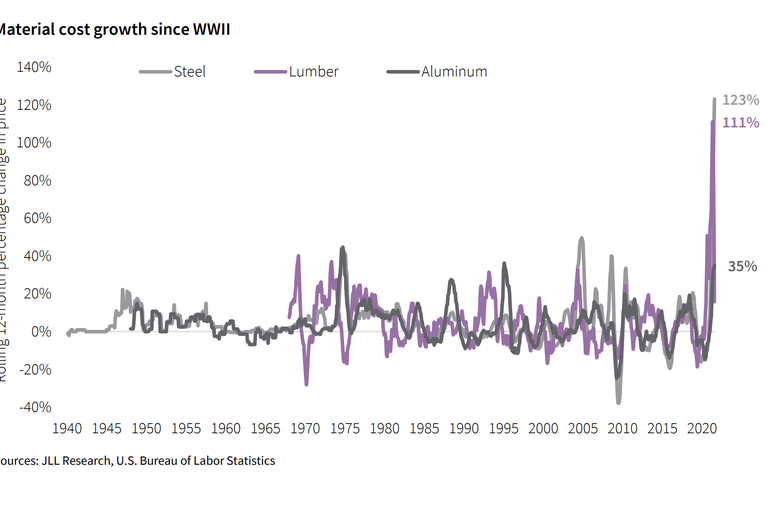
In fact, lumber is the only construction material that has had its price retreat at any point in the past year. Copper and brass products, insulation materials, gypsum, plastic and steel all increased in price over the past year at more than triple the rate they have grown over the three-year period ending at the same time, JLL reports.
Much like with labor, a sheer lack of availability in materials is an issue that has effects that go beyond price increases. Delays in obtaining relatively niche materials like petroleum-based roofing insulation have become so severe and unpredictable that contractors are sourcing alternative products, which tend to be much more expensive, The Wall Street Journal reports.
So far, the construction industry seems to be placing a premium on the certainty of lead time in an environment when even the most powerful homebuilders miss their own delivery estimates. Delays come with their own heavy costs, and as long as the coronavirus remains a concern, when a delay may arise and how long it will last is impossible to predict.
The same is true of the labor part of the equation, as construction is the industry with the lowest rate of Covid-19 vaccination and the highest rate of vaccine hesitance, according to CMU data reported by JLL. That means that an outbreak-related shutdown remains an elevated risk on the average construction site, even as the delta variant begins to recede.