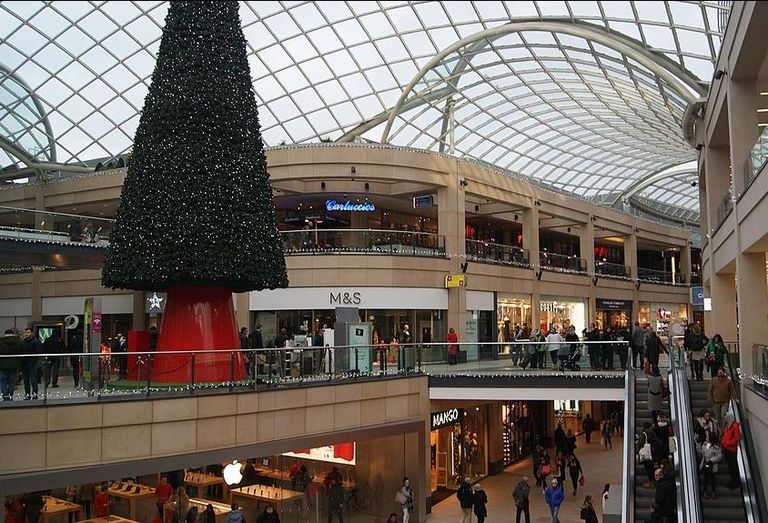
The half-year results of two of Britain’s biggest REITs offered a glimmer of hope for the struggling UK shopping centre market, with the dramatic recent falls in both rents and values almost slowing to a stop.
It is only two companies and both own some of the UK’s better shopping centres. But both Landsec and British Land said that rents and values were starting to "stabilise" in financial results announced last week. Noticeably the more positive of the two, Landsec even said it was considering starting to buy in the sector again.
Both companies reported rents and values falling in the six months to the end of September. At Landsec, like-for-like rents fell 1.8% and the value of its regional shopping centres fell 4.1% to £979M. At British Land, rents fell 2.7% and values 4.2%.
That’s still a drop, but during the same period in 2020, Landsec’s shopping centre assets dropped in value by 16%, and BL’s by 18%. Landsec’s rents were down 10% in the period. Meanwhile, BL said it was having to cut new deals 8% below its estimated rental values.
In its presentation, Landsec said the company was signing retail leases 3.3% ahead of ERVs, and that the majority of the valuation falls had been in Q1 (September-June), with yields stable in Q2.
“On the investment side, liquidity is beginning to return to the shopping centre market and importantly, senior debt is beginning to become available,” Landsec Chief Executive Mark Allan said on a conference call with analysts. “For our own part, with increasing conviction in the affordability of rent levels, we continue to believe prime retail yields look attractive on a relative basis. Of course, shopping centre rents are down just under 40% from peak, value is down around two-thirds. So it's only right to be cautious from here.”
As part of its results presentation, the company said that in its shopping centre portfolio, it was "likely to sell assets that do not meet our criteria and look selectively at investment opportunities.”
BL was more cautious, with Chief Executive Simon Carter noting that when it comes to retail, the company will be buying out-of-town retail parks, which performed well during the period. As far as shopping centres were concerned, the strategy was to keep its existing centres full.