| With the viaduct down, some of the city's oldest and most isolated neighborhoods will will be reconnected to each other and to the waterfront. What comes next is the most exciting part, says UrbanVisions CEO Greg Smith: owners, investors, office tenants, retail, and residents sense the coming together of a grand vision. |
| A photo taken from the Bisnow Lego Chopper. This vision will redevelop the area in the model behind Greg, connecting Pioneer Square, the Stadium District, the Chinatown International District, and the waterfront. Besides the concrete corridor disappearing from the landscape (as everyone had hoped it would), zoning had to be changed to create a modern mix of work-play-learn space. "After the 2001 earthquake, a small group of us got together—all developers, all competitors—and said, let?s come up with a vision that kind of stitches together the neighborhoods of South Downtown," Greg tells us. |
| Above is a rendering of 200 Occidental on the Diamond Lot in Pioneer Square, a mixed-use building with 130k SF of office, roughly 72 market-rate loft-style apartments, and about 16k SF of retail space. It's one of three projects Greg is focused on. Second and Pike is a 37-story apartment tower with about 350 apartments. The Tower is designed by award-winning architect, Tom Kundig of Olson Kundig Architects. Greg plans to take both to the capital markets next month. He also has a 1.5M office tech campus in the planning stages on seven acres he owns east of the stadiums. Since about 1,600 parking stalls between the viaduct and North Lot will be wiped out, Greg wants to develop 120 to 200 stalls of short-term parkingunder Occidental Park, save the trees, and redesign the public space. (Or put the exact park back in its place.) |
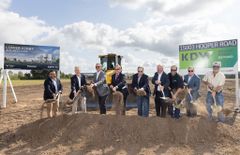
| As the viaduct melts away, the $180M first phase of the North Lot project (above) recently commenced and will feature the west block development known as Stadium Place, according to developer Kevin Daniels. The sponsor, R.D. Merrill Company, got involved because it provides a long-term opportunity, and "we are committed to reinvigorating Pioneer Square," chairman Charlie Wright tells us. ?This is a unique, never-to-be-duplicated site, and like the Space Needle, we want this building to become a lasting Seattle image." Adding the building to the density will do a lot for the area, he says. The second phase, called Stadium Towers, is expected to begin in late '12, with the total project scheduled for completion in '16. |
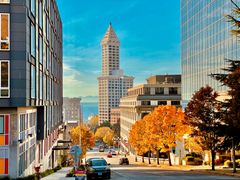
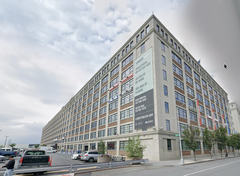
| Owners of existing buildings, like the historic landmark 1201 Western Building owned by Mickey Smith, long-time principal of Martin Smith Inc, may be nestled up to the viaduct now, but soon they'll have shoreline seats on the waterfront. (In short, the back will become the front.) The Western Building is already 100% occupied—that's just 3% above the average for his entire 15-building office portfolio, which spreads from Pioneer Square and along the east and west sides of the viaduct's corridor. |
| Above, is a cool idea presented to Waterfront Seattle by designer James Corner of NYC-based James Corner Field Operations at the end of October. How the waterfront is ultimately redesigned is a subject in which Mickey has a lot of vested interest; in addition to the office buildings, he also owns Piers 55 and 56, next to Ivar's Acres of Clams at Pier 54. "It's a great opportunity, but until I know what's going to happen, I'm not making any plans," Mickey tells us. The grand vision could well be much-needed help for retail (the first floor of most of his office buildings), which has been hurt by the lack of parking (more hurt on the way). Mickey's solution: a combination of existing garages, new public garages, and improved public transportation. |
| We asked the Smith brothers separately (yes, Greg and Mickey are brothers) to tell us something people might not know about them. Starting with Greg: "We're related to Ivar in Ivar?s Acres of Clams." Yep, blood of the family. Now their last name is Smith and they tell us their father, Martin Smith, used to own the Smith Tower in the '70s with Ivar. And this recent history has caused some confusion. "A lot of people think it was named after my family, and it was not," Mickey tells us. "There are a lot of Smiths in this world." Ok, so the gentleman above is Leonard P. Smith, the brothers' great-great-grandfather who settled in Seattle in 1868, served as mayor in 1880 and 1881, and was the town's first jeweler. (For the record, the Smith Building was actually named for Lyman Cornelius Smith, inventor of the first workable typewriter. Think old-timey iPad.) |
The Big Plan for South Downtown
Continue reading this story with a free account
Log in or register
Related Topics:
200 Occidental
, James Corner Field Operations
, Kevin Daniels
, Martin Smith
, North Lot
, Pioneer Square
, Smith Tower
, South Downtown
, Space Needle
, Stadium District
, Stadium Place
, UrbanVisions CEO Greg Smith
, Waterfront Seattle