Three cities have been tapped for coveted ARPA-H hubs, elevating their stature in the life sciences world.
After months of campaigning by major cities, universities and economic development leaders for the $2.5B agency to establish one of three headquarters in their communities, the Advanced Research Projects Agency for Health has chosen Cambridge, Massachusetts, Washington, D.C., and Dallas as hub locations.

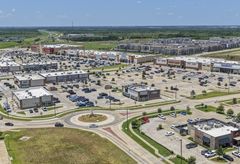
ARPA-H's administrative operations will be based in the D.C. region, near its parent agency, the Department of Health and Human Services. The Cambridge operation will function as an investor catalyst hub to be run by Hadley, Massachusetts-based nonprofit VentureWell, while the agency chose Dallas' Pegasus Park for its customer experience hub, according to a news release.
“ARPANET-H is a testament to our commitment to inclusivity and innovation in health care,” HHS Secretary Xavier Becerra said in the release. “With its vast array of cutting-edge health capabilities, this dynamic nationwide network embodies our unwavering mission to propel forward health outcomes in every corner of the country – and beyond.”
President Joe Biden announced plans last year to launch ARPA-H, a new agency dedicated to funding moonshot tech research, kicking off a battle among municipalities eager to land one of three hubs dedicated to advancing and funding cutting-edge research. Biden modeled the agency after the Defense Advanced Research Projects Agency, or DARPA, appointing Boston biotech executive Renee Wegrzyn to lead the effort.
A hub-and-spoke model will broaden the agency’s reach and help it tap into healthcare and research infrastructure across the nation.
“Through this nationwide hub-and-spoke network, ARPANET-H will enable ARPA-H to create breakthrough capabilities and achieve health outcomes for everyone that are accessible, tangible, and measurably better,” Wegrzyn said in a statement. “Regardless of location, ARPA-H funding will support the best and brightest ideas across the country, with opportunities for universities, companies, and non-traditional performers.”
In Dallas, Tuesday's news was greeted with enthusiasm as a sign that the city’s 26-acre life sciences campus had arrived. User testing, clinical trials, rapid prototyping and patient listening sessions are some of the activities expected to take place at the DFW hub.
"We are thrilled for Texas to play a significant role in advancing health outcomes in our country," Lyda Hill Philanthropies CEO Nicole Small told Bisnow in an email. "Our team is proud to be part of a collaborative effort among communities of all sizes across the state to ensure Texas was selected."
Lyda Hill is one of the developers behind Pegasus Park.
Dallas was chosen based on its access to technical expertise and its cost-competitiveness, and the decision comes after stakeholders spent the past several years attempting to legitimize North Texas as the next logical hub for life sciences.
The Metroplex boasts several Tier 1 research universities, a network of reputable healthcare systems and a business-friendly environment, but it has lacked the necessary lab space inventory to take the industry to the next level.
The opening of Pegasus Park off Stemmons Freeway in 2021 was a major turning point, and in 2022, when BioLabs debuted its 37K SF coworking lab in the development, the region received even more buzz.
All of that activity led to Dallas as a serious contender for the ARPA-H hub. The campaign was endorsed by several key leaders, including U.S. Reps. Colin Allred, D-Dallas, and Michael Burgess, R-Pilot Point, who led their colleagues in writing a letter advocating for the selection of Pegasus Park.
Dallas' selection validates what market experts like JLL's Ethan Garner say they have been championing for years — that the city is organized, collaborative and supportive around an industry that has long seen great science leave to grow elsewhere.
"We're so excited to see the fruits of all of this labor continue to come together in ways that are beneficial to not only north Texans but the country as a whole," Garner, who is the region lead for JLL's healthcare and life science business, said in an email.
"Continued federal investment will enhance venture development that will help drive innovation in the biotech sector in this region and benefit lives through new therapies and partnerships."
UPDATE, SEPT. 27, 11:23 A.M. CT: This story has been updated to include insight from JLL's Ethan Garner.