For a city known the world over for its restaurant scene, Chicago's embrace of food trucks leaves a lot to be desired. The city's food truck ordinance, which went into law five years ago next month, seems tailored to make successful food trucks the exception, not the norm.
But food trucks' loss has often been brick-and-mortar's gain.

The ordinance is littered with restrictions on where and for how long a food truck may operate. The city designated 37 food truck zones, but trucks may only stay parked in a zone for two hours at a time. The ordinance prohibits food trucks from parking within 200 feet of any business that sells food, including pharmacies and convenience stores. Food trucks must be equipped with GPS devices officials can track if they are operating outside of the designated zones.
Food trucks also incur stiff penalties for violating the ordinance's regulations. Parking violations range from $1K to $2K, while health code violations start at $200. The result is fewer licensed food trucks today than when the ordinance became law. Five years ago, there were 130 licensed food trucks in Chicago. Today, there are around 70. By comparison, Austin, Texas, with a population of 931,000, has licensed 1,250 food trucks.
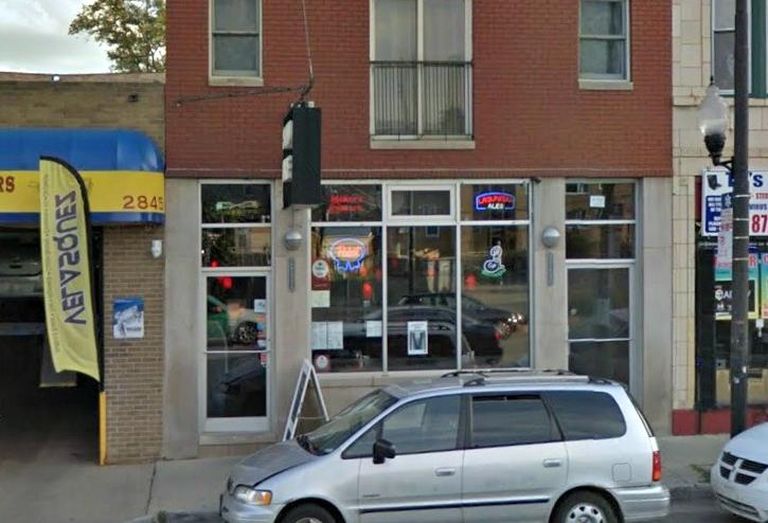
The food truck ordinance's restrictions and the reality of incurring extra costs in fines have led many food truck operators to incorporate a brick-and-mortar component to their business plans. Amy Le, founder of the Illinois Food Truck Association, ran the DucknRoll truck from October 2011 to December 2012 and racked up $20K in debt before she ceased operations. Le went on to open two South Loop restaurants, Saucy Porka and Spotted Monkey. Döner Men co-owners Shawn Podgurski and Phil Naumann opened DMen Tap, a bar in Avondale with a kitchen for them to serve their European-style Doner kebabs, late last year. Podgurski said a bar and restaurant were always in their business plans but the restrictions of the food truck ordinance forced them to look for a space sooner than they wanted.
Podgurski said the limited number of designated zones where food trucks can operate results in a lack of diversity, especially in the highly coveted downtown zones where a food truck can make the majority of its daily business catering to downtown office workers grabbing a quick bite for lunch.

Beavers Coffee + Donuts owner Gabriel Wiesen, who serves as Illinois Food Truck Association president, opened a shop inside the Chicago French Market in 2012 and plans to open a second location this year. In a Crain's Chicago Business op-ed last December, Wiesen said he was one of the fortunate food truck operators, with the resources to either add a storefront or transition away from a mobile operation.
For those that do not have the resources to operate a fully functional food truck to cook and prepare food on board, shared kitchens like Kitchen Chicago offer an alternative. Kitchen Chicago, on the West Side, has a roster of clients using its kitchens that includes Beavers Coffee + Donuts and other food trucks like the Tamale Spaceship, while 5411 Empanadas used Kitchen Chicago before opening its own storefront in Wicker Park.
But the food truck ordinance may even be keeping this entry into brick-and-mortar from exploding. Both food truck operators and restaurateurs believe loosening the restrictions would help the food truck scene to rival that of cities like Austin and Los Angeles, and allow for more operators to make the transition to storefronts.
"If you want food trucks to succeed in Chicago, let them operate like they do everywhere else," Podgurski said.