
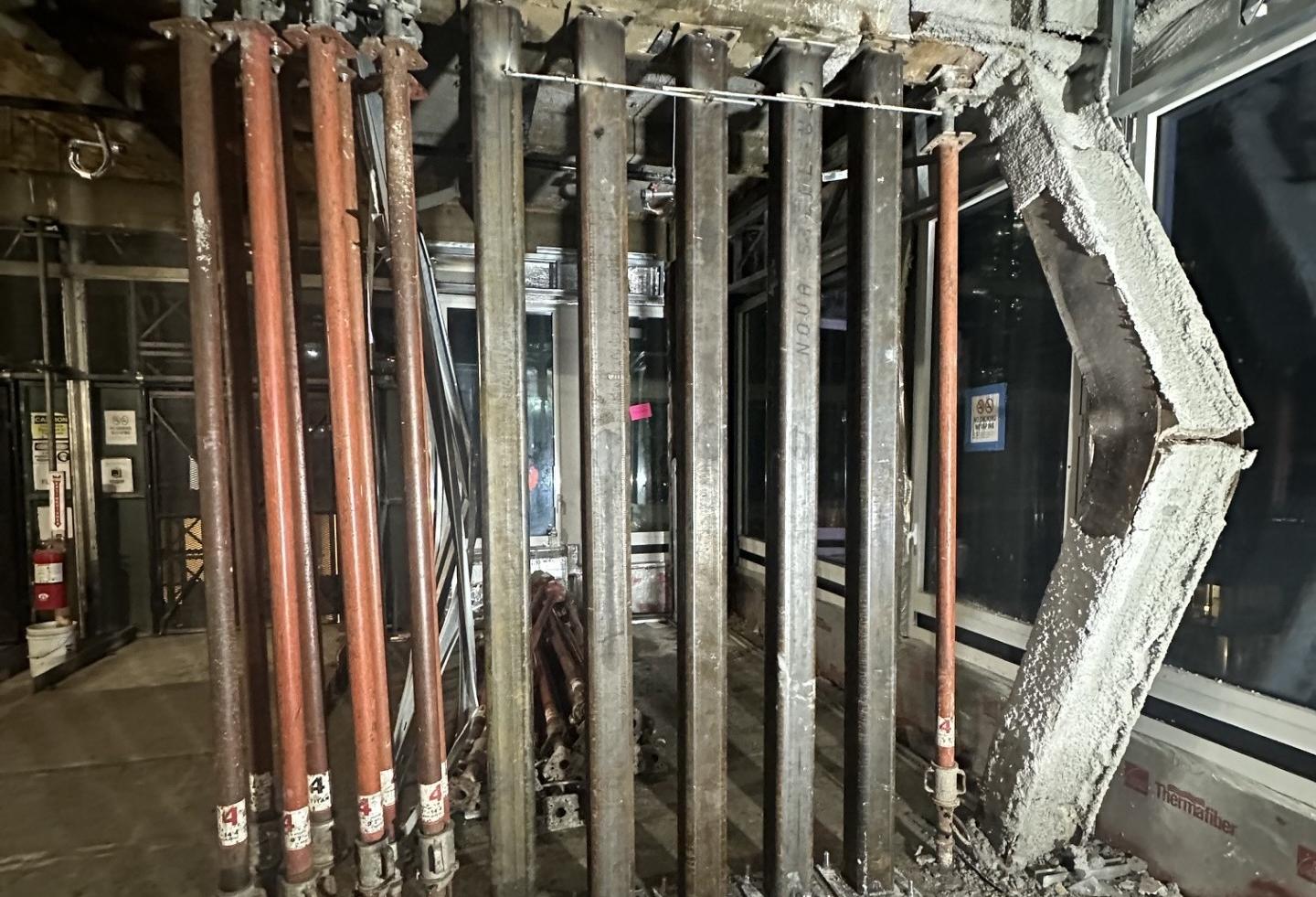
The buckling of two support columns at the former Pfizer headquarters in Midtown Manhattan on Tuesday morning rattled more than the nation's largest office-to-residential project. It jolted a real estate industry that has been looking to the building as a bellwether for the city’s conversion boom.
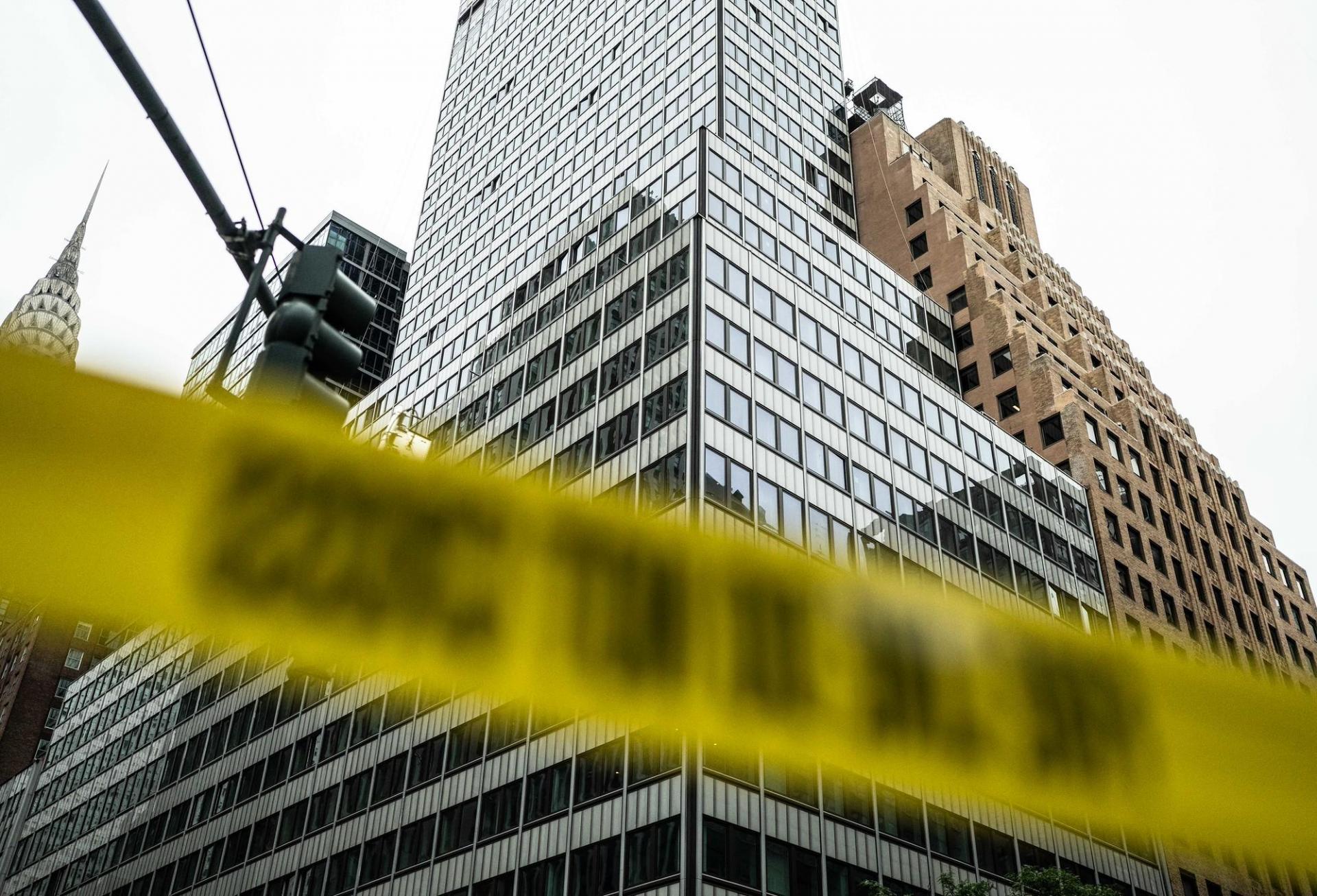
The discovery of the compromised structure prompted a swift emergency response, forcing the evacuation of nine nearby buildings and the closure of 10 city blocks as workers pushed to stabilize the building at 235 E. 42nd St.
By Wednesday morning, the project — a 1,600-unit luxury apartment building set to open sometime next year — had been stabilized, and the evacuation zone around it was significantly reduced to a handful of nearby buildings. But images of bent steel and sagging floors will linger as developers across the city pursue similar conversion projects.
Policy changes and tax incentives pushed New York City to the forefront of the country’s accelerating adaptive reuse trend. Since 2020, 3.3M SF of office space has been converted into residential use, with more than 19M SF in the pipeline, according to a second-quarter report by Avison Young.
The former Pfizer headquarters is responsible for approximately 1.3M SF of that pipeline. But some are wondering if Tuesday’s incident could hold larger ramifications.
“There should be a reaction. There should be laws and regulations that respond to mistakes that are made,” New York Apartment Association Executive Vice President Jay Martin said. “But the concern would be that there would be an overreaction, there'd be this knee-jerk reaction by the city council or agencies to put more and more regulations, at the cost of providing housing.”
Martin added that lenders could be more hesitant to finance these projects and insurance rates could rise following the national news coverage the incident has received.
In a statement, developer Metro Loft Management said the issue affected fewer than 30 apartments and it has ensured that workers have created a plan to fully rebuild the impacted area.
“While we understand this has drawn significant attention, we want to be clear: this involves a small fraction of the building, and we are already in the process of resolving it,” the statement says. “We remain on schedule.”
Bisnow/Sasha Jones/FDNY
Initial analyses indicated that the 11-story addition overstressed the 37 floors below it, causing the building to shift and supporting structures to bend.
“Reports of risk of a collapse were and are inaccurate,” Metro Loft added.
During a press conference on Tuesday, New York City Fire Department Chief of Department John Esposito said that officials were concerned about “a localized collapse.”
The Department of Buildings has issued a vacate order for the site and launched an investigation into the structural failure, a spokesperson for the agency said. It has required that the developer retain a third-party engineer to conduct a forensic evaluation.
“I do continue to consider the conversion of office space into residential space as part of our answer to the housing crisis. I also consider that we have to do so safely and in a way that is fully accountable,” Mayor Zohran Mamdani said at an unrelated press conference on Wednesday. “This is not a necessary consequence of an office-to-residential conversion. This, however, is clearly a breakdown in that process.”
Activists have used the event as an opportunity to push for union labor mandates, attributing the mishap to a lack of standards. In a statement, Buildings and Construction Trades Council of Greater New York President Gary Labarbera said that the group is seeking to tie construction wage requirements to tax abatements supporting conversion projects.
However, Metro Loft founder Nathan Berman downplayed the situation, calling it a “freak accident” that was “blown a little bit out of proportion.”
He also said the incident could happen at any construction site, whether that be ground-up or adaptive reuse.
“This could not have been systemic,” he told Bloomberg.
Conversions have been celebrated as a solution for both record-high office vacancy rates and the housing crisis — essentially a way to kill two birds with one stone. At the same time, skeptics have pointed to high construction costs and awkward floor plans as a reason such projects might not be a panacea.
Manhattan, with its plethora of aging office properties and soaring living costs, has become ground zero for the movement. The City of Yes citywide zoning update and the Midtown South rezoning dramatically increased the number of buildings that could be legally converted for residential use. The city created a conversion accelerator program to streamline approvals.
The state legislature adopted the 467-m tax break in 2024 to incentivize the construction of affordable housing in these projects, with higher bonuses awarded to first movers. The 42nd Street incident occurred just a week after the deadline for developers to commence a project in exchange for the maximum 35-year property tax abatement.
Those initiatives may make conversions easier to finance, but they don’t make construction simpler.
Conversion projects don't have the luxury of being a “blank slate” the way new construction is, said Stanley Stoll, CEO of forensic engineering firm Knott Laboratory.
“A building that's been in service for 50 years, it's exposed to elements, potential deterioration of those materials,” Stoll said. “All of those [variables] have to be accounted for and understood when you're going to reuse them and potentially add more loads to them than they were originally designed for.”
Metro Loft is perhaps the most experienced developer of conversion projects in the city. Berman has been transforming office towers into apartments since 1997.
That includes 25 Water St., the largest completed conversion in history, where Berman and GFP Real Estate added 10 floors to the former JPMorgan Chase office tower for its transformation. The Pfizer project, a partnership between Metro Loft and David Werner, follows a similar blueprint.
Martin highlighted that the situation is uncommon — most conversions don’t involve major additions. He also expressed concern that Tuesday's incident may result in unnecessary mandates and additional costs, whether that be by lawmakers, lenders or insurance providers.
“What's most important is that everyone keeps a very realistic head about this,” Martin said.
Stoll said Tuesday’s incident could have been the result of a small mistake at any level. The issue could have been as simple as building materials being stockpiled in one area of the building, overloading the columns below.
“Maybe there was a weakness in the building, just because of the construction sequencing,” Stoll said. “But once it was constructed, it was going to be perfectly fine.”
Accounting for such small details requires expertise, which may not be available for every project or even within city agencies. The DOB’s full-time headcount remains below its early-pandemic peak, and turnover has increased in key technical and inspectorial titles, according to an audit by New York State Comptroller Thomas Dinapoli released last month.
The audit also revealed that although construction site safety indicators show improvement, the time it takes for the city to examine plans and inspect developments has grown due to budget constraints and reduced staffing.
As the city is attempting to speed up the development process, layering additional checks and balances onto conversion projects may slow approvals, increase administrative burdens and undermine efforts to cut red tape.
“There are a few different options to up the quality control and review process, but they all go against time,” Stoll said. “And we’re in a state where we need more housing.”
)
)
)
)
)
)
)
)
)
)
)
)