
Matthew Jemal sat alone in the back of a modest room at Alex Cooper Auctioneers’ Northwest D.C. office. One of a dozen attendees, he was considering bidding on a K Street office building up for auction — a property bound to sell for a fraction of its former value.
It was May 30, 2024, and his family’s real estate empire, Douglas Development Corp., was under pressure: Its $1.4B deal to build a new federal agency headquarters was on the verge of falling apart, and it was in default on loans tied to office and retail buildings that suffered from the post-pandemic value destruction that swept downtowns across the country.
Yet one of its executives was busy trying to take advantage of that same distress. While the lender ultimately won that auction, his presence in the room signaled something: The Jemals were looking to buy.
“We’re deal junkies,” Jemal told Bisnow before the bidding began.
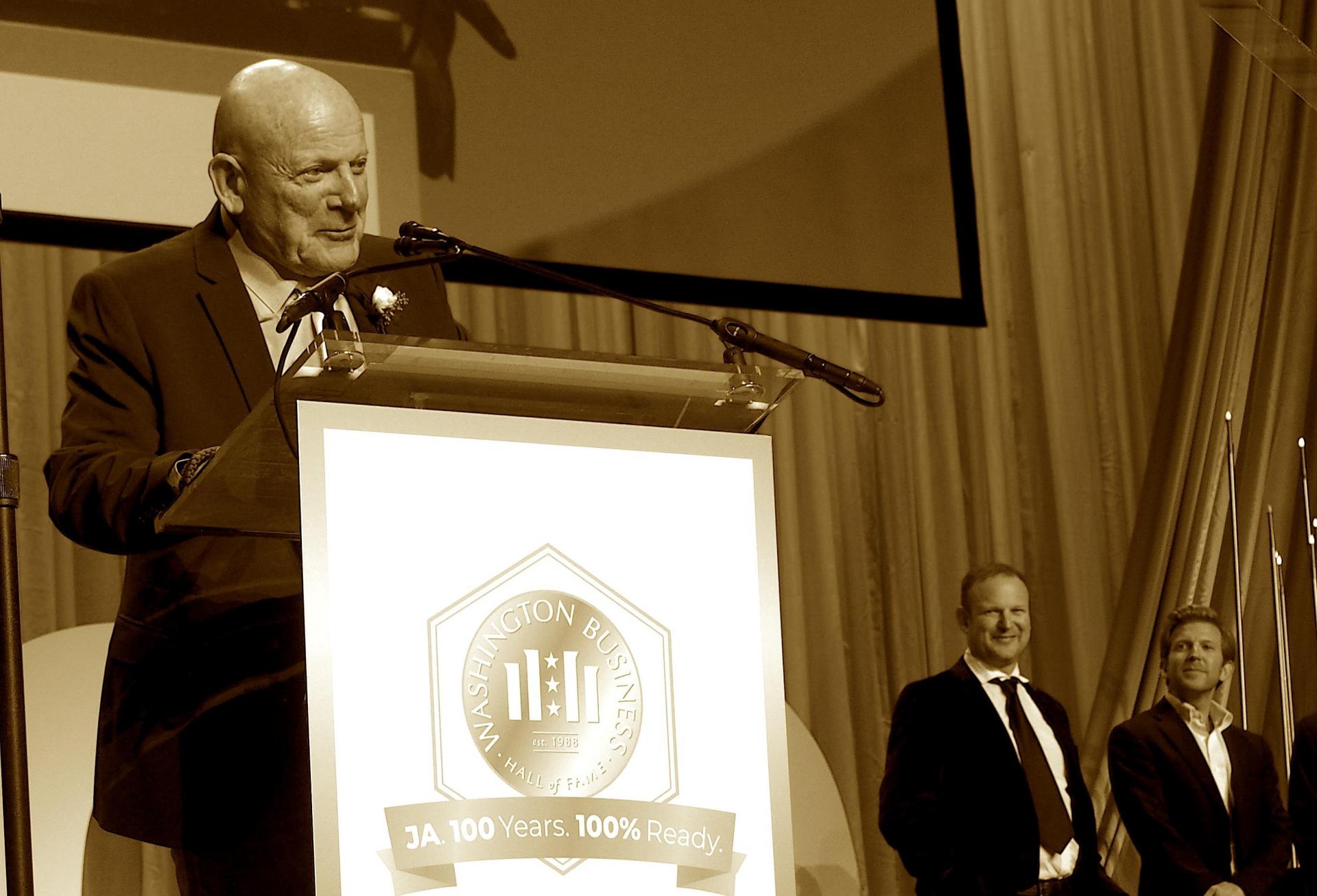
Matthew Jemal, the youngest son of D.C. real estate mogul Doug Jemal, has emerged since then as one of the city’s top dealmakers. Over the last eight months, the family firm has purchased four office properties in the D.C. area totaling 598K SF — for just $89.3M combined — and at least three of them were through a new venture the 38-year-old is spearheading.
He declined to participate in an interview or answer written questions for this story after several inquiries. But local office market sources tell Bisnow he is on the hunt for more deals.
“Right now, Matthew Jemal is the most active buyer in D.C.,” said Transwestern Managing Director Phil McCarthy, co-leader of the firm’s regional office, which has brokers representing the Jemals.
“They're looking at every investment opportunity in the city right now, as far as I know,” said Stream Realty Executive Managing Director Kyle Luby, another local market head whose firm works with the Jemals.
The father-and-sons team has amassed a property empire over the last five decades of more than 270 buildings totaling 19M SF in seven states, primarily concentrated in the District. They own swaths of office and retail buildings downtown and a series of historic buildings they converted to new uses.
But many of their D.C. properties have fallen into financial distress as the city's real estate values have dropped, and the family has been offloading assets.
Douglas Development has sold at least 20 properties in the greater D.C. area over the past 15 months — 737K SF for a total of $232.6M, according to a Bisnow analysis.
The landlord has lost at least one to foreclosure: a stretch of retail and office properties across from Capital One Arena in the heart of the first D.C. neighborhood Doug Jemal bet on in the 1980s. And it has another scheduled for a foreclosure auction next month.
Zoom in on the map below and click on the icons for more details on Douglas Development's deals over the last 18 months. Sales are in green, foreclosures are in orange, and acquisitions are in blue.
The company’s foreclosures, sales and acquisitions represent a dynamic taking place across the D.C. market: owners cutting their losses and cashing out where possible, then pouncing on office deals born out of distress, betting they can profit from the city’s recovery.
But the Jemals stand out from the crowd, not only because of their long history and large portfolio in the city but also because of their conviction and speed — traits Matthew Jemal has picked up from his father, Doug, and older brother, Norman.
Doug and Norman Jemal also didn't respond to requests for comment for this story.
As a family business, Douglas Development operates differently from many of the traditional buyers in D.C.’s office market, such as pension funds, life insurance companies or REITs, which typically go through lengthy deliberations before closing a deal.
“They know what they want and cut to the chase to get deals done that they want to get done,” said Miller Walker co-founder Bill Miller, a D.C. retail broker. “They're far more entrepreneurial than a big public company that would go through committees and committees and end up with an answer after some protracted period of time.”
The Jemals have built their business by taking big risks to get big rewards. They know how to strike while the iron is hot, and they are doing it again. Only this time, there's a new front man.
“They're really good distressed-property buyers, and they're restocking, reloading the cabinets and the assets,” MRP Realty Managing Principal Bob Murphy, another of the city’s top developers, told Bisnow.
Building An Empire
Doug Jemal began buying up buildings in the early 1980s after co-founding his family’s electronics business, Nobody Beats The Wiz.
The company took on properties in parts of D.C. that had seen better days: historic office and retail buildings in Chinatown and Penn Quarter before the MCI Center was built, plus old industrial buildings in Ivy City and other underdeveloped parts of Northeast D.C.
Jemal, now in his mid-80s, earned a reputation for his ability to see beauty in older, underutilized buildings.
“I'm probably a doctor of abandoned property,” he said in 2019.
In the late 1990s, he acquired the former Wonder Bread factory in Shaw and an old warehouse on New York Avenue Northeast built for the People’s Drug Store chain — both of which he turned into office buildings.
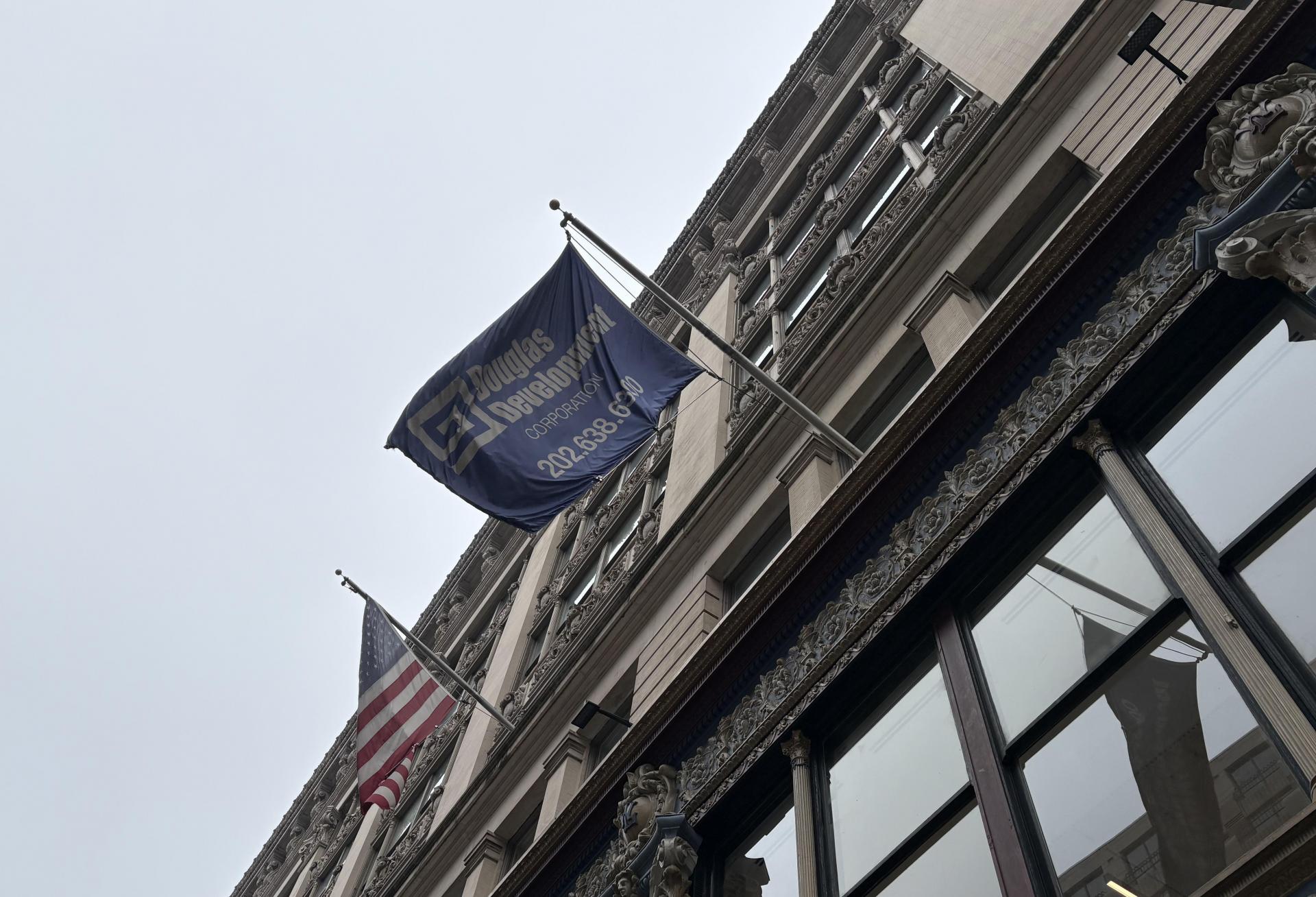
In the early 2000s, Douglas Development revamped the 1880s-era Woodward & Lothrop flagship department store downtown into half a million square feet of office and retail it called the Woodies Building. Atop the restored, multicolored engravings that adorn the exterior flies a Douglas Development flag — navy blue printed with the company’s rectangular spiral insignia.
The Jemals' most dramatic turnaround project was Uline Arena, a domed brick structure that had hosted Dwight Eisenhower’s inaugural ball, The Beatles’ first U.S. concert and professional sporting events before being turned into a trash transfer station, then falling into disrepair.
Douglas Development bought it in 2004 and held on to it for more than a decade before converting it into an office and retail complex that houses D.C.'s flagship REI store and a brewery.
A mile and a half up New York Avenue sits the six-story building that had served as the central warehouse for department store chain Hecht Co. starting in the 1930s. The Jemals acquired the loan, foreclosed on it and then took over the property at an auction in 2011, then redeveloped it into luxury apartments and retail. They bought several older brick buildings in the surrounding Ivy City neighborhood and turned them into a trendy hub of distilleries, breweries and restaurants.
“They have been visionaries relative to first moving and doing things that others weren't prepared to take a risk on,” Miller said.
In interviews, the patriarch has described himself as a lone wolf in D.C.’s real estate network, opting for cowboy boots and jeans and never quite fitting in with the traditional suit-and-tie crowd. He brought his two sons into the business before they could legally buy a beer.
Norman Jemal joined the family business after high school — his LinkedIn profile notes that he attended “real world university” — and Matthew Jemal dropped out of high school to join the family business.
At 56, Norman is 18 years older than Matthew.
“You got the father teaching the son, and then the son teaching the younger one,” Cushman & Wakefield Executive Vice Chair Bill Collins said.
Matthew and Norman Jemal have spearheaded the company’s D.C. activity in recent years, sources said, while Doug Jemal has worked on their expansion into other markets like Buffalo, New York, where he bought the city's tallest building.
Norman Jemal has led their expansion into Richmond, Virginia, where he landed a $56M construction loan last month to convert an office tower into a hotel and apartments.
“They grew up in the business, and their dad’s handing the baton, so to speak,” Collins said. “He’s not out of it. He’s a great mentor for them, but they’re obviously doing a lot of stuff out front.”
With Norman Jemal’s earlier entrance into the business, he was the one involved in the company’s legal troubles in the early 2000s.
The company was sued dozens of times for breaches of contracts, including instances in which contractors alleged that the family failed to make payments, allegations that continue to this day.
In 2005, Norman and Doug Jemal, along with the company's director of leasing, were indicted and in 2006 tried for conspiracy, bribery, fraud and tax evasion. Prosecutors claimed the defendants had attempted to bribe a D.C. official with gifts including a Rolex watch, limousine rides, box tickets to Capitals and Wizards games, and a pair of cowboy boots, The Washington Post reported.
It was Matthew Jemal’s 18th birthday when the FBI stormed the Douglas offices in 2005, leading up to the indictment and trial.
“I didn’t even realize there was much of an investigation going on,” the younger Jemal told the Post in 2017.
Norman Jemal was cleared of all charges. Doug Jemal was found guilty solely for wire fraud. He was pardoned by President Donald Trump at the end of his first term.
Pruning The Portfolio
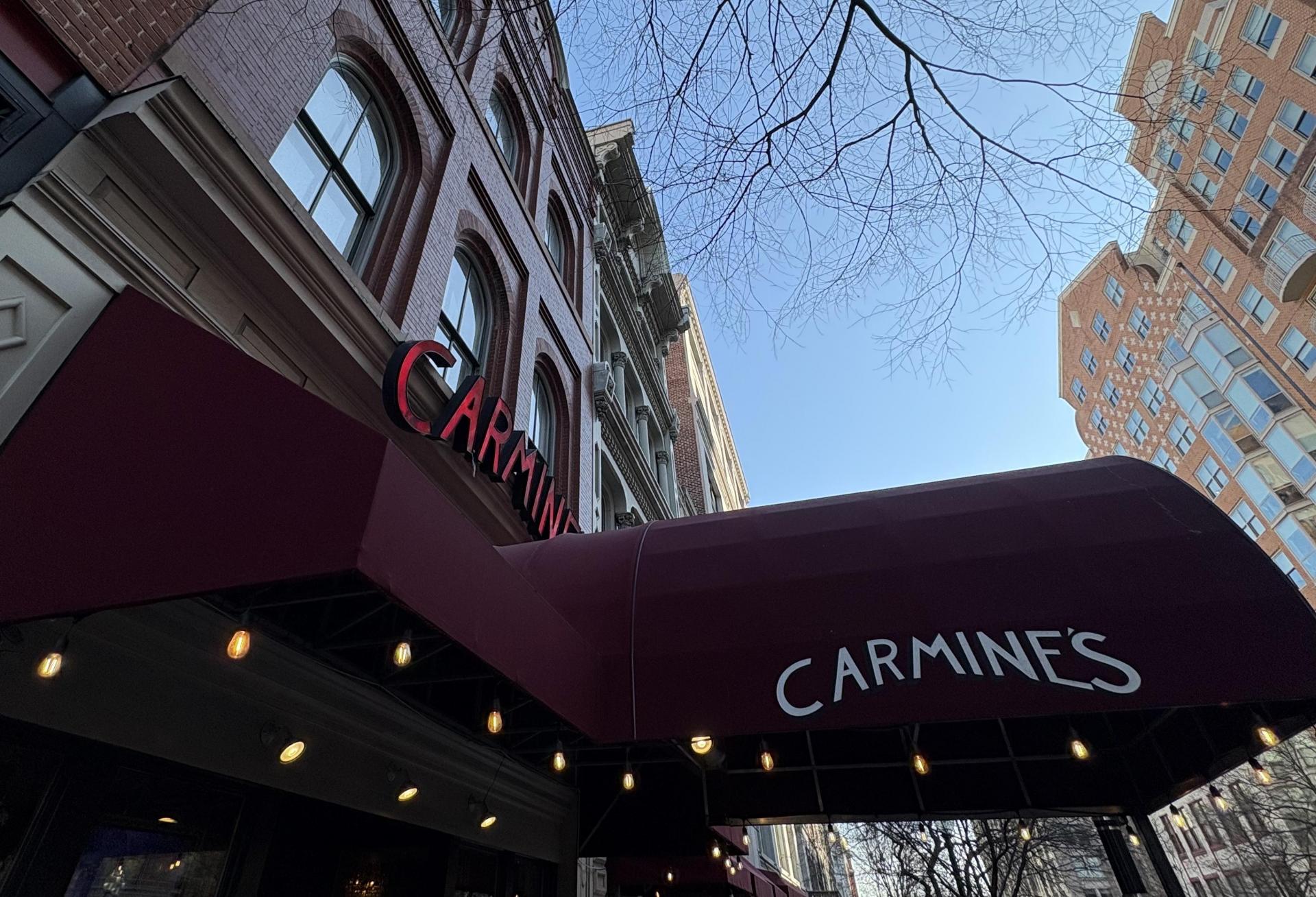
In October, Douglas Development sold two restaurant spaces in the heart of Penn Quarter to two of its tenants, Rasika and Carmine’s.
The sales represented a full-circle moment for the company. The restaurant spaces are part of an office and retail stretch that Doug Jemal began acquiring in 1981 when he purchased a store he was leasing.
At the time, he was a tenant at the property with Nobody Beats The Wiz and ended up purchasing it after the landlord grew tired of getting complaints from neighbors about the noise coming from his shop.
“That’s how I got into real estate, by getting kicked out,” Jemal said, reminiscing at a public event in February 2021, the Investigative Post reported. “I said no one’s going to fucking kick me out again, and that’s why I’m here now.”
Jemal later named the entity that owns the building Jemal’s Douglas Stereo LLC in a tongue-in-cheek nod to his electronics business.
In fact, the Jemal family puts its name on nearly all of its LLCs — a rare quality for landlords, and one that shows its sense of humor. Jemal’s Darth Vader LLC, for instance, owned a hulking black building that evoked the Star Wars villain.
Lately, these Jemal entities have been showing up in local property records as sellers.
At least one of 20 D.C.-area properties the family has offloaded appears to be a short sale: It sold an office building near Metro Center in July for $8.7M, while deed records show it owed $15.7M on the property as of late 2024. It had previously been scheduled for a foreclosure sale in early 2025 that was later canceled.
Like Carmine’s and Rasika, the Jemals sold the property to its tenant, Americans for Tax Reform.
It is a strategy that brokers say has allowed the Jemals to land higher prices than they would have gotten on the open market.
“Users are willing to pay a little more to not go through a lot of headaches,” Collins said.
In October, the Jemals sold the former headquarters of Black Entertainment Television in Northeast D.C. to U.S. Black Chambers to build out its own headquarters and innovation center.
BET’s glistening office tower, adjacent studio and warehouse brought in $38.5M for Douglas Development, which had acquired the buildings in 2021 for $16.4M — four years after BET vacated and moved to New York.
Some of the Jemals’ exits have been less glamorous.
In May, the company lost Chinatown Row, a block of office-above-retail buildings on the busy Seventh Street corridor. Fellow D.C. development company Monument Realty acquired the loan in April and then took the property over at a foreclosure auction.
Now, Douglas Development’s Orme Building, a 121-year-old office property on the National Register of Historic Places, is headed to a foreclosure auction in early March with an $8.6M loan balance.
The distress has become common for owners of D.C. commercial properties. The city's central business district has suffered a 47% decline in property values over the last five years, the second-largest drop in the country, according to MSCI.
And with as big a portfolio as the company has, much of it concentrated in the CBD, losses are all but inevitable.
“There's nobody who invested in an office that hasn't faced some sort of pain, and in some cases, it's been minor,” Cushman & Wakefield’s Collins said. “In some cases, it's been mortal.”
Amid the market upheaval, Douglas Development's next big development opportunity fell through.
In 2021, it won a contract to build a new 2.1M SF headquarters for the Securities and Exchange Commission on a site in NoMa — one of the largest federal contracts in history. But three years later, the federal government canceled the $1.4B deal after Douglas Development and its partner, New York-based Midtown Equities, couldn't line up financing for the project.
The Jemals protested the move, and earlier this month, they reached an agreement with the General Services Administration, which paid between $10M and $20M to settle the appeal, the Washington Business Journal reported.
The Matthew Show
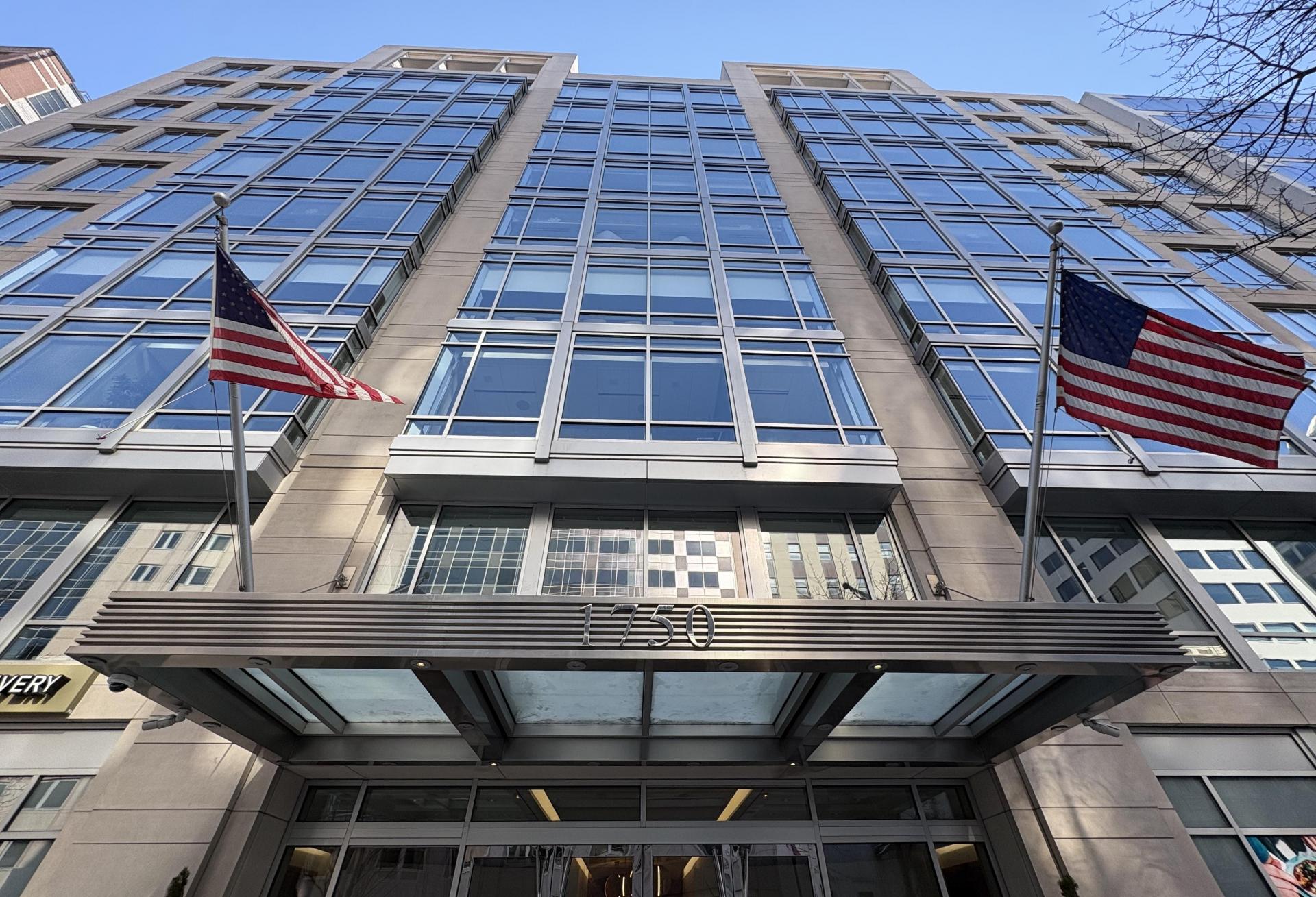
In July, Matthew Jemal purchased a 123K SF office building just a few blocks from the White House for $28.8M.
He tapped Luby's team at Stream Realty to lease the property at 1750 H St. NW. The broker’s experience on his first tour of the building, he said, spoke volumes as to how Jemal operates.
“When we walked it, we had certain recommendations,” Luby recalled. “By the end of the building tour, he knew exactly what he was going to do and was already emailing, calling and texting people on his team to start.”
Jemal had immediately decided on the scope of renovations, the design of spec suites, and which architects and contractors he would bring in. It is a different mode of operating from an institutional investor, Luby said, which would take about a month to analyze its options for the building and come back with “a hint of direction.”
“Within 60 minutes, we knew exactly what we were going to do, and we were already off to the races doing it,” he said.
Luby was one of several brokers who described Matthew Jemal as fast-moving and decisive. He is intimately involved with every deal, even small ones, and is constantly connected.
“The guy is on his phone more than anyone I’ve ever seen,” Luby said.
That hands-on style continued with his effort to lease up the building. Newmark Senior Managing Director Doug Damron represented a tenant that leased around 10K SF at 1750 H, and he said the amount of direct involvement Matthew Jemal had was “extremely” rare for a deal of that size.
“Even though the whole family is very hands-on, this one, it was like he had to get it done like his life depended on it,” Damron said. “He was calling me nonstop trying to get the transaction done, which is awesome. If you get the owner that hands-on, it helps everything.”
The 1750 H deal was made through the new venture Matthew is leading under the Douglas Development umbrella: Jemal Equities.
It is focusing on acquiring urban commercial properties, and the deals it has done so far show it is looking for deep discounts.
1750 H had gone through foreclosure in 2024, and Jemal acquired it for $213 per SF — well below last year’s average D.C. office sale price of $329 per SF.
In October, Jemal landed another bargain, buying an office building on Rosslyn’s Wilson Boulevard for $28M, equating to $160 per SF. Then, in January, he paid $20M for the 1920s-era Colorado Building two blocks from the White House, equating to $150 per SF.
And this month, he found an even cheaper deal when he took over another downtown office building at a foreclosure sale — for $81 per SF.
Jemal Equities had purchased the loan on MRP Realty and BGO’s 155K SF Lion Building near Dupont Circle in December, Bisnow first reported, and initiated foreclosure proceedings in mid-January.
Then, at another foreclosure sale at Alex Cooper’s offices on Wednesday, the lender, Jemal’s Lion LLC, won the property with its opening bid of $12.5M.
Matthew Jemal called in to the auction via his lawyer, Scott Foley, who placed his phone on the auctioneer’s desk during the proceedings. It was a role reversal for Jemal, who had sat in that same room less than two years earlier, considering placing a bid on the distressed K Street office building.
The Jemals declined to answer questions on the relationship between Jemal Equities and the larger Douglas Development Corp. But the parent company’s name and headquarters address appear in some of the deed records tied to these deals, and on Thursday, it posted about Jemal Equities for the first time.

“As we build Jemal Equities, a next-generation platform emerging from the legacy of Douglas Development, we are looking for strong talent to join us and help shape the next chapter of our portfolio and pipeline,” Douglas Development Corp. wrote in a LinkedIn post advertising an asset manager job.
The company also created a LinkedIn page for Jemal Equities that lists one employee: Matthew Jemal, its founder. The page says the venture “combines institutional discipline with an owner-operator mindset to unlock value in complex, underutilized properties.”
Jemal Equities is among a small but determined group of new and established investors with cash to spend, sniffing out steep discounts for D.C. office buildings.
Meridian Group Chief Investment Officer Gary Block said at a Bisnow event last month that now is the “most compelling entry point for real estate investing” in more than three decades.
His firm and other D.C. stalwarts like Carr Properties and Buchanan Partners are taking that bet, as are newer firms like FarmViewVentures and Taicoon Property Partners. The latter has purchased four capital-distressed area office buildings in the last two years. These firms have stepped in as D.C.’s historically active institutional buyers have shied away from the city.
“There's not many of us out there that are buying office right now, and [the Jemals] are definitely one of them,” Taicoon Managing Director Suzanne Pyles told Bisnow.
It is a familiar game for a family that made its empire out of taking big risks, changing the narrative around forgotten buildings and neighborhoods.
And as the city undergoes a once-in-a-generation shift, the Jemal family is moving quickly to ensure it will be part of writing that story, too.
“They are particularly good at these types of markets,” said MRP’s Murphy, head of one of the firms that lost the Lion Building to Matthew Jemal at the foreclosure auction Wednesday. “They recognize this is a moment in time. It's not permanent.”
)
)
)
)
)
)
)
)
)
)
)
)