Summertime promises of al fresco lunch might be in jeopardy for New York City office developers.
A zoning resolution passed in 1961 to prevent the spread of outdoor flea markets has been revived under a new interpretation by the Department of Buildings that will limit the use of commercial terraces.
The DOB’s claim could impact a competitive office market where owners depend on amenities like outdoor communal spaces to attract tenants, Rosenberg & Estis Member and Leasing Department Co-Chair William Byers said.
Under the current zoning code, all commercial use must be within an "enclosed" building. What defines both commercial use and an enclosed building is the main debate. The zoning resolution defines an enclosed building as one with walls and a permanent roof interrupted only by windows, entrances and doors, Rosenberg & Estis Of Counsel Frank Chaney said. Terraces, he claims, are still part of the enclosed building, but the DOB plans to restrict use to the inside of a commercial building.
Commercial use is also open to interpretation. When the Department of City Planning and REBNY met to discuss the new enforcement of the code earlier this July, the DCP reportedly agreed with REBNY that passive recreational use of a terrace in a commercial office building is not prohibited, Chaney said. The DOB has yet to change its interpretation, but talks with the DCP are said to be continuing.
“So what is a commercial use? People sitting outside on the terrace eating their lunch, is that a commercial use? Obviously, the DOB thinks it is,” Byers said.
The DOB has not shared its rationale for stricter enforcement. While the department issues policy and procedure notes that can explain new interpretations, Rosenberg & Estis has yet to see any documentation that cites a specific case that sparked the DOB to revisit the issue.
“Often the interpretations are requested by property owners, and zoning determinations as well are issued in response to that,” Chaney said. "We are not aware of any memoranda, directive or procedure policy notice on this subject, so we don’t really know what prompted this reinterpretation. We do know that is has been fairly recent."
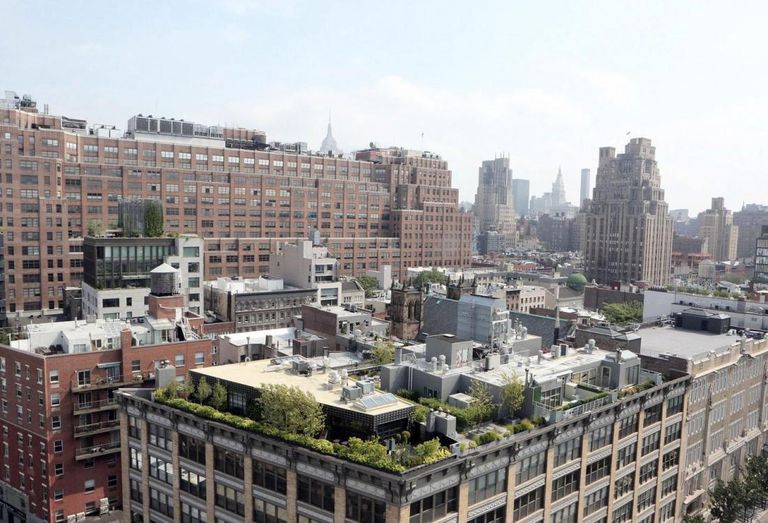
Rosenberg & Estis benefits from an outdoor terrace in its office, as do many tall New York buildings. They are required by the zoning resolution to have setbacks at certain heights to allow sunlight to reach the street, creating mid-building outdoor areas. Existing spaces have been grandfathered into a zoning interpretation that until recently was the norm. If tenants want to make improvements or necessary upgrades, these changes might place them back under the new interpretation of the zoning code.
“The current concern would be that if you had to or wanted to make some alterations to the terraces, you would be unable to do so,” Chaney said.
For buildings still in the development pipeline or leasing process, the new interpretation could alter plans and hurt a property’s competitiveness within the market and its value. Owners considering designs of new developments or alterations to existing properties are becoming cautious about spending on large spaces they would be unable to use, Byers said. Often, these communal terraces include gardens and other green spaces that also might fall by the wayside.
As office trends push toward open, collaborative spaces, limiting those options will have prospective tenants looking elsewhere.
“There are a lot of existing deals out there and deals that are pending right now where they are promising leases with terraces, which this new interpretation could seriously impact,” Byers said.
To learn more about this Bisnow content partner, click here.