

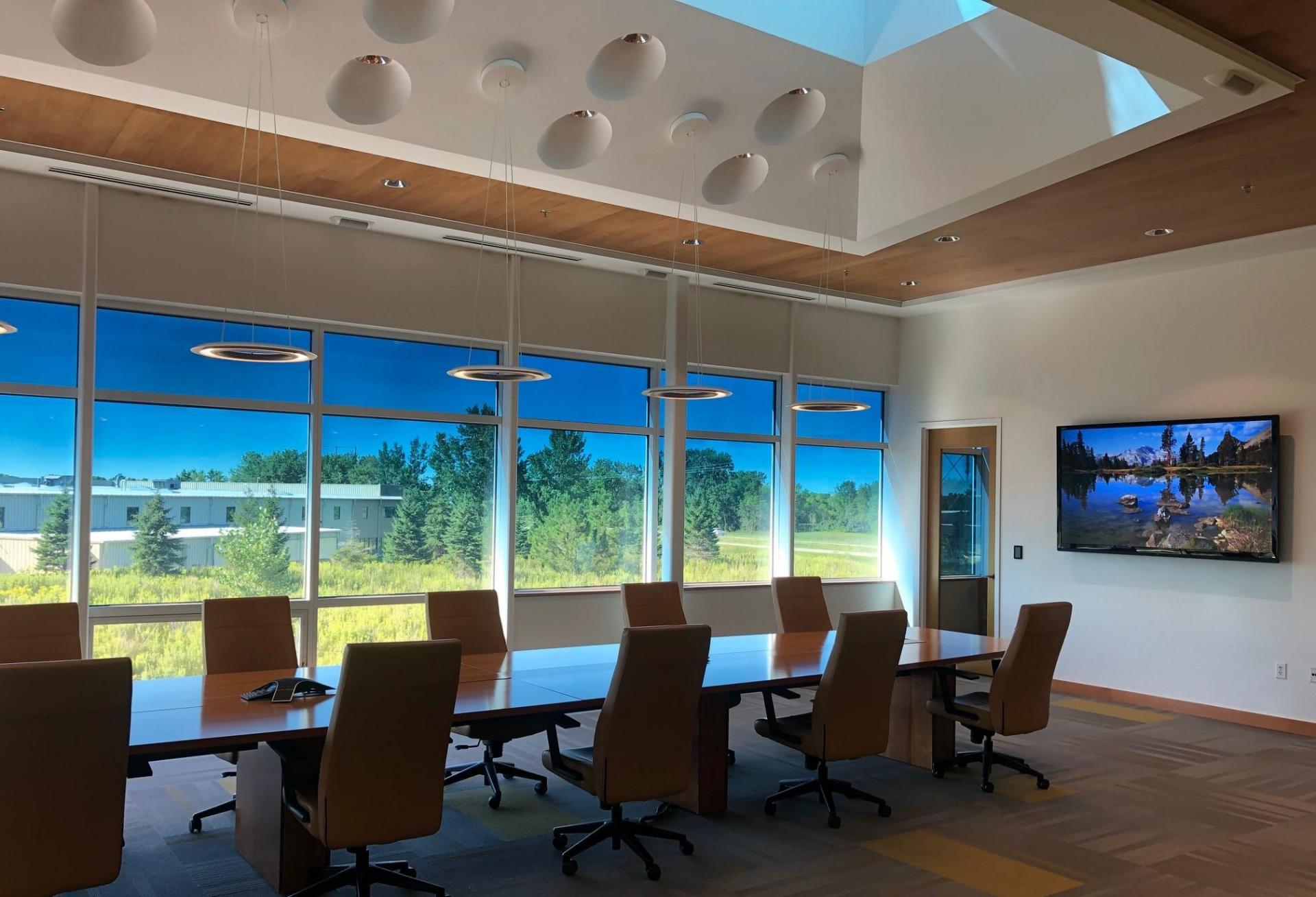
Office buildings are facing new competition, and it’s not from their downtown neighbors or suburban office campuses. It’s the allure of a home office, a spacious desk and a sunny backyard.
More employees are working from home than ever before, and many would like it to stay that way. For decades, office developers and companies alike have squished more employees into smaller spaces, driving up productivity per square foot. But to prevail against the possibility of a work-from-home revolution, they may need to recalibrate their priorities around space, natural light and fresh air.
“Building managers and architects have always treated daylight and views as luxuries,” author Emily Anthes said in an interview with Monique Salas of SageGlass. “You think of the corner office. The higher-ups in the organization might get those big windows. But these are not luxuries. The evidence makes [it] clear that they are critical to our functioning.”
Anthes is a science writer and author of The Great Indoors, a new book that examines the physiological and psychological impacts of the buildings where Americans spend the vast majority of their lives.
In that interview, Anthes considered what it would be like to rework office culture — and the entire built environment — to optimize employee well-being. She also suggested architectural, behavioral and design changes that building operators can institute to make modern offices more compelling places to work.
Access To Daylight And Views
Two of the best-studied aspects of living indoors are the need for connection to the outside in the form of sunlight and nature views.
Anthes described “reams of scientific evidence” pointing to the benefits of light and views, including studies that showed how hospital patients in sunnier rooms recover more quickly and use fewer painkillers, and how even simple views of trees can reduce stress and anxiety, boost concentration and promote productivity.
But while employees’ homes and apartments may be adequately lit and offer them connection to the outside, office windows are a rarity and are often reserved for the most senior members of a company. Even if offices have views of the outside, many tenants cover them up with blinds that block views and daylight, because windows are too hot in the summer, too cold in the winter and let in too much glare year-round.
While technologies like electrochromic glass can create windows that tint in response to sunlight, cutting glare and increasing tenant comfort, Anthes said many builders haven’t yet caught on to the importance of daylight. To create commercial and office spaces that are built to promote happiness, preserving views and access to daylight is crucial.
“Looking out a window, particularly at a natural landscape, allows our minds to rest and engages us in this kind of effortless way,” Anthes said. “It subsequently improves our focus and our attention span and productivity.”
Access To Fresh Air
One of the biggest mistakes that building designers make in practice, Anthes said, is designing windows that can’t bring in any fresh air.
“You see all these buildings that have windows, especially office buildings, but the occupants can’t open them,” she said. “Fresh air is also important to regulate temperature and air out indoor air pollutants. If there were one thing I could wave a magic wand and wish for in building design, it would be no more non-operable windows.”
Anthes published her book before the coronavirus pandemic began, but her push for more fresh air has taken on even more currency as buildings have had to re-evaluate the safety and power of their ventilation systems.
If employees feel their offices will subject them to air that is being recirculated and shared among other building occupants, they may not be as willing to abandon home offices where they can easily open a window, walk out into a courtyard or backyard and breathe freely.
Work Flexibility And Customization
When employees work from home, there is no quibbling over the thermostat. They have control over their lighting and heating conditions and can customize them to their own preferences. Employees in larger homes may even move their workspaces throughout the day to suit the task at hand. Going forward, Anthes hopes that technology will bring that same level of customization to the office space.
Products like electrochromic windows, smart thermostats and adaptive lighting can learn occupant preferences and change with weather or throughout the day to provide employees with optimal conditions for work.
But to truly make a built environment that optimizes well-being, Anthes said, building designers and companies will have to give some agency to the employees themselves, giving them the information about their indoor environment and where they can be most productive.
“We don’t have a lot of data around our indoor environments,” Anthes said. “There are apps and sensors now which can identify that this corner of the office is quieter and cooler than anywhere else. They can put that information in the hands of employees to enable them to make choices.”
This feature was produced in collaboration between the Bisnow Branded Content Studio and SageGlass. Bisnow news staff was not involved in the production of this content.
)
)
)
)
)
)
)
)
)
)
)
)