Another quarter of strong hotel revenue gains has one executive touting the start of a multiyear upswing for the sector, although that hasn’t resulted in profits for operators, and future growth will likely be more moderate than this year's pace.
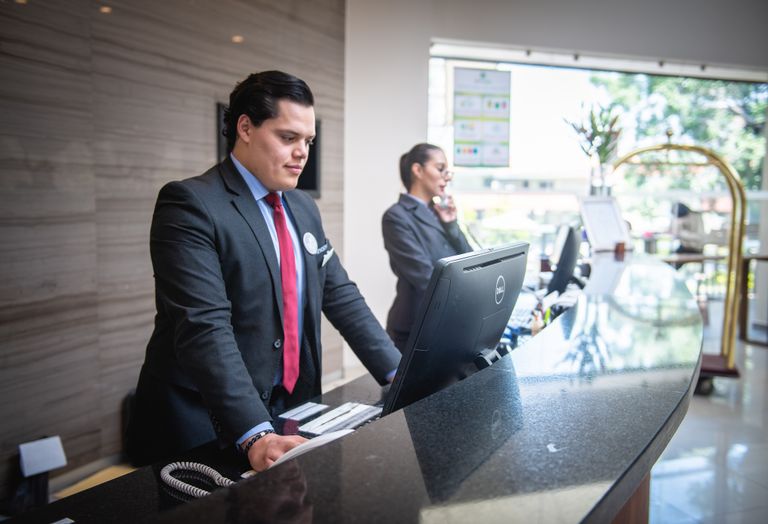
U.S. hotels recorded third-quarter increases in occupancy, demand and average daily rate, driving a 7% increase in revenue per available room, according to CBRE’s latest data. Occupancy rose nearly 2% in the quarter, while room demand was up 3% and ADR increased by more than 4%.
Pebblebrook Hotel Trust reported an 8.3% year-over-year increase in RevPAR and 7% growth in ADR for Q3. That prompted the luxury hotel REIT to increase its RevPAR outlook by 175 basis points at the midpoint to a range of 5.5% to 6%.
“As we look beyond this year, we continue to believe we're at the beginning of a very strong multiyear upcycle for the hotel industry,” Pebblebrook CEO Jon E. Bortz said during the REIT’s earnings call last week.
The industry’s other major hotel chains recorded similar RevPAR growth for the quarter.
Hyatt Hotels’ RevPAR was up more than 8% in the U.S., while Marriott International and Hilton were both above 7% growth.
IHG Hotels & Resorts and Wyndham Hotels reported RevPAR jumps of 6% or more in the U.S., and Choice Hotels' increase was a more modest 3.8%.
The industry’s rate of growth and the broad recovery in demand were helped by weak comparisons from last year. RevPAR declined in each of the final three quarters of 2025 following President Donald Trump’s tariff announcements.
This year, RevPAR growth has accelerated each quarter, said Jan Freitag, the national director of hospitality analytics for CoStar Group.
“Hotel operators were able to raise rates because midweek corporate travel stayed healthy, group demand rebounded, and higher-income leisure travelers kept spending,” Freitag told Bisnow.
September was the strongest month of the year, with RevPAR up 11% and occupancy and ADR each up more than 5%.
Big events like the World Cup tournament added to the year's momentum, though RevPAR growth was already above 4% before the first match. Plus, the tournament's effect was largely concentrated in July.
“The World Cup was a good, strong dose of caffeine in one given month,” said Suraj Bhakta, CEO of hospitality-focused brokerage NewGen Advisory.
The industry also benefited from a favorable calendar, with holidays like Independence Day and Yom Kippur falling on weekends. But the growth of weekend and weekday occupancies points to underlying demand beyond those events, Freitag said.
Luxury and upper-upscale hotels sold nearly 2 million more group rooms and about 4 million more rooms booked by individual travelers than in the same period of 2025, according to CoStar data. RevPAR in the luxury segment grew more than 9% through August and 13% in September, marking its strongest performance outside the World Cup months since the pandemic rebound.
The industry’s limited supply growth, which remains below 1%, also helped drive RevPAR and ADR higher. Bhakta doesn’t expect supply growth to bounce back next year, as construction costs and the cost of capital haven't declined enough to spur new development.
The industry’s momentum is expected to help it close out 2026 strong, and analysts forecast it should easily beat the 1% decline in RevPAR recorded in Q4 last year. Forward bookings are slightly ahead of where they were a year ago, suggesting the industry will also outperform CoStar's full-year growth forecast of 4.4%, Freitag said.
However, those RevPAR gains didn’t necessarily translate into stronger profits, as rising labor and operating costs cut into revenue gains. During the third quarter, hotel wage growth increased nearly 5% year-over-year, outpacing the national average and the rate of inflation.
Hyatt Hotels’ adjusted earnings before interest, taxes, depreciation and amortization was up 1.4% to $295M in Q3, but the company’s revenue fell 2.4% to $1.7B.
“Profit gains are concentrated at the high end,” Freitag said.
Gross operating profit has risen 7.2% at luxury properties and 4.9% at upper-upscale ones, but it is only up 1.2% through the rest of the sector, according to CoStar.
And profit is expected to slow further. CoStar has forecast national gross operating profit per available room growth of 4% in 2026, but just over 1% for next year. After adjusting for inflation, that metric remains roughly 16% below 2019 levels.
Bhakta said the hospitality industry could see another solid year in 2027, but it will be hard to show the same kind of RevPAR growth because of the high peak hotels hit this year.
“It'll temper a little bit, but it'll still be good,” Bhakta said, predicting 2% to 3% RevPAR growth next year.