A pop-up hotel concept that originated in Washington, D.C., will launch in Miami on May 1.
WhyHotel takes over units in new luxury apartment buildings, bringing in revenue and adding vitality to properties during the lease-up period.
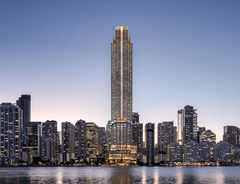
In Miami, WhyHotel will operate over 100 units at AMLI Midtown Miami, a 719-unit complex at 3000 NE Second Ave. that opened last year. The amenity-rich facility includes pool decks on the fourth and ninth floors, group fitness, coworking spaces including private offices and conferences room, a saloon, a makerspace, a mini bowling alley and a pet spa.

WhyHotel CEO Jason Fudin told Bisnow in a call that he came up with the name thinking, “Why would anyone give up this kind of space and experience for something small,” like a standard hotel room? “Why stay in a hotel when you can have a place like home?”
WhyHotel’s website says that the average size of a hotel room is 300 SF, while its apartments are typically about 725 SF and include furniture, full kitchens, washer-dryers and WiFi.
Fudin’s team typically partners with developers and brings its own staff to handle everything from furnishings to housekeeping for the units it operates. It has capabilities for contactless check-ins, but also assigns a general manager to each property and has staff available to guests 24/7.

Contracts with developers typically run from six months to several years and can allow for developers to take back some of the units earlier than anticipated if need be, Fudin said.
“We actually give the unit back in brand-new condition,” Fudin said. “We pull everything out and spackle, paint, steam carpet,” he said. They even touch up the corridors.
In Miami, WhyHotel is already accepting bookings for over 30-day stays and will begin accepting shorter transient stays on May 1. Room prices are in line with hotels or high-end Airbnbs for short stays, and comparable with extended-stay hotels for visits longer than 14 days. Units can be booked on WhyHotel’s website, as well as major travel sites Expedia, Booking.com and Airbnb. A sales team can help with big groups or corporate relations.
WhyHotel has already operated numerous pop-ups in the D.C. area. The first, at The Bartlett, took over 50 of the building’s 699 units. WhyHotel now operates on the National Mall, and is active in Baltimore, Houston and Seattle, with more locations to be announced soon, Fudin said.
Fudin developed the idea when he was an executive at Vornado, and with a partner, spun it off in 2017. It is now venture-backed.
“We've raised just shy of $40M in venture dollars,” Fudin said. Top investors include Harbert Growth Partners and Highland Capital Partners.
CORRECTION, MARCH 30, 11:30 A.M. ET: An earlier version of this story misstated the name of Harbert Growth Partners.