
Sea level rise and storm surge are top of mind for anyone in Miami-Dade County, but residents balked at a solution the Army Corps of Engineers had proposed: a $4.6B project that would have included running a concrete seawall, 20 feet high at some points, through Biscayne Bay and some of Miami’s most exclusive residential neighborhoods.
The plan would have left some parts of the city on the seaward side of the wall, which could have tanked real estate values.
Last week, the county formally rejected the plan. Now county and federal workers will try to formulate a different plan with more natural elements.
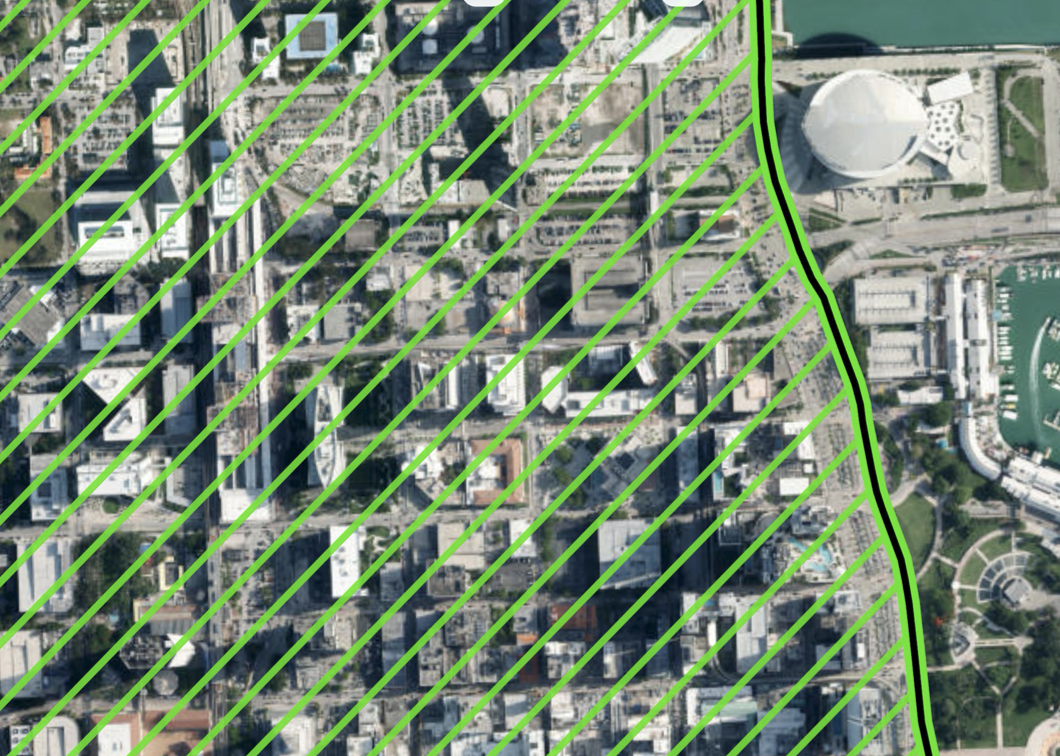
The Army Corps has spent three years and $3M on the Miami-Dade Back Bay Coastal Storm Risk Management Feasibility Study and proposed solutions, the Miami Herald reported. Its proposed solutions also included less controversial elements, such as elevating homes, planting mangroves and installing floodgates.
In response to the feds’ plan, Swire Properties, which aims to be the leading sustainable developer in the world by 2030, engaged infrastructure and advisory firm Moffatt & Nichol to come up with alternative, more nature-based ideas such as oyster reefs and earthen beds that could blunt impact from storms. Environmental groups including the Environmental Defense Fund supported those measures.
The EDF, in a video outlining the challenges, said that $3.5 trillion in assets and 4.8 million people are at risk of flood exposure by 2070, and 5 to 6 feet of sea level rise by 2100 could displace 800,000 residents — a third of the population.
The Herald reported that it will take months for a new Army Corps study to be authorized and begin, so the county will miss a chance to get federal funds through an appropriation bill in 2022 but could be eligible again in 2024.
On the west coast of Florida, Collier County, which includes Naples, faces a similar decision over a $2.1B storm protection plan proposed by the Army Corps. A $2.8B plan to protect the Florida Keys is on track to proceed in 2022.
)
)
)
)
)
)
)
)
)
)
)
)