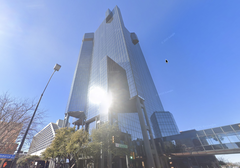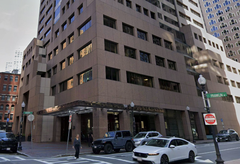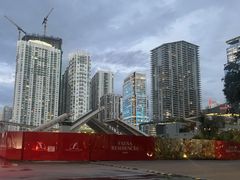
The pandemic’s lingering effects could drain $800B in real estate value by 2030 in major global cities, largely due to companies’ inability to get workers back to the office full time, according to a new study by consulting giant McKinsey & Co.
Office attendance remains 30% below pre-pandemic levels and could take decades to return, and it could still be 20% lower than before the pandemic by 2030, McKinsey predicted. The deficit is most acute in core urban markets where workers were in the office an average of 3.5 days a week as of October.
The drop in demand could erase 26% of office values by 2030 in the nine “superstar cities" McKinsey studied in a moderate scenario. Up to 42% of office values could be wiped away in the worst-case scenario.
“The impact on value could be even stronger if rising interest rates compound it,” the report, penned by 11 McKinsey Global Institute researchers, says. “Similarly, the impact could be stronger if troubled financial institutions decide to more quickly reduce the price of property they finance or own.”
McKinsey’s report, which studied New York, Boston, San Francisco, Houston, London, Paris, Munich, Tokyo, Shanghai and Beijing, projects an even gloomier scenario for office landlords than recent studies by New York University and Columbia University researchers, which last year projected a $500B U.S. office value wipeout.
While office attendance improved throughout last year coming out of the era of stay-at-home orders, it has largely stabilized since last year, with some high-earning and senior employees saying they would quit rather than report to the office daily if required, McKinsey found.
A CBRE report found a similar sentiment, with 60% of company executives surveyed by the brokerage firm finding that their worker attendance has reached a “less-than-full utilization as the new normal.”
The resulting ripple effect will also likely dampen demand and values for retail and residential real estate in cities that have a historically disproportionate share of urban gross domestic product and GDP growth.
“What is certain is that urban real estate in superstar cities around the world faces substantial challenges," the McKinsey researchers wrote. "And those challenges could imperil the fiscal health of cities, many of which are already straining to address homelessness, transit needs and other pressing issues."
Corporate real estate reaction to the pandemic has already seen a dramatic effect. Companies have slowed office leasing across the U.S. During the second quarter, companies leased 40.4M SF, down 14% from a year ago and below the pre-pandemic level, Bloomberg reported, citing JLL data. Companies are now more often negotiating for shorter-term leases with landlords because of economic uncertainty and a cloud over just how much space they will need in the future. That, in turn, has complicated landlords’ ability to land debt and financing and added downward pressure to real estate values, McKinsey reported.
Not all markets and not all office buildings will be affected in the same way. McKinsey said that markets with more expensive residential real estate and higher inbound commuting rates will feel the valuation pinch harder than other cities.
San Francisco is seen as the market with the biggest loss in value. McKinsey estimated that residences in the city's urban core are now worth $750B less than they would have been if their prices had risen at the national average rate.