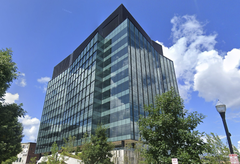
Lab landlords are struggling with an immense oversupply in many U.S. markets, but new demand is starting to emerge, driven in part by artificial intelligence firms.
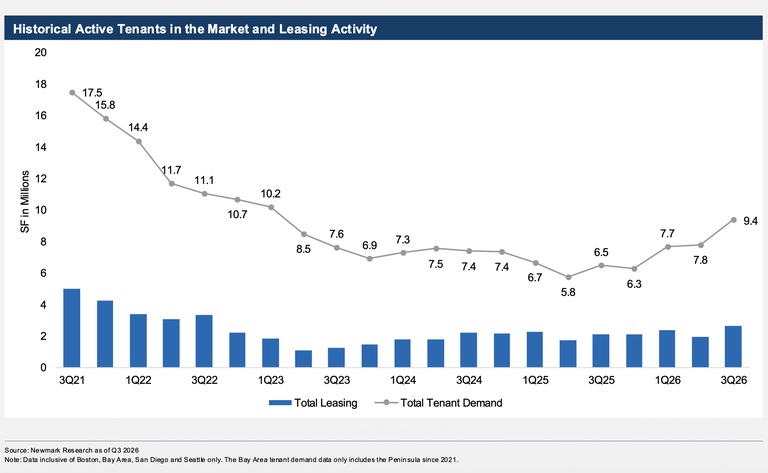
The Boston, Bay Area, Seattle and San Diego markets have recorded 6.9M SF of leasing through the first nine months of this year, and the number of active tenant requirements in those markets is up 63% from the mid-2025 low point, according to a new report from Newmark.
Requirements from AI and quantum science companies are increasing as landlords are trying to fill up the space left behind by traditional lab users, the report found.
“This positive momentum is expected to continue in the near term as select tenants seek to expand in core markets," the report says. "Alternative users are also ramping up leasing activity within life sciences assets, which is helping to chip away at the overhang of space in select markets.”
In the Bay Area, specifically, Newmark attributes the decline in vacancy from 28.4% to 27.3% to the outperformance of the local AI and tech companies.
Boston also experienced meaningful AI growth, with leasing requirements in the first three quarters increasing 68% from 2025. AI companies Anthropic and Blitzy signed leases in Kendall Square this year.
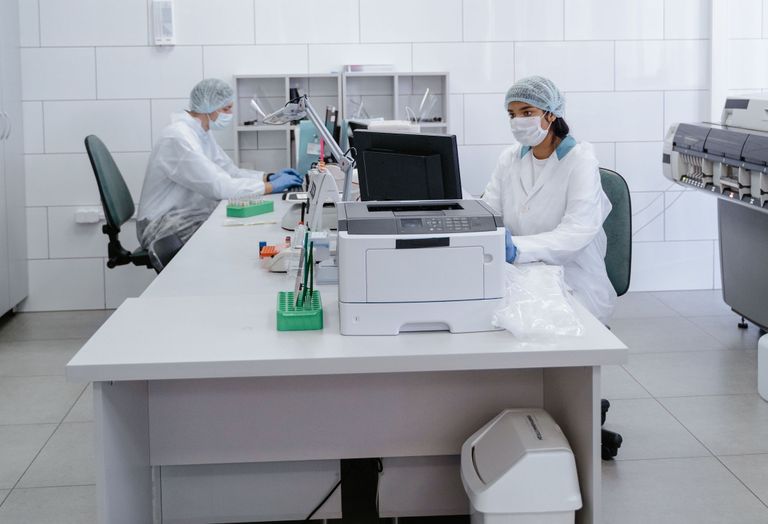
Though there has been an uptick in activity, landlords have a long way to go to fill up their space: Newmark found that the national lab vacancy rate stood at 27% last quarter. Rents fell in eight of the 13 largest life sciences markets.
Life sciences property values have fallen by 38% from their peak in 2022 and are now "well below" their late 2019 levels, Newmark's report says, citing the Green Street Commercial Property Price Index.
The decline is steeper than the office market's pandemic-era drop.
Though investor appetite in life sciences assets is increasing, buyers are now sifting through the supply in the market for the best deals.
"Investor interest in life science assets has improved in recent quarters, but buyers remain selective," the Newmark report says. "Occupiers are likely to continue to take advantage of depressed values through owner-user acquisitions."
Making substantial progress on bringing down vacancy and boosting values will require a surge in funding to the companies that lease lab space, and Newmark's report shows some positive signs on that front.
Biotech venture capital funding reached $11.5B through the third quarter of this year, already well above the levels reached in each of the four years before the pandemic. An index of publicly traded biotech companies has gained 124.6% since its April 2025 low, far outpacing the S&P 500. And M&A activity this year is the strongest it has been since 2021, the report says, indicating that Big Pharma companies are becoming far more active in the market.
Outside of the traditional life sciences real estate space, biomanufacturing has also seen a significant increase, with Newmark saying the sector displays the "most significant green shoots" in the market.
Big Pharma companies have poured hundreds of billions of dollars into U.S. manufacturing and research. Recent announcements include Eli Lilly's $6.5B commitment to Houston in September and BeOne's $300M New Jersey expansion over the summer.