More than a dozen huge pieces of public land may soon be part of the United States’ arsenal in the global race for artificial intelligence supremacy.
The Bureau of Land Management and the Department of Energy are considering leasing at least 17 public land parcels totaling 19,200 acres to developers that plan to build data centers and power infrastructure on the land, a Bisnow analysis of public records found. Just two companies are responsible for more than half of the filings.
“This is a new strategy by the Trump administration,” said Chinonso Anozie, an assistant professor at the University of Houston Law Center. “What it would do is remove a lot of local opposition and local vetoes over some of these data centers, limiting what states and local communities can also do in challenging and stopping data centers.”
Bisnow verified 17 proposed projects with the BLM and DOE that are either approved or pending authorization by cross-referencing federal agency records and press releases with data center trackers from two conservation and public lands advocacy groups: the Center for Western Priorities and More Than Just Parks.
The majority of those projects, excluding separate land parcels for power stations, are in the western U.S., while a smattering of sites are in the Southeast.
The filings show that developers are jumping on the opportunity to lease public lands, catalyzed by a July 2025 White House initiative to accelerate the country’s AI industry and by last year’s One Big Beautiful Bill Act.
Using public lands also means the federal government can flex the supremacy clause, a constitutional provision that gives federal law priority over some state laws. This tool could help developers skirt a broad cultural pushback against data centers.
Industry advocacy group Data Center Coalition praised the Trump administration and the DOE for the policy initiative.
“The digital infrastructure that data centers provide is essential to advancing America’s global economic competitiveness, safeguarding national security, and maintaining the country’s edge in cloud computing, artificial intelligence, and many other 21st-century technologies,” Michele Nellenbach, the trade group’s vice president of federal affairs, said in a statement.
But elected officials are already speaking out against leasing public lands for data center development in Idaho and Kentucky. A lack of local support could still hamper proposals far away from towns and cities, said John Boyd Jr., principal at site selection firm The Boyd Co.
“Companies routinely look for some type of public-private partnership, whether that be sales tax abatements for the server equipment or property tax abatements,” Boyd said. “All of that requires county, city or state support.”
Most of the companies that filed prelease applications with the BLM or have been selected for projects on DOE land didn't respond to Bisnow’s requests for comment.
SB Energy In Ohio
Part of a former uranium enrichment plant near the 2,200-person town of Piketon in southern Ohio is planned to become the world’s largest data center to date.
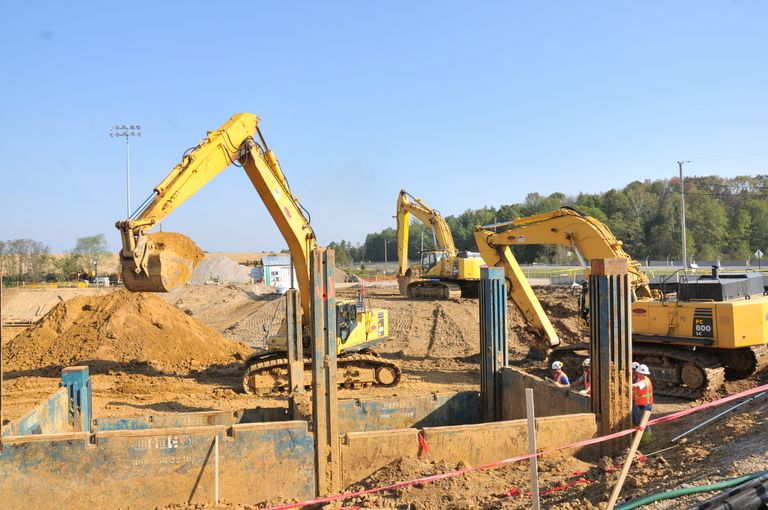
SB Energy, a SoftBank Group company, broke ground on the 189-acre project in March and committed to building 10 gigawatts of new power generation connecting to the local grid. It expects to generate 10,000 construction jobs and 2,000 permanent jobs in the region.
Known as the Portsmouth Site, it includes Department of Energy land. It is split between public land and some private land, according to a spokesperson for SB Energy.
Valar Atomics In Utah
Valar Atomics, a company focused on scaling nuclear energy for heavy industrial power, filed an application with BLM to build a 9,000-acre facility in Carbon County, Utah, NPR reported in September. BLM records confirm the filing but don't contain the project's acreage.
The development, named Project Beehive, is planned to include data centers along with 456 small nuclear reactors and space to produce nuclear fuel and store nuclear waste on a Department of Energy site.
A Brookfield Partnership In Kentucky
A partnership between Brookfield, NextEra Energy Resources, Big Rivers Electric Corp., Jackson Purchase Energy Cooperative and Paducah Power System is planning an energy generation and AI campus on a 785-acre DOE site.
Construction is expected to conclude on the former Superfund site in 2031, following remediation efforts that are needed because of the site’s decades of uranium enrichment operations, according to a release from the department.
A spokesperson for the Paducah American Energy Hub told Bisnow in a statement that the team is “committed to working with all stakeholders.”
“We have met with many local and state officials and look forward to engaging constructively with them and the community as a whole,” the spokesperson said.
But Gov. Andy Beshear told Politico in August that the Trump administration excluded him from conversations about the $100B data center project and indicated a willingness to block or delay data centers from opening.
While Beshear can’t stop the data center from happening, Anozie said, local governments can still make it difficult for projects to operate once they are built.
“Where the states might have a way of regulating what is going on is using state environmental laws to challenge and to say, ‘Well, you didn't get the permit for this,’” he said. “But they cannot outrightly veto or zone out that area for a data center.”
Amentum And DC Blox In South Carolina
The Savannah River Site was one of 16 sites identified by the DOE in April 2025 to support the construction of data centers and the power infrastructure they require.
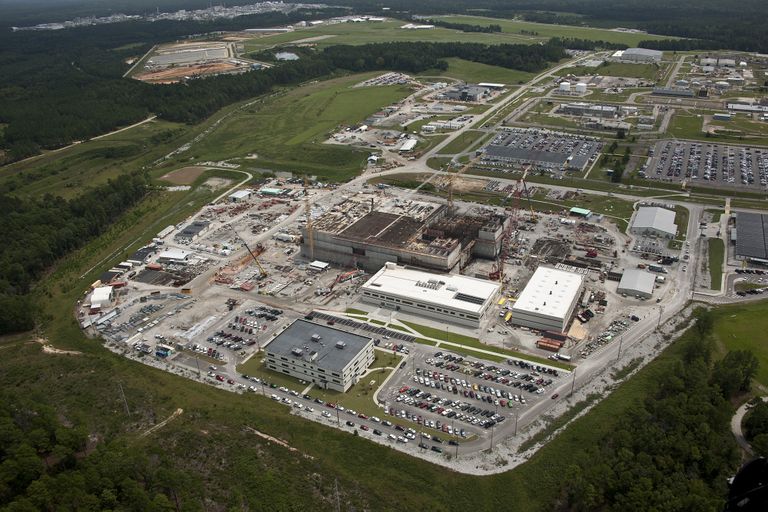
The site was used to produce plutonium and tritium for nuclear weapons in the 1950s, Spectrum News reported. Efforts at the site have centered on environmental cleanup and managing nuclear materials, as well as research and development.
In July, the National Nuclear Security Administration chose engineering firm Amentum and digital infrastructure provider DC Blox to handle building out a 1-gigawatt data center and a 2 GW on-site power plant. DC Blox told Bisnow it has no further comment beyond publicly available information.
Arevia Power In 3 States
Arevia Power, a Las Vegas-based solar and wind developer, has submitted preapplication filings on six parcels in Nevada, Arizona and Idaho through LLCs.
In Arizona’s Mohave County, Arevia proposed a 1,110-acre site under Leo Data Center LLC. Little public information is available, but the mailing address on the LLC’s filing to the BLM shares the same address as Arevia’s office in Glendale, California.
In Idaho, Arevia subsidiary Rhea Data applied in September to build a 4M SF campus and its own gas plant across a BLM site southeast of Boise. The development on the 3,700-acre site would be five times the size of Meta’s nearby 750K SF Kuna plant, which opened a few days before Rhea’s application was announced, the Idaho Statesman reported.
Boise Mayor Lauren McLean said in September that selling off public lands for data centers is “shortsighted,” adding that “no data center of this size should be considered anywhere” without a framework to protect the state’s natural resources. Approvals for the Arizona and Idaho projects are pending.
In Lyon County, Nevada, Arevia filed to use four BLM parcels to build out data center campuses. It used multiple subsidiaries to apply for the swaths of land.
Two have so far been approved: On The Mark LLC plans to build a 530-acre development, and Kimberly Mountain Data LLC has the go-ahead to build a 696-acre campus known as Silver Springs West, Arevia Power Executive Vice President of Lands and Permitting Rafik Albert said at the Lyon County Board of Commissioners meeting on March 19.
The Lyon County commissioners voiced concerns over the projects to Albert, arguing there isn’t enough water to support them. Board members also argued that Arevia should instead choose private lands that are already zoned for data centers so the local economy can benefit.
The remaining two entities in Nevada are waiting to hear if they have permission to move ahead. Silver Springs South LLC is waiting for a verdict on whether it can use a 1,056-acre site, and BLM records also show a Silver Springs North data center application of an undisclosed size filed by Moorman Ridge Data LLC.
Copia Digital In 4 States
Copia Digital, a subsidiary of power and AI infrastructure development platform Copia Power, filed preapplications for six projects on BLM land. Global investment firm Carlyle created Copia Power in 2021 and sold the company to Swedish firm EQT in July this year.
Copia has one application in Nevada: a 744-acre data center site northeast of Las Vegas named the Bergen Data Center.
It also filed two proposals in Maricopa County, Arizona, one on a 620-acre site called the Frontier Data Center and another on a 999-acre site called the Tap Data Center. It filed to use a 275-acre site west of Phoenix called the Harquahala Data Center.
In Oregon’s Umatilla County, Copia filed a preapplication for the Charleston Data Center on a 106-acre parcel.
Copia also filed a preapplication on a 1-acre site for the Falcon Data Center in Idaho in late January, although county officials told Idaho News 6 in September that they will likely push back on the project due to the lack of water and power near the development.
All six applications are pending, BLM records show. A representative for Copia declined to comment to Bisnow.
Skylar Capital Management In Nevada
A proposal from an affiliate of Skylar Capital Management is engaging in a back-and-forth over its proposed data center on a BLM-owned parcel spanning more than 80 acres.
Townsite Solar 2 LLC originally planned to build a solar farm on the site. But in March, the firm pivoted and applied to build a data center on the site instead.
Townsite received permission to push ahead with the data center in June. But that didn’t last long: Residents of Boulder City – just a few miles from the site — appealed the BLM’s decision alongside environmental advocacy groups the Center for Biological Diversity and the Sierra Club.
That resulted in a federal appeals board ordering a halt on the project in September, with the board concluding that the BLM had likely violated environmental law by approving a project based on a review that was prepared for the solar farm rather than the data center, ENR Mountain States & Southwest reported.