America’s battery storage boom is colliding with the same opposition that has slowed data centers. A growing number of communities are responding with moratoriums and development restrictions on battery facilities, even though many have no relation to artificial intelligence.
The pushback comes at a critical moment for battery energy storage systems, or BESS, which are expected to expand rapidly through the end of the decade as utilities, institutions and commercial property owners seek more reliable power.
“This conflation of batteries with data centers is totally unhelpful,” said Marguerite Wells, executive director of the Alliance for Clean Energy New York. “From the public's perspective, all they know is that it's a big facility with no windows and no jobs, and there's energy in there, and it's probably dangerous, and it probably shouldn't happen in my town.”
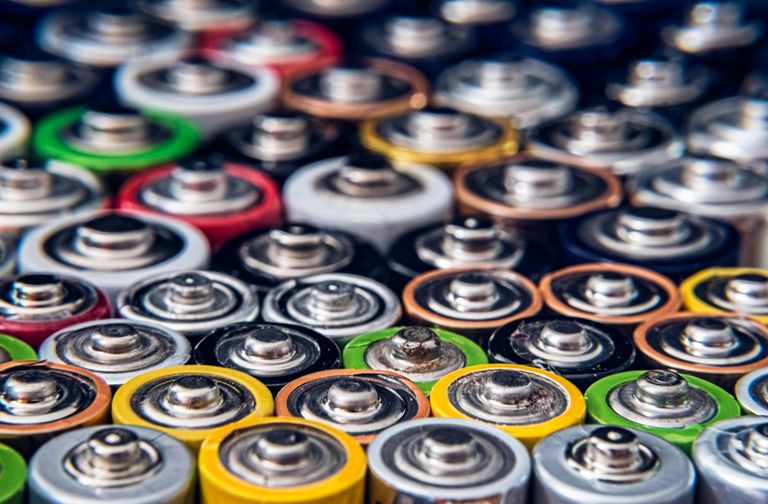
Misinformation, public fear over fires, and the technology’s association with controversial data center projects are fueling local resistance, threatening delays for projects that many states view as essential to grid reliability and future economic growth.
There are 177 BESS moratoriums across the country, according to research from Carina Energy, a battery development firm. The number is on the rise.
Not all moratoriums become bans. Many are purely meant to give municipalities and local leaders time to better understand the issue. But these pauses can still create costly delays for developers.
The BESS sector has rapidly expanded in recent years, pushed ahead by growing energy needs, an emphasis on energy resiliency, and a 30% tax incentive from the Inflation Reduction Act.
The sector is projected to grow 50% over the next five years, according to Wood Mackenzie and the American Clean Power Association. Many installations are meant as backup power sources, including those attached to a variety of commercial real estate sites, like hospitals and factories.
The challenge is that unlike data centers, which often seek tracts of rural land, BESS projects work best closest to users. This brings them closer to residential and commercial areas, which can make neighbors uneasy, Carina Managing Director Malaquias Encarnacion said.
“They're closer to civilization, in a way, and that's why you see some more towns and just propagating these [moratoriums], and it's spreading,” he said.
Many opponents link their negative feelings to data centers. BESS systems can be, but aren’t always, paired with larger data center projects.
Others point to past fires and safety incidents with large-scale battery installations, including the 2019 Surprise, Arizona, fire in which an explosion hurt first responders, and the 2025 Moss Landing fire in the San Francisco Bay Area, which displaced more than 1,200 people.
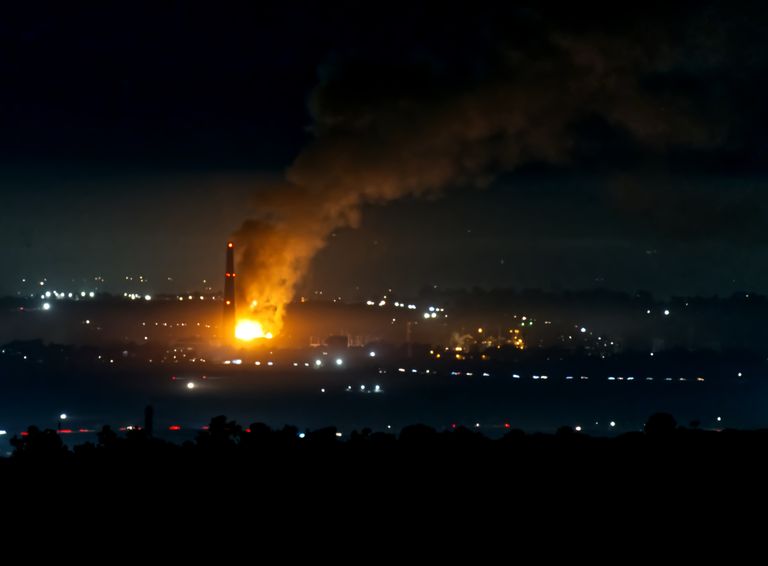
BESS facilities have a continually improving safety record, due to continued education and new manufacturing codes, according to data collected by the Electric Power Research Institute as part of its system failure incident database.
The number of fire incidents has shrunk 98% since 2018, even as deployment of batteries has rapidly accelerated from a few gigawatts in 2018 to more than 600 GW today, said Lakshmi Srinavasan, EPRI principal team lead and senior tech leader. There hasn’t been a reported injury or fatality from a battery system incident since 2019, according to EPRI.
“These incidents aren't as impactful from a community public perspective,” Srinavasan said. “Really, what you're talking about is property damage and lost revenue from the operation of the system, and not injuries, fatalities or other public impacts.”
But that hasn’t stopped moratoriums or fully eased anxiety in the industry. Wells said the concern level is “very high,” in large part due to siting. It is challenging for battery developers to move their project to a friendlier town, because the most helpful, valuable places to put battery storage are densely populated places with tight grids.
“The business case for batteries tends to be where people live,” she said.
New York has seen one of the biggest expansions of the BESS industry, due in part to state clean energy mandates. In September, New York approved eight projects totaling 950 megawatts, a significant step toward the state goal of getting 6 GW online by 2030. But Wells said she expects some of these projects to be delayed or stopped due to the rising public backlash.
To counter the backlash and ease resident anxiety, Wells and others in the industry have made it a habit to bring in fire departments to discuss their experiences with BESS.
“‘Hey, I work for FDNY, and I'm not afraid of batteries’ is about the most powerful message you can get,” Wells said.
There is a spectrum of local action. Moratoriums are often good faith efforts to understand the technology, risks and economic benefits. On the other end of the spectrum are moratoriums that get extended indefinitely — basically a ban by another name.
“Because the development cycle for all these projects is several years anyway, a one-year moratorium isn't a death knell for a project,” Wells said. “But if they extend it into a three- or four-year moratorium, then it certainly could be.”
There is a general sense in the industry that formidable BESS growth is still expected for the foreseeable future, Wells said. The Inflation Reduction Act tax credits don’t expire until 2032. But the rise in community pushback has added some uncertainty.
“Growth is certainly the trajectory for the foreseeable future, and data centers actually drive overall grid expansion, including batteries in the broadest sense of the word,” Wells said. “But you also never know what other shoe might drop tomorrow. So if you want to get projects built, try to get them built yesterday, before things change again.”