Landlords will be forced to start ejecting most immigrants who can’t prove they’re U.S. citizens from federally funded housing in early 2027 or risk losing subsidies, under a new rule from the Department of Housing and Urban Development.
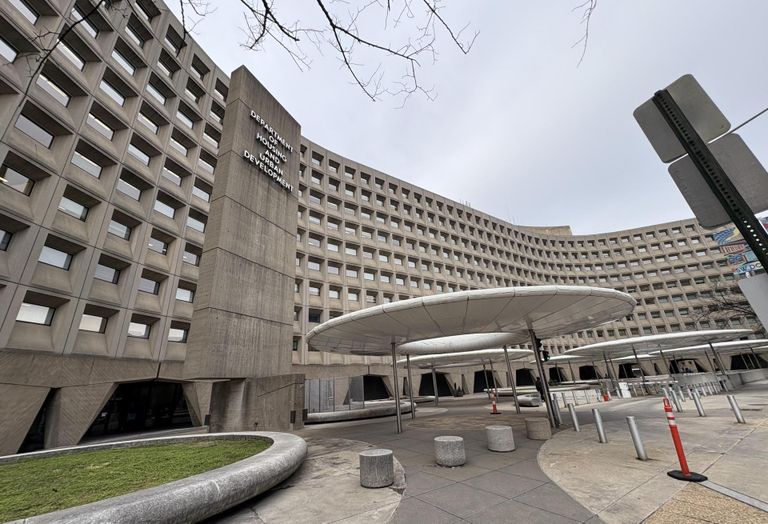
As many as 200,000 residents are no longer eligible to stay in properties that receive HUD funding, according to a final rule released by the department this month.
The change is intended to ensure that noncitizens who don’t meet the criteria to live in HUD-funded housing move elsewhere, freeing up housing for American families, the Trump administration said earlier this year when announcing the policy. But removing immigrants from federally subsidized homes will likely result in less subsidy for landlords and less housing supply, housing advocates told Bisnow.
“This is going to reduce funding for housing,” said Marie Claire Tran-Leung, evictions initiative project director and managing attorney at the National Housing Law Project. “It will apply to millions of people, including citizens who live in and receive assistance from the biggest housing programs that the federal government provides.”
In January, HUD announced that a large swath of residents in HUD-assisted housing will no longer receive the department’s help to pay rent. The only people who will be eligible are U.S. citizens and those who are part of a short list of noncitizens, including green card holders and asylum seekers. Other tenants who may be eligible but are without documentation will have to leave, and household members who do not receive subsidies will have to split up from those who do.
The department released its finalized rule on Nov. 10, along with an updated estimate of around 19,660 tenants in HUD-assisted housing who don't have proper documentation. The rule affects public housing authorities and landlords whose tenants receive other HUD rental assistance.
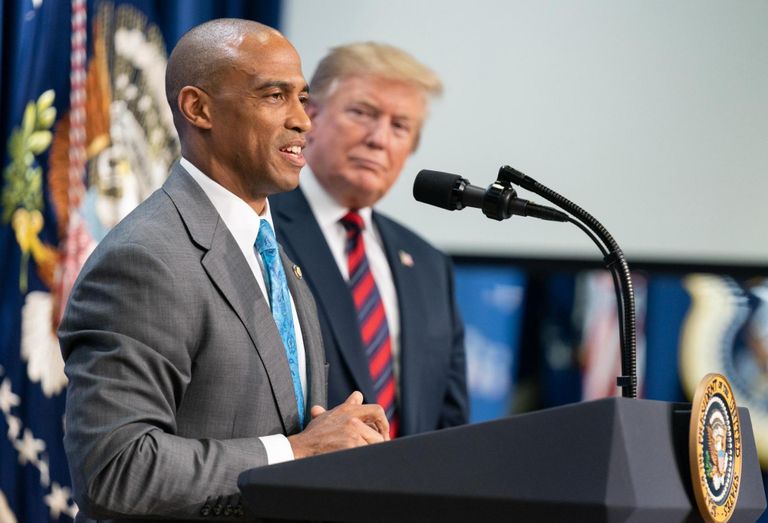
“President Trump warned that the days of illegal aliens and ineligible noncitizens exploiting government-funded welfare programs would be over,” HUD Secretary Scott Turner said in a statement. “It’s unacceptable that America’s homeless veterans, disabled, elderly, and victims of domestic violence languish on waitlists while illegals and ineligibles scam our system.”
All tenants in HUD-assisted housing must now prove that they are either U.S. citizens or fall into one of the categories of immigrants who are eligible to live in public housing under the rule. They must also provide a Social Security number, which wasn't previously required of every resident.
By Dec. 14, tenants need to provide evidence to landlords that they are eligible to remain in their housing. By Jan. 11, if tenants haven't submitted that documentation, public housing authorities and landlords receiving federal subsidy must begin notifying those tenants that they have to provide documentation or vacate the property.
If the tenant fails to prove their eligibility, under the updated rule, their rental assistance must be terminated.
The rule is an enormous undertaking for public housing authorities, especially in such a short span of time, said La Shelle Dozier, CEO of the industry group the Council of Large Public Housing Authorities.
“There's a huge regulatory burden in terms of administering the program, and now you're adding on another layer of complexity,” she said, adding that staff will also need to be trained to help landlords comply. “There just isn't enough time.”
Housing providers voiced their opposition to the rule during its public comment period earlier this year. HUD received more than 16,000 comments on the rule, including from more than 100 housing authorities, financing agencies, apartment associations and landlords.
“Destabilizing thousands of households will not expand housing opportunity,” the California Association of Housing Authorities, which represents 91 public housing authorities, said in its public comment. “It will intensify displacement pressure in an already strained system.”
The rule creates broad changes in who’s eligible to live in HUD-subsidized housing, potentially resulting in dramatic changes in occupancy, advocates said.
Previously, HUD allowed mixed-status households, where only some residents have documentation, to receive federal assistance. Those households are eligible for prorated assistance, where residents with documents proving their immigration status receive subsidies and residents who can’t prove their eligibility pay full rent.
Without that assistance, families will be forced to choose either to ask some members of their households to move out or to leave their homes altogether and try to find units on the open market and risk living in unsafe housing or on the street, Tran-Leung said.
“HUD is trying to enlist housing providers in its immigration enforcement,” Tran-Leung said. “That is something that I think makes a lot of them feel deeply uncomfortable and very outside of the scope of their mission of providing affordable housing.”
Because mixed-status families receive less subsidy and pay more rent, removing them from federally funded housing means that building owners will get less cash for repairs and maintenance, Tran-Leung said.
“One of the things that HUD actually acknowledged in its regulatory impact analysis of the proposed rule was that if these families are forced to leave, there will be less funding available for HUD-assisted housing,” she said. “That reduces the housing supply and worsens the housing crisis for everyone.”
The rule will also impact tenants who are eligible but may not have the required documents, Dozier said.
For some groups, like asylum seekers, getting documentation can take years. Other residents, like U.S. citizens over 62 years old — who were previously exempted from providing documentation but now must do so to stay in their homes — are now also at risk.
“I have members in my family who weren’t born in hospitals, so getting a birth certificate is not always an easy feat,” Dozier said.
Additionally, HUD intends to use an online service managed by the U.S. Citizenship and Immigration Services, the Systematic Alien Verification for Entitlements, to check residents’ eligibility.
But the tool is “known to be faulty,” Tran-Leung said. It has a track record of creating false positives: When the second Trump administration used the online system to verify voter eligibility, SAVE mistakenly identified hundreds of U.S. citizens as noncitizens, ProPublica previously reported.
“The fact that they want to now expand it more broadly to all residents is a recipe for disaster for citizens and noncitizens living in HUD housing,” Tran-Leung said.
The sweeping changes put landlords who work with HUD to provide housing in a precarious situation, Dozier said.
Tenants afraid that someone will knock on their door and tell them that they cannot legally live there may choose to leave suddenly without telling their landlords, she said. That risk creates a level of unpredictability for landlords who may then have to contend with the cost of the lengthy process of replacing a tenant.
It may also make landlords less willing to participate in any HUD-funded rental assistance program, Dozier said. Comments submitted to HUD earlier this year included concerns that the rule would make landlords reluctant to participate in other federally funded housing programs, including Housing Choice Vouchers and public housing.
Overall, she said, the rule will narrow the opportunities for landlords to provide rental housing to individuals who need access to subsidized housing.
“If I'm a landlord and I'm seeing these types of costs and these types of issues and uncertainty, it would make me think twice about participating in the program,” Dozier said. “We don't have a program if we don't have landlords. We need landlords to participate.”