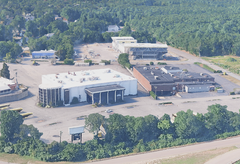
Intel has won the single biggest grant under the CHIPS And Science Act so far, the White House announced, and that will lead to new real estate development.
The Biden administration has awarded Intel $8.5B to expand its footprint in the U.S. under the program, created to reestablish the nation as a leader in producing semiconductors. The grant puts the country in a position to handle 20% of the world's chipmaking by the end of the decade, commerce secretary Gina Raimondo said on a call with reporters Tuesday, the New York Times reported.
Intel plans to use the funds to build and renovate facilities in Oregon, Arizona, New Mexico and Ohio.
The money will help fuel Intel's entrance into the Midwest, where it plans to build two factories near Columbus, Ohio. In Arizona, Intel is building two $20B plants in Chandler and updating an existing third. Intel is also renovating an innovation hub in Hillsboro, Oregon, and will retrofit two plants into packaging facilities in Rio Rancho, New Mexico.
Intel is expected to claim federal Investment Tax Credits during construction, which could cover up to 25% of the projected $100B cost of development, and the company is eligible for $11B in federal loans.
First-round funding for the CHIPS Act wrapped up last February and awarded $39B total to BAE Systems, Microchip Technology and GlobalFoundries.
As the second wave of funding kicks off, Bloomberg reported last week that South Korean chipmaker Samsung is poised to win $6B under the program to invest in plants on U.S. soil. Next up on the docket in the coming months: Taiwan Manufacturing Co. and Micron Technology.
With the upcoming Intel projects expected to create over 10,000 manufacturing jobs, $50M of the grant will be used for the company to train and develop employees.
The projects are also expected to create 20,000 construction jobs, which may be hard to fill as labor shortages are a consistent problem in the construction industry. Demand for these workers has been booming since 2022, when construction doubled because of the Inflation Reduction Act. Construction spending reached $1.9B in 2023, a 7% boost from the previous year.
The sector needs more than 500,000 more workers this year and 454,000 the next to meet demand, according to Associated Builders and Contractors. Labor shortages, along with shipment, weather and financing delays, have been slowing down projects.