Mines eventually run dry, but the holes and caverns left behind can serve as stable frameworks for the right kind of reuse.
Across the globe, limestone and salt mines and rock quarries that long outlived their original intentions are being repurposed into tourist attractions, data centers, nature parks and hotels. Here are five examples.
1. Louisville Mega Cavern - Louisville, Kentucky
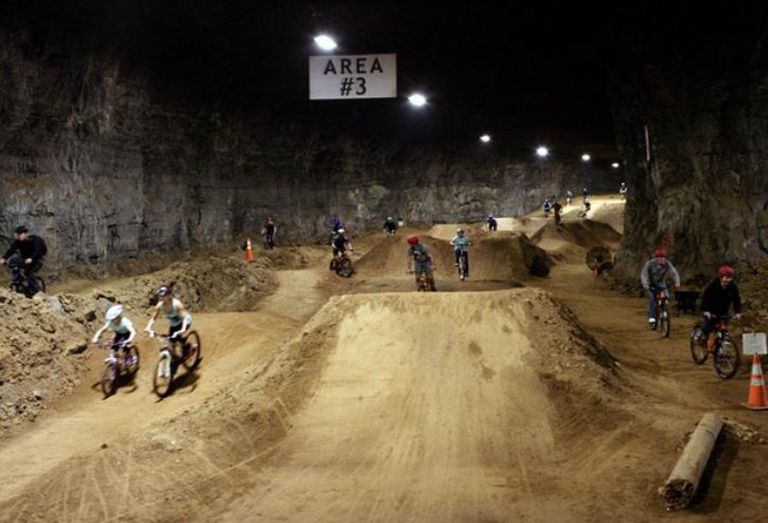
This 100-acre, 4M SF former limestone mine stretches under all 10 lanes of the Watterton Expressway and parts of the Louisville Zoo. Because of its support structures, Louisville Mega Cavern is classified as a building, and is the largest building in Kentucky.
The Mega Cavern is used for business, recycling and storage, and has a substantial tourism component including zip lines, a dirt bike track, tram tours, a rope course and an annual holiday lights display, all of it in an environment kept at 58 degrees, year-round.
2. Salina Turda Amusement Park - Turda, Romania
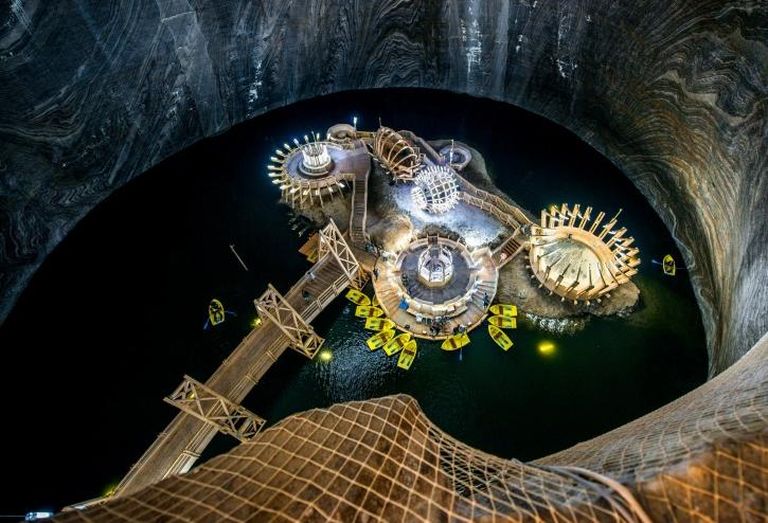
This Romanian salt mine has a long history of adaptive reuse. Over 3 billion tons of salt were mined from this site from the 1800s through 1932. After operations ceased, the mine, which is 400 feet below the surface, served as a World War II bomb shelter and a cheese locker before it was adapted into an amusement park.
Salina Turda's attractions include a Ferris wheel, an underground lake with row and paddle boats, a bowling alley, ping pong, mini golf courses and an amphitheater. The mine also includes a spa with constant environmental conditions for visitors seeking wellness treatments.
3. Subtropolis Technology Center - Kansas City, Missouri
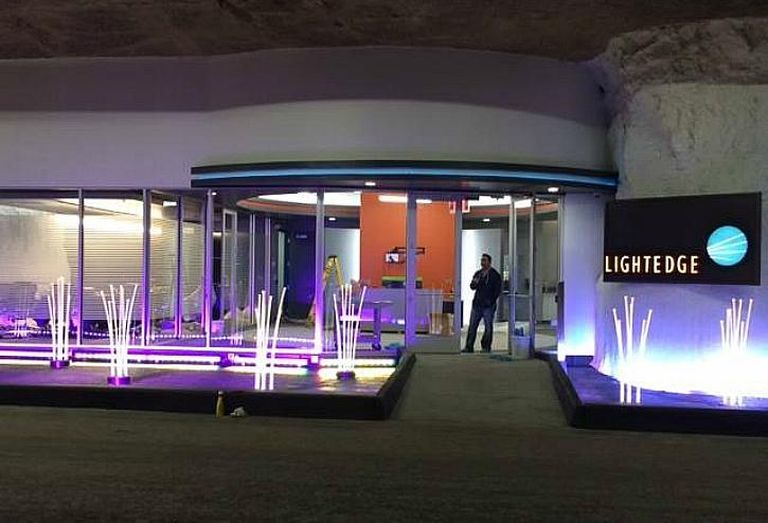
An availability of underground space helped Kansas City emerge as a growing data center market. In 2014, Hunt Midwest Real Estate Development and LightEdge Solutions opened a $60M data center in an underground limestone mine that Hunt repurposed into a business park. The site's limestone walls are six times stronger than concrete. Electrical infrastructure was already in place from the mining activity. The data center takes advantage of its subsurface environment for cooling during hot summers, and allows for contiguous expansion in the form of hard wall suite environments.
4. Henry C. Palmisano Nature Park - Chicago, Illinois
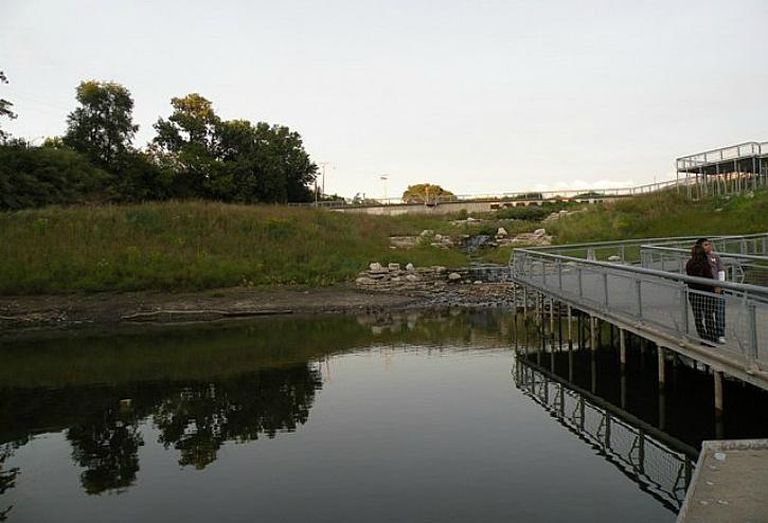
This 27-acre nature park in Chicago's Bridgeport neighborhood was originally Stearns Quarry, a limestone quarry that provided much of the limestone for downtown Chicago's foundation and the Illinois & Michigan Canal between 1836 and 1970. Excavation brought the quarry down 380 feet below street level, at its deepest point.
After the quarry closed, it became a site for clean construction debris for 30 years. In 1999, the City of Chicago issued a request for proposals to various city departments to submit plans to redevelop the quarry. The winning proposal came from the Chicago Park District, which transformed the quarry into a nature park featuring native plantings, 1.7 miles of pedestrian paths, catwalks and jogging tracks, a soccer field and a retention pond 40 feet below street level with the exposed limestone wall as a backdrop. A hill 33 feet above street level with unparalleled views of the downtown Chicago skyline has become popular with kite enthusiasts.
To fill the giant hole left behind from 134 years of limestone excavation, the Park District trucked over 40K SF of topsoil to bury the construction debris and sculpt the park's topography.
5. Shimao Wonderland InterContinental Hotel - Shanghai, China
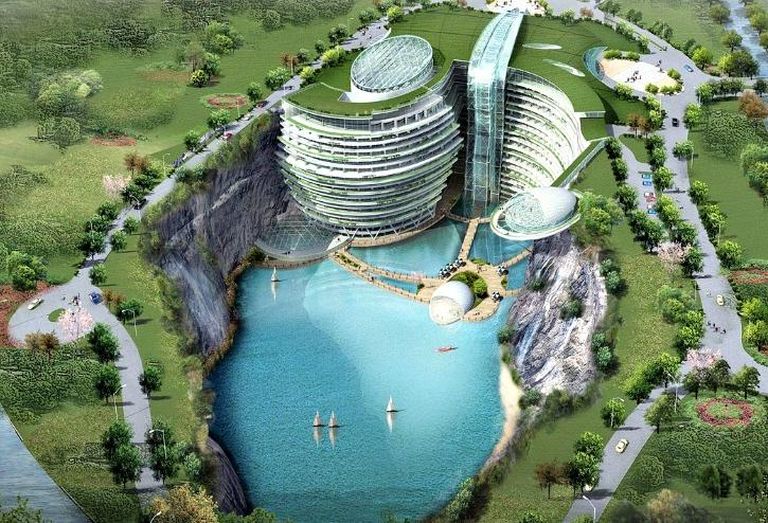
The Shimao Shanghai Group invested $555M to build this hotel on the site of an abandoned stone quarry in Tianma Hill, 30 miles from downtown Shanghai, that will be run by InterContinental Hotels Group as one of its flagship hotels.
The 370-room property will rise 19 stories and is designed to resemble hanging gardens. Seventeen stories will be below ground level, and two of those will be underwater. The quarry will also serve as a man-made lake with sailing and other water sports, while the rock wall will be used for rock climbing and bungee jumping. It will open in 2018.