Now that the long-awaited Metro Expo Line Extension is complete, how will it affect commercial real estate? Bisnow recently caught up with Colliers International executive managing director Hans Mumper, who weighed in on that question.
Hans says, among other things, that the Expo Line is helping reactivate neighborhoods that it connects.
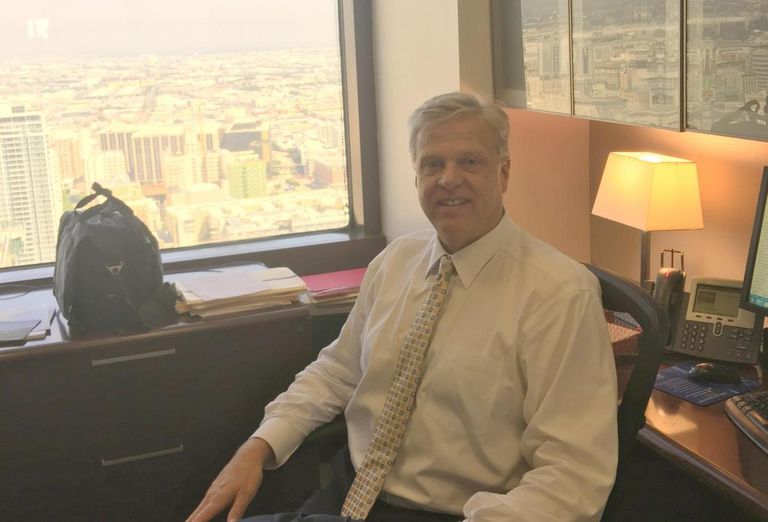
Bisnow: Some are calling the opening of the Metro Expo Line Subway Extension a game-changer. What impact do you think its opening will have on commercial real estate?
Hans Mumper: I’ve given that some thought, and I’d go further and call it perhaps the most important link in the entire Metro system, a mass transit network that has become a reality in just a relatively short period of time, if you really think about it.
Bisnow: You’ve been working in downtown for decades. How have things changed in terms of the subway system and real estate?
Hans Mumper: Big, big question. In 1990, this was a dream, a hope, a promise that many didn’t think would ever happen. In 1994, dirt was finally turned on the first mile of the Red Line subway linking Union Station to downtown’s then much-smaller financial district, ending at Figueroa and Seventh Street. The whole thing took about eight minutes to ride the entire length. It had two stops—Pershing Square and Figueroa and Seventh. That was it. There were a lot of naysayers at the time who didn’t believe a mass transit system would be built on the scale we have today and they called it the then-Mayor Villaragosa’s folly. How wrong they were. Today, we are all benefiting from one of the finest mass transit systems in the world. What that first short Red Line did was show it could be done. It was a watershed event.
Bisnow: How?
Hans Mumper: It opened the floodgates. Now, 15 years after that initial pioneering line, commuters can ride on the Metro from Azusa in the far east San Gabriel Valley to the sands of Santa Monica. This access will have a diverse and transformational impact on the entire LA Basin in terms of our culture, our way of life and, yes, on commercial real estate.
Bisnow: How is it changing real estate?
Hans Mumper: Commercial real estate—including office space and retail space on the Westside—has become, in some cases for some startup firms and other business owners, especially those in the tech business, too expensive. With the Metro, they can now consider alternatives to the Westside in terms of where they locate their businesses. Now, they are concentrated in Santa Monica and Culver City, what is commonly called "Silicon Beach." With the completion of the (Expo) Line, any transportation barriers have been removed to the educated, trained tech workforce who may live on the Westside, but can now work downtown without the hassle of a daily commute on congested freeways.
Bisnow: So you’re saying that instead of riding the line to the beach in Santa Monica, many Westside residents can now ride from the their Westside and beach-close homes to easily work downtown?
Hans Mumper: Yes, exactly, and the companies that employ them will be able to expand their search for traditional office or creative office space when and if they are looking to expand. Landlords can expand their searches for more affordable space. It opens up a much larger area, including downtown, Mid-Wilshire and points east, where a significant amount of new and reuse commercial construction is taking place and where they may find the lease and ownership costs much, much less than on the Westside.
Bisnow: How big of a factor is mass transit to downtown and the decision of employers to locate there?
Hans Mumper: Right now, if you walk along any of downtown’s streets from Spring Street on the east, Fourth Street on the north, Olympic on the south and Grand Street on the west, what you will see are cranes dotting nearly everywhere you look.
Bisnow: How else has the Metro changed the landscape of LA? What other impacts will it have?
Hans Mumper: The Expo line as well as the entire Metro system is helping reactivate neighborhoods that the line connects—and these connections will allow areas once closed off from certain centers of employment to participate fully in applying for jobs in areas once too far for them to travel.