Last year, 97% of healthcare investors surveyed by CBRE indicated they were most interested in MOB product, driving medical office buildings acquisitions up by 34.4% to $1.4B in the Texas-Oklahoma-Arkansas region in 2017. With prices continuing to rise even as the tides of national healthcare policy shift, are MOBs still blue-chip assets for investors or has the sector hit a bubble?
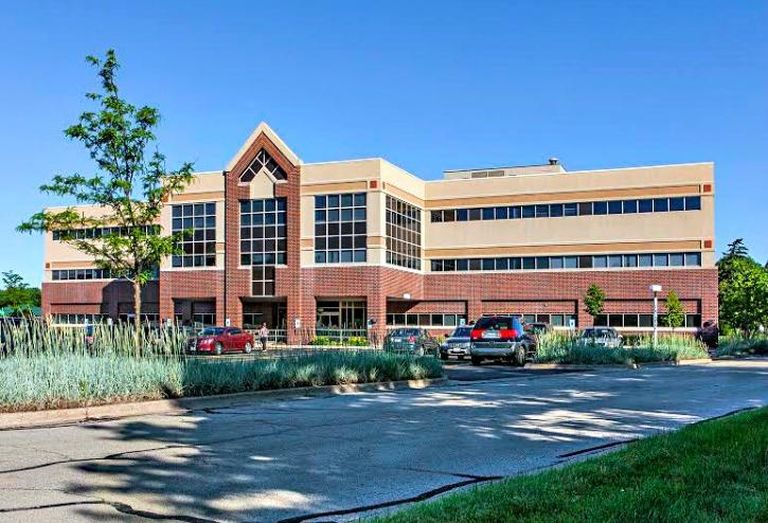
“If you gauge it by the amount of pent-up institutional and foreign capital looking to acquire these assets, you can definitely make the case that medical office buildings are blue-chip assets,” Transwestern National Director of Healthcare Services Eric Johnson said. “The interest is not just from REITs, it’s from pensions funds, institutional capital, the best-in-class investors.”
Although future healthcare policy remains uncertain, demographic trends signal strong demand for medical office space through the long term, according to a recent report from CBRE. The 65+ population, which accounts for the highest per-capita healthcare spending by far, is expected to nearly double between 2015 and 2055.
But the robust demand for MOBs has some worried because what goes up, must come down. At Bisnow's Atlanta Healthcare Leadership Forum last year, Novant Health Senior Vice President of Construction David Park warned MOBs may be in a bubble.
“At some point in time, what you start looking at is: When does that population growth, that bell curve, start down?" he said. "At some point, that number is going to drop."
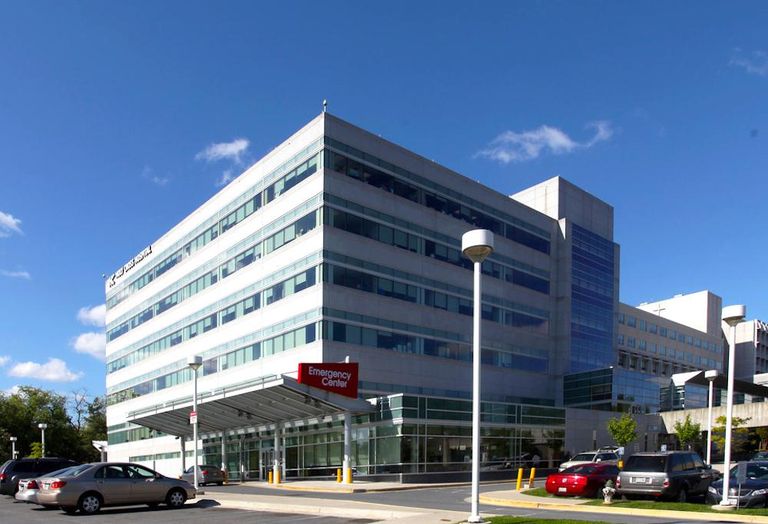
But the data is not bearing that out yet. Absorption of medical office space across the U.S. has outpaced completions of new supply for the past seven years, driving steady decreases in the national vacancy rate. The U.S. MOB vacancy rate decreased by a modest 10 basis points per quarter between 2010 and 2017, leading to an overall vacancy rate of 8%. Overall asking rents for MOBs have remained relatively flat since 2010, ranging between $22 and $23/SF. High build-out costs and the importance of proximity mean tenants stay in the same place for longer periods of time.
Rising investor confidence in the MOB segment has driven increased transaction volume, which totaled $9.9B last year at a 6.8% cap rate. Within the current MOB investment framework, there are marked differences in terms of quality, occupancy and location. The western region of the U.S. remains ahead of the pack with an average sale price of $329/SF — $90/SF above the national average. Seattle and Los Angeles saw the most MOB investment activity among major U.S. cities in 2016 with a combined total of $1.1B in transactions across 82 properties. Along with New York, these two markets also saw trades in excess of $1K/SF with several around $1,500/SF and one above $1,750/SF. Cap rates for well-located and fully leased prime assets remain compressed at around 4.5% in these markets with high barriers to entry — a substantial premium over national averages.

Houston, a global healthcare powerhouse, will particularly benefit. Over the past two years, completions were highest in the medical hubs of Houston and Boston, each with more than 1.2M SF of new product.
"Houston is a strong region because of the trifecta of strong research hospitals, medical centers as anchors, and colleges and universities to develop curriculum and staff," CBRE Director of Research in Texas Robert Kramp said. "At the end of the day, there isn't a single person that doesn't require healthcare."
In Houston, healthcare employment has outpaced MOB delivery in the past year, creating demand for new development. Hospitals systems are targeting patients with suburban expansions, further fueling demand for on-campus and campus-adjacent MOBs.
Uncertainty surrounding U.S. healthcare policy, and payments methods in particular, have reinforced preferences for medical office buildings over healthcare assets, as providers working in medical office space are typically less reliant on Medicare and Medicaid. With good cap rates, limited supply and increasing demand, expect MOBs to be the star of healthcare investment portfolios.
To hear the latest regarding the healthcare sector, do not miss Bisnow's National Healthcare South on Feb. 27.