The Chicago Bears are pivoting from plans to build a stadium in Arlington Heights and bearing down on a new domed stadium on the lakefront, pledging $2B in private financing to construct it.
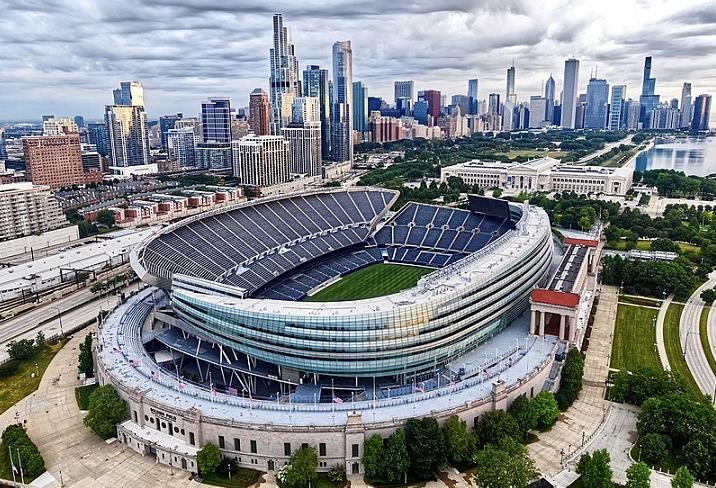
As a part of the plan, the team would partially demolish Soldier Field, which has the smallest seating capacity in the National Football League, and erect a publicly owned stadium with the potential for year-round events, including the Super Bowl, according to Crain's Chicago Business.
The new area would increase open space by about 20% and include publicly accessible plazas, paths and landscaped areas while also featuring access to the lakefront, the outlet reports.
“The Chicago Bears are proud to contribute over $2 billion to build a stadium and improve open spaces for all families, fans and the general public to enjoy in the City of Chicago,” Bears President and CEO Kevin Warren told The Athletic in a statement.
“The future stadium of the Chicago Bears will bring a transformative opportunity to our region — boosting the economy, creating jobs, facilitating mega events and generating millions in tax revenue. We look forward to sharing more information when our plans are finalized.”
In February 2023, the Bears purchased the 326-acre site of the former Arlington International Racecourse in Arlington Heights for $197.2M, seemingly dooming the city's prospects of keeping the team in Chicago.
But as the stadium saga dragged on for the past 13 months amid a property tax dispute, the team mulled several options, including moving to Naperville, Aurora or Waukegan, as well as staying in the city.
A McGuire Research poll of 500 registered voters found that 80% of Chicagoans are in favor of a museum campus location, and 77% want the team to stay in Chicago, the Chicago Tribune reported.
Although the team's pledged private financing would make up a significant portion of the total cost of the project, it would still need hundreds of millions in public money to support the endeavor. A new domed stadium in the city carries an estimated cost of a minimum of $2.5B to $3B, stadium consultant Marc Ganis told Crain's.
The move was welcomed by Mayor Brandon Johnson, who has reportedly facilitated a better working relationship with the team than his predecessor, Lori Lightfoot.
I look forward to subsequent talks with the Bears, State leadership and community stakeholders about how we can continue to responsibly support the aspirations of the team, its fans and all residents of the City of Chicago.
— Mayor Brandon Johnson (@ChicagosMayor) March 11, 2024
A public financing plan may have some local backing. According to the McGuire poll, 60% of Chicagoans support using public money for a publicly owned stadium.
In a Monday afternoon interview, Arlington Heights Mayor Thomas Hayes told CBS News the announcement took him by surprise, adding that the village hadn't received any notice of the pivot.
But village officials plan to battle for the Bears to stick to their original plan.
“We knew they were going to be doing their due diligence,” Jon Ridler, executive director of the Arlington Heights Chamber of Commerce, told CBS. “We knew that this was part of the discussion, and now we know what they're proposing in Chicago. Arlington Heights can now step up and we can showcase that we could do it better and we're the better choice for them. It's not a done deal, and we want to continue the conversation.”
Elsewhere on the battlefield for stadium dollars in Chicago, White Sox owner Jerry Reinsdorf has lobbied Springfield for $1B in public financing to build the baseball club a new stadium in the South Loop. The team wouldn't seek taxpayer funding, according to Crain’s, and would instead propose tapping into a 2% hotel tax originally used for Soldier Field renovations in 2003, plus tax increment financing district revenue.
Reinsdorf has faced opposition from Gov. J.B. Pritzker, who argued against public financing for the White Sox stadium at a press conference last month.
“Stadium projects around the country have occurred with public dollars, fewer and fewer over the years, and there's a reason for that,” Pritzker said, according to NBC Chicago. “The return on investment for taxpayers has to be proven now before we would actually move forward. I have not seen proof that this is a good deal for the taxpayers of the state of Illinois, but they have not presented that case yet.”
UPDATE, MARCH 11, 4:30 P.M. CT: This article has been updated to include reactions from Arlington Heights officials.